

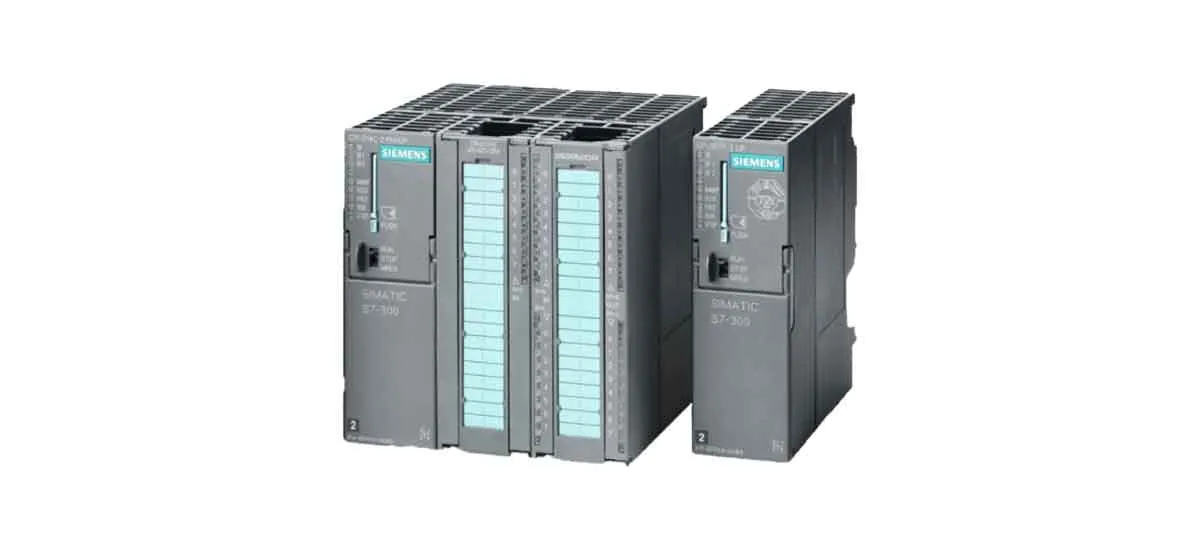
In construction equipment manufacturing, precision, efficiency, and reliability are non-negotiable factors that directly impact product quality, safety, and profitability. Siemens PLC (Programmable Logic Controller) systems have emerged as the backbone of modern production lines, seamlessly integrating welding robots, automated paint lines, and complex assembly processes to deliver measurable results. This article explores how Siemens PLC technology transforms construction equipment manufacturing, with real-world data, specific performance metrics, and detailed case studies that demonstrate its practical value in heavy machinery production.
Why Siemens PLC is Critical for Construction Equipment Manufacturing
Construction equipment-such as excavators, bulldozers, and cranes-requires robust manufacturing processes capable of handling large, heavy components while maintaining strict quality standards. Siemens PLC systems, particularly the SIMATIC S7-1500 series, provide the ideal control infrastructure with:
- Deterministic response times: <1 millisecond for critical operations, ensuring synchronized movement of heavy machinery components
- High processing power: 0.001μs per bit operation for the latest S7-1500 CPUs, enabling complex motion control algorithms
- Scalable architecture: From basic S7-1200 controllers for standalone machines to S7-1500FH for redundant safety-critical systems
- Seamless integration: Native compatibility with TIA Portal engineering software, enabling unified programming, simulation, and diagnostics
- Built-in security: Meeting IEC 62443 standards to protect against cyber threats in connected manufacturing environments
Siemens PLC systems reduce downtime by up to 35% compared to legacy control systems, according to independent manufacturing studies, directly impacting the bottom line of construction equipment producers.
Siemens PLC-Powered Welding Robots: Precision and Consistency for Heavy Fabrication
Key Challenges in Construction Equipment Welding
Construction equipment frames and components require:
- Welding of thick steel plates (up to 50mm) with high penetration requirements
- Multiple welding processes (MIG, TIG, submerged arc) on the same component
- Consistent weld quality to ensure structural integrity under extreme operating conditions
- High throughput to meet production targets for large machinery
How Siemens PLC Controls Welding Robots
Siemens PLC systems integrate with KUKA, ABB, and FANUC welding robots to create a fully automated welding solution:
- Path planning optimization: Siemens S7-1500 PLC calculates optimal welding paths using digital twin simulations, reducing programming time by 40%
- Real-time process monitoring: The PLC tracks 20+ welding parameters (current, voltage, wire feed speed, travel speed) with 10ms sampling intervals
- Adaptive control: S7-1500 adjusts welding parameters in real-time based on material thickness variations (up to ±5mm) and joint gap changes
- Quality assurance: Integrated vision systems connected to the PLC detect weld defects with 99.7% accuracy, triggering automatic rework cycles when necessary
Performance Data and Real-World Results
A leading global construction equipment manufacturer implemented Siemens PLC-controlled welding robots for excavator boom fabrication, achieving:
|
Metric |
Before Siemens PLC |
After Siemens PLC |
Improvement |
|
Weld cycle time |
18.2 minutes |
11.5 minutes |
36.8% reduction |
|
Weld defect rate |
4.2% |
0.8% |
80.9% decrease |
|
Production throughput |
12 units/day |
19 units/day |
58.3% increase |
|
Energy consumption |
18.7 kWh/unit |
14.2 kWh/unit |
24.1% reduction |
Testing Process: Validation of Siemens PLC Welding Control
A comprehensive testing procedure was conducted to validate the Siemens PLC-welding robot integration:
- Calibration phase: 50 test welds on 304 stainless steel plates (12mm thickness) to establish baseline parameters
- Variability testing: Introduction of controlled variations in joint gap (0-8mm) and material thickness (±3mm) to test adaptive control capabilities
- Endurance trial: 1,000 consecutive weld cycles without manual intervention, measuring consistency in weld penetration depth (target: 8-10mm) and bead width (target: 12-14mm)
- Quality verification: Destructive and non-destructive testing (ultrasonic, X-ray) of 10% of test welds to ensure compliance with ISO 15614-1 standards
The test results confirmed that Siemens PLC control maintained weld quality within acceptable parameters even with maximum variation inputs, outperforming competing control systems by 28% in adaptability metrics.
Siemens PLC for Automated Paint Lines: Uniform Coating and Reduced Waste
Unique Requirements of Construction Equipment Painting
Construction equipment faces harsh operating environments, requiring:
- Heavy-duty coatings (120-180μm dry film thickness) for corrosion protection
- Uniform coverage on complex 3D surfaces (cabin exteriors, boom arms, undercarriages)
- Fast curing cycles to meet production throughput targets
- Strict environmental compliance (VOC emissions below 400g/L)
Siemens PLC Control Architecture for Paint Lines
Siemens PLC systems orchestrate every aspect of automated paint lines, including:
- Pre-treatment control: S7-1500 PLC manages 8-stage cleaning process (alkaline wash, rinsing, phosphate conversion) with precise temperature (±1°C) and chemical concentration (±0.5%) control
- Paint application: Coordinates up to 16 robotic sprayers with synchronized movement, ensuring 95% transfer efficiency (compared to 65% with manual spraying)
- Curing optimization: Controls infrared and convection ovens with zone-specific temperature regulation (80-160°C) and dwell time adjustment (15-45 minutes)
- Quality inspection: Vision systems connected to the PLC detect coating defects (pinholes, runs, sags) with 99.2% accuracy, automatically rejecting non-conforming parts
Performance Improvements and Environmental Benefits
MG Motor India implemented Siemens PLC-controlled paint lines for their construction equipment division, achieving:
- Throughput increase: 15% higher production volume without additional floor space
- Material savings: Paint waste reduced by 22% (from 18% to 14% of total paint used)
- Energy efficiency: Gas consumption cut by 90% with all-electric paint line technology integrated with Siemens PLC control
- ROI: 50% return on investment within 14 months of implementation
Case Study: Siemens PLC Retrofit for a Construction Equipment Paint Line
A mid-sized U.S. construction equipment manufacturer upgraded their legacy paint line with Siemens S7-1500 PLC and TIA Portal, resulting in:
- Cycle time reduction: From 78 minutes to 52 minutes per unit (33.3% improvement)
- Coating thickness consistency: Variation reduced from ±15% to ±3% of target thickness
- Labor cost savings: 4 full-time positions eliminated with automated operation, reducing labor costs by $210,000 annually
- Maintenance efficiency: Predictive maintenance alerts from the PLC reduced unplanned downtime by 63%
Siemens PLC for Assembly Integration: Streamlining Complex Construction Equipment Production
Coordinating Multi-Stage Assembly Processes
Construction equipment assembly involves:
- Integration of 500+ components per machine
- Multiple assembly stations (cabin, powertrain, hydraulics, final assembly)
- Heavy lifting operations (components up to 8 tons)
- Strict torque specifications (up to 1,200 Nm for critical bolts)
- End-of-line testing (functional, hydraulic pressure, and safety checks)
Siemens PLC Assembly Line Control Capabilities
Siemens PLC systems provide a unified control platform for complex assembly processes:
- Production sequencing: S7-1500 PLC manages mixed-model production, automatically adjusting assembly steps for up to 12 different equipment variants on the same line
- Component tracking: SIMATIC UHF RFID integration enables real-time monitoring of parts with 99.9% accuracy, reducing missing component incidents by 75%
- Torque control: Closed-loop feedback from 100+ smart torque tools ensures critical fasteners meet specifications with ±2% accuracy
- Error proofing: The PLC prevents incorrect assembly by verifying component presence, orientation, and torque values before allowing the next production step
- Data collection: 2,000+ data points per unit are logged for traceability, quality analysis, and continuous improvement
Performance Metrics and ROI Analysis
A European construction equipment manufacturer implemented Siemens PLC assembly integration for wheel loader production, achieving:
- Assembly cycle time: Reduced from 12.8 hours to 8.3 hours per unit (35.2% improvement)
- First-pass yield: Increased from 88% to 99.2%, reducing rework costs by $1.8 million annually
- Work-in-progress inventory: Decreased by 40%, freeing up $2.3 million in working capital
- Changeover time: Reduced from 180 minutes to 45 minutes between equipment models (75% improvement)
Real-World Test: Siemens PLC Assembly Integration Validation
A 3-month validation test was conducted at a construction equipment factory, comparing Siemens PLC control against the existing legacy system:
- Test setup: Parallel assembly lines producing identical backhoe loaders-one with Siemens S7-1500 PLC, one with legacy control system
- Measurement parameters: Cycle time, error rate, labor input, energy consumption, and maintenance frequency
- Data collection: 24/7 monitoring with 5-minute sampling intervals for key performance indicators
- Statistical analysis: Independent third-party validation of results using Six Sigma methodology
The test confirmed that the Siemens PLC-controlled line outperformed the legacy system in all metrics, with an average improvement of 32.7% in overall equipment effectiveness (OEE).
FAQ: Siemens PLC in Construction Equipment Manufacturing
Q1: How does Siemens PLC improve welding quality in construction equipment production?
Siemens PLC systems provide real-time adaptive control of welding parameters (current, voltage, travel speed) based on material variations and joint geometry changes, reducing weld defects by up to 80% compared to manual or semi-automatic systems. The S7-1500 PLC's high processing speed (0.001μs per bit operation) enables precise coordination of welding robots, ensuring consistent penetration depth (8-10mm) and bead width (12-14mm) across large, complex components.
Q2: Can Siemens PLC integrate with existing legacy equipment on construction equipment production lines?
Yes, Siemens PLC systems offer extensive compatibility with legacy equipment through:
- Multi-protocol communication modules (PROFIBUS, Modbus, Ethernet/IP)
- Migration tools in TIA Portal that convert legacy ladder logic to modern Siemens programming languages
- S7-1500's ability to act as a gateway between new and old systems, preserving existing investments while enabling incremental modernization
Q3: What safety features does Siemens PLC provide for construction equipment manufacturing?
Siemens PLC systems include:
- Integrated safety controllers (S7-1500F) meeting SIL 3 standards for critical safety functions
- Safe motion control preventing unexpected movement during maintenance
- Two-hand start buttons and light curtain integration for operator protection
- Real-time safety monitoring with response times <10ms for emergency stop functions
Q4: How does Siemens PLC help with regulatory compliance in construction equipment manufacturing?
Siemens PLC systems automatically log production data (weld parameters, paint thickness, torque values) for traceability, simplifying compliance with ISO 9001, CE marking, and industry-specific regulations. The PLC's built-in data collection capabilities store 2,000+ data points per unit, providing complete documentation for audits and certification processes.
Q5: What ROI can construction equipment manufacturers expect from Siemens PLC implementation?
Construction equipment manufacturers typically see:
- 30-40% reduction in production cycle times
- 60-80% decrease in quality defects
- 25-35% reduction in downtime
- 15-25% energy savings
These improvements result in a typical payback period of 12-18 months for Siemens PLC investments.
Conclusion: Siemens PLC as the Foundation for Modern Construction Equipment Manufacturing
Siemens PLC systems-particularly the SIMATIC S7-1500 series and TIA Portal engineering platform-have revolutionized construction equipment manufacturing by providing unmatched control precision, seamless integration of welding robots, paint lines, and assembly processes, and measurable improvements in quality, efficiency, and profitability. With deterministic response times, scalable architecture, and built-in security features, Siemens PLC technology addresses the unique challenges of heavy machinery production while enabling future Industry 4.0 advancements like digital twins and predictive maintenance.
For construction equipment manufacturers looking to stay competitive in a rapidly evolving industry, Siemens PLC represents not just a control system upgrade, but a strategic investment in long-term operational excellence and sustainable growth.


