


As a supplier of Mitsubishi HMI (Human-Machine Interface) products, I've witnessed firsthand the critical role that HMIs play in modern industrial automation. One of the most frequently asked questions from our customers is about the programming languages used for Mitsubishi HMIs. In this blog, I'll delve into the details of the programming languages associated with Mitsubishi HMIs, exploring their features, applications, and how they contribute to the overall functionality of these devices.
Understanding Mitsubishi HMI
Before we dive into the programming languages, let's briefly understand what Mitsubishi HMIs are. Mitsubishi HMIs are advanced control devices that provide a user-friendly interface for operators to interact with industrial equipment. They are used in a wide range of industries, including manufacturing, automotive, food and beverage, and more. These HMIs allow operators to monitor and control processes, view data, and receive alerts, making them an essential component of any automated system.
Programming Languages for Mitsubishi HMI
Mitsubishi HMIs support several programming languages, each with its own unique features and applications. The most commonly used programming languages for Mitsubishi HMIs are:
GX Works3
GX Works3 is a comprehensive programming software developed by Mitsubishi Electric for programming their PLCs (Programmable Logic Controllers) and HMIs. It provides a unified environment for creating, editing, and debugging programs. GX Works3 supports ladder logic, structured text, function block diagram, and sequential function chart programming languages.
- Ladder Logic: Ladder logic is the most widely used programming language for PLCs and HMIs. It uses a graphical representation similar to electrical ladder diagrams, making it easy for electrical engineers and technicians to understand and program. Ladder logic is ideal for simple control tasks, such as motor control, conveyor belt operation, and lighting control.
- Structured Text: Structured text is a high-level programming language similar to Pascal or C. It allows programmers to write complex algorithms and mathematical calculations. Structured text is suitable for applications that require advanced control logic, such as process control, motion control, and robotics.
- Function Block Diagram: Function block diagram is a graphical programming language that uses blocks to represent functions and their interconnections. It is easy to understand and use, especially for applications that involve complex control systems. Function block diagram is commonly used in industrial automation, such as in the control of pumps, valves, and motors.
- Sequential Function Chart: Sequential function chart is a graphical programming language that represents the sequence of operations in a process. It uses steps, transitions, and actions to describe the flow of the process. Sequential function chart is ideal for applications that involve sequential control, such as assembly lines, packaging machines, and material handling systems.
GT Designer3
GT Designer3 is a dedicated software for programming Mitsubishi HMIs. It provides a user-friendly interface for creating and designing HMI screens. GT Designer3 supports a wide range of graphic objects, such as buttons, text boxes, gauges, and charts, allowing users to create intuitive and interactive HMI screens.
- Scripting Language: GT Designer3 also supports a scripting language called GT Script. GT Script allows users to add custom functionality to their HMI screens. It can be used to perform calculations, control other devices, and handle events. GT Script is similar to JavaScript and is easy to learn and use.
Applications of Programming Languages in Mitsubishi HMI
The programming languages used for Mitsubishi HMIs are applied in various industries and applications. Here are some examples:
Manufacturing
In the manufacturing industry, Mitsubishi HMIs are used to monitor and control production processes. The programming languages allow operators to set up and adjust parameters, such as temperature, pressure, and speed. For example, in a food processing plant, the HMI can be programmed to control the cooking temperature and time of a batch of food products. The ladder logic programming language can be used to create simple control programs, while the structured text programming language can be used to implement more complex algorithms for quality control.
Automotive
In the automotive industry, Mitsubishi HMIs are used in assembly lines and testing equipment. The programming languages enable operators to monitor the status of the production line, detect faults, and perform maintenance tasks. For instance, in an automotive assembly plant, the HMI can be programmed to display the status of each workstation, such as the number of parts assembled, the time taken for each operation, and the quality of the finished products. The function block diagram programming language can be used to design the control system for the assembly line, while the sequential function chart programming language can be used to manage the sequence of operations.
Energy
In the energy industry, Mitsubishi HMIs are used to monitor and control power generation and distribution systems. The programming languages allow operators to view real-time data, such as voltage, current, and power, and make adjustments to the system as needed. For example, in a power plant, the HMI can be programmed to control the operation of turbines, generators, and transformers. The structured text programming language can be used to implement advanced control algorithms for optimizing the power generation process.
Advantages of Using Mitsubishi HMI Programming Languages
There are several advantages of using the programming languages for Mitsubishi HMIs:
- Ease of Use: The programming languages are designed to be user-friendly, with intuitive interfaces and graphical representations. This makes it easy for engineers and technicians to learn and use the programming languages, even if they have limited programming experience.
- Flexibility: The programming languages support a wide range of programming styles and techniques, allowing users to choose the most suitable language for their application. This provides flexibility in designing and implementing control systems.
- Compatibility: The programming languages are compatible with other Mitsubishi products, such as PLCs and servo drives. This allows for seamless integration of the HMI with other components of the automation system, reducing development time and costs.
- Scalability: The programming languages support scalable applications, allowing users to start with a simple control system and gradually expand it as needed. This makes it easy to adapt to changing requirements and technologies.
Recommended Mitsubishi HMI Products
As a Mitsubishi HMI supplier, I would like to recommend some of our popular HMI products:
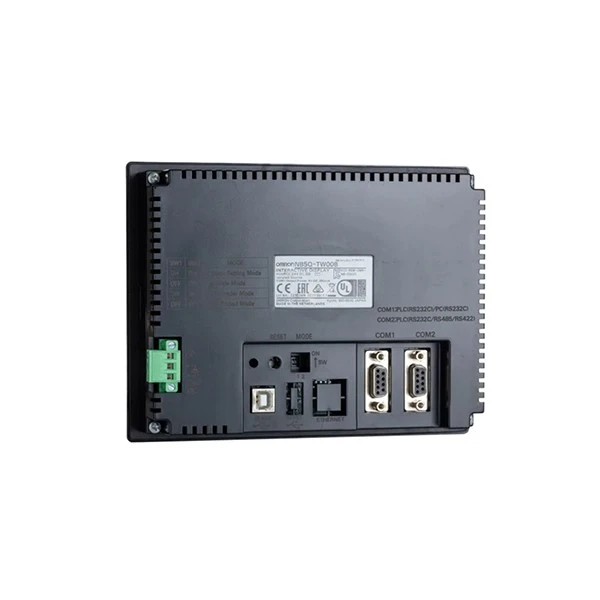

- Mitsubishi GT2510-VTWD: This is a high-performance HMI with a large touch screen and advanced features. It is suitable for applications that require a high level of visualization and control.
- Mitsubishi GT1275-VNBA: This is a compact HMI with a user-friendly interface. It is ideal for applications that have limited space and require basic control functions.
- MITSUBISHI HMI GT1695M-XTBA Touch Panel: This is a rugged HMI with a high-resolution touch screen. It is designed for use in harsh industrial environments and provides reliable performance.
Contact for Purchase and Consultation
If you are interested in purchasing Mitsubishi HMIs or have any questions about the programming languages, please feel free to contact us. We have a team of experienced professionals who can provide you with detailed information and technical support. We look forward to working with you to meet your industrial automation needs.
References
- Mitsubishi Electric Corporation. (2023). GX Works3 User's Manual.
- Mitsubishi Electric Corporation. (2023). GT Designer3 User's Manual.


