

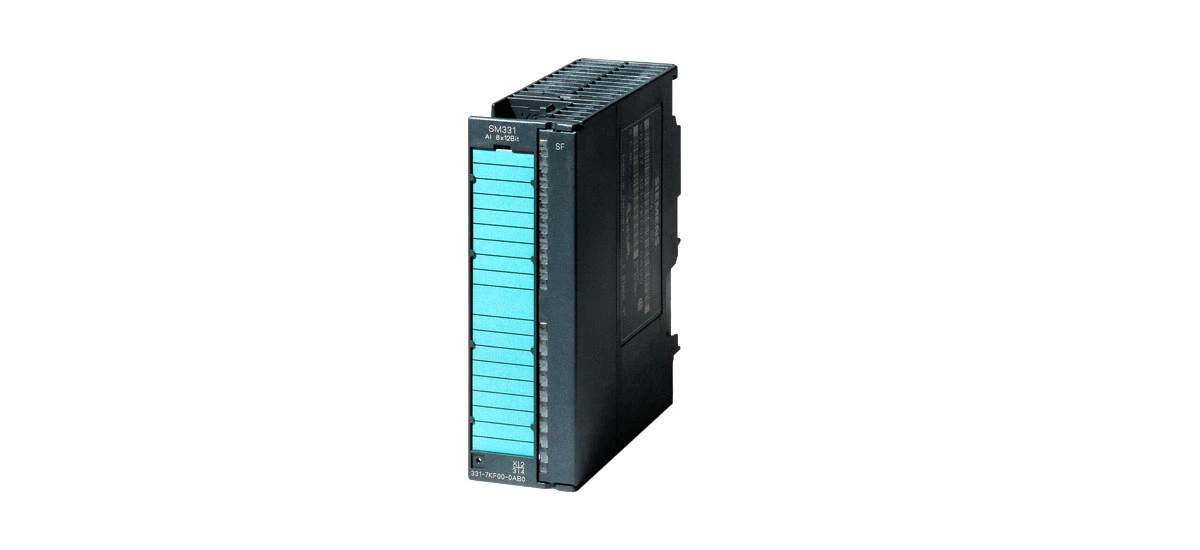
In the world of industrial automation, where machines and systems work together to produce goods and manage processes, having reliable components is key. The SIMATIC SM331 analog input module is one such important component. It acts as a bridge between the physical sensors that monitor industrial processes and the programmable logic controllers (PLCs) that control those processes. Whether it's measuring temperature in a factory, pressure in a chemical plant, or voltage in a power station, the SIMATIC SM331 plays a vital role in making sure accurate information is passed on. In this guide, we'll explore what the SIMATIC SM331 is, how it works, where it's used, and some useful tips for using it. Dive in now to learn how you can leverage this module to boost efficiency in your industrial operations!
What is SIMATIC SM331 Analog Input Module?
The SIMATIC SM331 is a vital part of the SIMATIC S7 - 300 series, a popular family of PLC systems used in factories, plants, and industrial sites around the world. As an analog input module, it serves as a critical link between the real-world conditions of industrial processes and the digital brain of the PLC.
Analog signals are different from digital signals, which have only two states (on or off). Analog signals are continuous, meaning they can take any value within a range. For example, a temperature sensor might output a signal that changes smoothly from 0 to 10 volts as the temperature goes from 0°C to 100°C. The SIMATIC SM331 is designed to take these varying signals-from sensors that measure temperature, pressure, flow, humidity, or even light intensity-and turn them into digital numbers that the PLC can process.
This conversion is not just a simple task. The SIMATIC SM331 does it quickly and accurately, ensuring that the PLC gets an up-to-date and precise picture of what's happening in the industrial process. Without this module, the PLC would be "blind" to these continuous changes, making it impossible to control processes with the necessary precision. It's compatible with many different types of sensors, which makes it a flexible choice for various industrial setups.
Functions of SIMATIC SM331
Signal Conversion Function
One of the main functions of the SIMATIC SM331 is its signal conversion ability. The SIMATIC SM331 signal conversion function is highly efficient, handling a wide range of analog input types to meet the needs of different industrial sensors. It can process current signals, such as the common 4 - 20 mA range, which is often used for sensors that need to transmit data over long distances without losing strength. Voltage signals, including 0 - 10 V and ±10 V, are also easily handled-these are common in sensors that measure things like position or level.
But the SIMATIC SM331 doesn't stop there. It can also work with specialized signals from temperature sensors like thermocouples (used for high-temperature measurements) and resistance temperature detectors (RTDs), which are known for their high accuracy in moderate temperature ranges. This versatility means that whether a factory uses simple voltage sensors or more complex thermocouples, the SIMATIC SM331 can convert their signals into a form the PLC understands.
High Accuracy
The SIMATIC SM331 is known for its high accuracy, a feature that sets it apart in industrial settings where even small measurement errors can lead to big issues. The SIMATIC SM331 accuracy features include a low error rate, often as little as ±0.1% of the full signal range. This means that if a sensor is measuring a pressure range of 0 to 100 bar, the SIMATIC SM331 will convert that signal with an error of no more than 0.1 bar.
This level of precision is crucial in processes like pharmaceutical manufacturing, where ingredient quantities must be exact, or in food processing, where temperature must be kept within a narrow range to ensure safety. For example, if a sensor in a candy-making machine measures the temperature of molten sugar, an accurate reading from the SIMATIC SM331 ensures the PLC can adjust the cooling system to prevent the sugar from burning or crystallizing incorrectly. Without this accuracy, product quality would suffer, and waste would increase.
Signal Isolation
Another great function of the SIMATIC SM331 is signal isolation, a protective feature that keeps analog signals clean and reliable even in noisy industrial environments. Signal isolation works by using a physical barrier-often an optical or magnetic component-to separate the input signals from the module's internal electronics and the rest of the PLC system. This barrier prevents electrical noise, which is generated by machines like motors, welders, or large pumps, from interfering with the analog signals.
In busy factories, electrical noise is everywhere. It can cause analog signals to fluctuate, leading to incorrect readings. For example, a sensor measuring the flow of water in a pipe might send a steady 10 mA signal, but electrical noise could make that signal jump up and down randomly. The SIMATIC SM331's signal isolation blocks this noise, ensuring the converted digital signal remains steady and accurate. This is especially important in sensitive processes, like semiconductor manufacturing, where even tiny signal disruptions can ruin expensive products.
Industrial Applications of SIMATIC SM331
Manufacturing Industry
The SIMATIC SM331 in manufacturing industry is widely used, playing a key role in keeping production lines running smoothly and efficiently. In car manufacturing plants, for example, hundreds of sensors are placed along the assembly line. Some sensors measure the pressure applied by robotic arms when attaching parts like doors or wheels, ensuring the parts are fastened tightly but not too tightly, which could damage the car. Others monitor the temperature of paint ovens, making sure the paint dries evenly and adheres properly.
The SIMATIC SM331 converts all these signals-pressure, temperature, and even the speed of conveyor belts moving car parts-and sends them to the PLC. The PLC then uses this data to make real-time adjustments. If a robotic arm's pressure is too high, the PLC can reduce it; if the oven is too cool, the PLC can increase the heat. This not only ensures product quality but also prevents equipment damage and reduces downtime. In electronics factories, the SIMATIC SM331 is used with sensors that measure the position of circuit board components, ensuring they're placed correctly before soldering.
Chemical Industry
The SIMATIC SM331 in chemical industry is also very important, helping to manage dangerous and complex processes safely. Chemical plants handle substances that can be toxic, flammable, or corrosive, so precise monitoring is essential. Sensors in these plants measure a range of parameters: pH levels in mixing tanks (to ensure chemical reactions are balanced), the concentration of gases in storage tanks (to prevent explosions), and the pressure in reaction vessels (to avoid leaks).
All these are analog signals, and the SIMATIC SM331 converts them to digital data for the PLC. For example, in a plant making fertilizers, sensors measure the level of ammonia gas in a reactor. The SIMATIC SM331 converts this signal, and if the level gets too high, the PLC triggers a valve to release excess gas safely. In another part of the plant, sensors monitor the temperature of a chemical mixture. The SIMATIC SM331 sends this data to the PLC, which adjusts the heating system to keep the mixture at the exact temperature needed for the reaction to work. Without the SIMATIC SM331's accurate conversion, these processes could become unstable, leading to accidents or failed batches.
Power Industry
In the power industry, where electricity is generated, transmitted, and distributed, the SIMATIC SM331 plays a key role in ensuring reliability and safety. Power plants-whether they burn coal, use nuclear energy, or harness wind-rely on countless sensors to monitor equipment. In a coal-fired power plant, sensors measure the temperature of steam in boilers (to prevent overheating), the pressure of water in pipes (to avoid bursts), and the level of fuel in storage tanks.
The SIMATIC SM331 converts these analog signals, allowing the PLC to keep a constant eye on the plant's performance. If the steam temperature rises too high, the PLC can reduce the amount of coal being burned; if the water pressure drops, it can start a pump to increase it. In electrical substations, which distribute power to homes and businesses, sensors measure voltage and current in power lines. The SIMATIC SM331 converts these signals, and if there's a sudden surge (which could damage equipment), the PLC can quickly shut down a section of the line. This helps prevent blackouts and keeps the power grid stable.
Tips for Using SIMATIC SM331
Installation Tips
The SIMATIC SM331 installation tips are important to follow to ensure the module works correctly from day one. First, always mount the SIMATIC SM331 on a DIN rail, a standard mounting bracket used in industrial control panels. This keeps the module secure and prevents vibrations from loosening connections. When connecting sensors to the module, use shielded cables-these cables have a metal layer that blocks electrical noise, further protecting the analog signals.
Make sure to follow the wiring diagram provided with the SIMATIC SM331. Each sensor wire must be connected to the correct terminal: for example, current sensors usually connect to terminals labeled "+" and "-", while voltage sensors might use terminals marked "L+" and "M". Tighten the terminal screws to the right torque (usually 0.5 - 0.6 Nm) to avoid loose connections, which can cause signal loss. Finally, keep the SIMATIC SM331 away from high-voltage equipment, like motors or transformers, as these can create strong magnetic fields that interfere with signals.
Regular Maintenance
To keep the SIMATIC SM331 working well, regular maintenance is necessary. Start by cleaning the module every 3 - 6 months, depending on how dusty the environment is. Use compressed air to blow away dust from the terminals and cooling vents-dust can trap heat, which affects the module's performance. Check the wiring connections at least once a month to make sure they're tight and not corroded. Corrosion (a green or white buildup on terminals) can block signals, so clean corroded terminals with a dry cloth or a small brush.
If the SIMATIC SM331 shows error messages on the PLC screen-like "signal out of range" or "module failure"-don't ignore them. These messages often indicate a problem with a sensor, wiring, or the module itself. Troubleshoot by checking if the sensor is working (try replacing it with a known good one), inspecting the wiring for breaks, and ensuring the module is properly powered. Following the manufacturer's maintenance guide will help catch small issues before they become big problems, extending the SIMATIC SM331's lifespan.
Calibration
Calibrating the SIMATIC SM331 from time to time is important to maintain its high accuracy. Calibration involves comparing the module's readings to a known standard and adjusting it if there's a difference. Most experts recommend calibrating the SIMATIC SM331 once a year, though in harsh environments (like hot or humid plants), it may need to be done every 6 months.
To calibrate, you'll need a standard signal generator, a device that can produce precise analog signals (like 4 mA, 12 mA, or 20 mA for current). Connect the generator to the SIMATIC SM331, then send a known signal (for example, 10 mA). Check what reading the PLC receives-if it's not exactly 10 mA, use the module's calibration software or dip switches to adjust the reading until it matches. This ensures that the SIMATIC SM331 continues to convert signals accurately, which is essential for processes that rely on precise measurements, like medical device manufacturing or aerospace part production.
Conclusion
The SIMATIC SM331 analog input module is a cornerstone of industrial automation, with its ability to convert analog signals accurately, isolate them from interference, and support various industrial sectors. From manufacturing to chemical plants and power industries, its role in ensuring smooth and safe operations is undeniable. By following proper installation, maintenance, and calibration tips, you can maximize its performance. Don't wait-start integrating these insights into your industrial setup with the SIMATIC SM331 and see improved efficiency and reliability in your processes today!


