

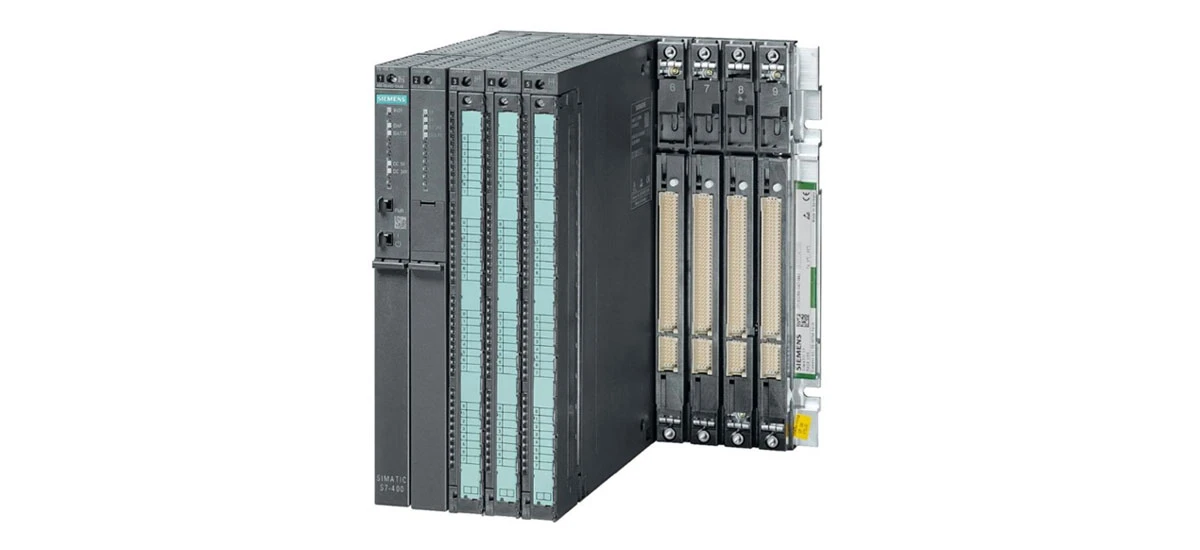
In the world of industrial automation, Programmable Logic Controllers (PLCs) are the backbone of efficient operations. Siemens, a trusted name in automation technology, offers two popular PLC lines: the Siemens S7 400 and the S7-1500. Both models deliver reliable performance, but they are designed for different project needs. Understanding their key differences will help you pick the right one for your industrial setup. Let's dive into the details of the Siemens S7 400 and S7-1500, including their strengths, use cases, and how they stack up against each other.
Core Overview of Siemens S7 400 and S7-1500
Before comparing specific features, let's start with a basic introduction to each PLC. The Siemens S7 400 is a mature, high-performance PLC that has been a staple in large-scale industrial projects for years. It's known for its robustness and ability to handle complex automation tasks. On the other hand, the S7-1500 is a newer model, built with modern technology to meet the demands of flexible, efficient manufacturing. While both are part of Siemens' S7 family, their design goals and capabilities set them apart.
H3: What is the Siemens S7 400?
The Siemens S7 400 is a modular PLC designed for large industrial systems. It excels in applications that require high processing power, multiple connections, and long-term reliability. Many industries, such as oil and gas, power generation, and heavy manufacturing, rely on the Siemens S7 400 for critical operations. Its modular structure allows businesses to expand or modify the system as their needs grow, making it a versatile choice for long-term projects. The Siemens S7 400 also supports a wide range of communication protocols, ensuring seamless integration with other industrial equipment.
What is the Siemens S7-1500?
The S7-1500 is Siemens' advanced PLC, launched as an upgrade to the S7-300 and S7-400 lines. It focuses on energy efficiency, user-friendliness, and compatibility with modern automation tools. The S7-1500 uses the Totally Integrated Automation (TIA) Portal software, which simplifies programming, configuration, and maintenance. It's ideal for medium to large projects that need flexibility and quick adaptation to changing production demands. Unlike the Siemens S7 400, the S7-1500 has a more compact design without sacrificing performance, making it suitable for both new installations and upgrades.
Key Differences Between Siemens S7 400 and S7-1500
To decide which PLC fits your project, let's break down their differences in critical areas: performance, hardware, software, cost, and maintenance.
Performance and Processing Power
When it comes to handling complex tasks, the Siemens S7 400 and S7-1500 have distinct strengths. The Siemens S7 400 is built for heavy-duty processing. It can manage hundreds of I/O points, complex mathematical calculations, and simultaneous tasks without lag. This makes the Siemens S7 400 perfect for large-scale industrial projects like power plants or chemical factories, where multiple processes run at the same time. For example, a Siemens S7 400 for large-scale industrial projects can control conveyor systems, temperature regulators, and safety protocols all at once.
The S7-1500, while powerful, is optimized for efficiency. It has a faster clock speed than the Siemens S7 400, which means it processes simple to medium tasks more quickly. It also uses less energy, making it a greener choice for projects focused on sustainability. However, for extremely large systems with thousands of I/O points, the Siemens S7 400 still holds an edge in raw processing capacity.
Hardware Design and Scalability
Hardware is a key differentiator between the two PLCs. The Siemens S7 400 features a modular design with separate power supplies, CPUs, and I/O modules. This allows businesses to customize the system to their exact needs-adding more modules as the project expands. The Siemens S7 400 is also known for its durability, with components designed to withstand harsh industrial environments (like extreme temperatures or vibration). Another advantage is Siemens S7 400 compatibility with legacy systems; many older industrial setups can easily integrate the S7 400 without major overhauls.
The S7-1500, in contrast, has a more compact, integrated design. It combines the CPU, power supply, and some I/O functions into a single unit, reducing space requirements. While it's still scalable (you can add expansion modules), it's better suited for projects that don't need the same level of customization as the Siemens S7 400. The S7-1500 also uses newer hardware technology, such as faster memory and better connectivity options (like Ethernet/IP), which simplifies integration with modern devices like IoT sensors.
Software Compatibility and Programming
Software plays a big role in PLC usability. The Siemens S7 400 uses Step7 V5.x software for programming. Step7 is a mature platform with a steep learning curve, but it's highly reliable for complex programming tasks. Many experienced engineers prefer Step7 because of its advanced features and compatibility with older Siemens systems. However, Step7 is not as intuitive for new users, and it lacks some of the modern tools found in newer software.
The S7-1500 uses the TIA Portal, Siemens' latest programming software. TIA Portal is designed for ease of use, with a graphical interface that simplifies programming, simulation, and troubleshooting. It also integrates with other Siemens tools (like WinCC for HMI design), creating a seamless workflow. For businesses looking to train new staff or streamline their programming process, the TIA Portal is a major advantage. However, the Siemens S7 400 cannot be programmed with TIA Portal-you'll need to stick with Step7, which may be a drawback if your team is already familiar with TIA.
Cost and Value
Cost is always a factor in project decisions. The Siemens S7 400 has a higher initial cost than the S7-1500. This is because it's built for large-scale, high-performance applications, and its modular components are more expensive. However, the Siemens S7 400 offers long-term value for projects that require reliability and scalability. Its durability means lower replacement costs over time, and its compatibility with legacy systems reduces the need for costly upgrades. When considering Siemens S7 400 vs S7 1500 cost comparison, remember that the S7 400 is an investment for large, long-term projects.
The S7-1500 has a lower upfront cost, making it more accessible for small to medium-sized projects. It also offers better value for money in terms of energy efficiency-lower power consumption translates to reduced utility bills over time. For businesses with limited budgets or projects that don't require the Siemens S7 400's heavy-duty capabilities, the S7-1500 is a cost-effective choice. However, if you need to scale to a very large system, the S7-1500's expansion costs can add up, making the Siemens S7 400 a better value in the long run.
Maintenance and Support
Maintenance is crucial for minimizing downtime in industrial settings. The Siemens S7 400 has been on the market for decades, so there's a large pool of experienced technicians who can service it. Siemens also continues to provide support for the S7 400, including spare parts and technical documentation. Siemens S7 400 maintenance requirements are well-documented, making it easy to schedule routine checks and repairs. This is a big plus for critical systems where downtime can be costly.
The S7-1500, being a newer model, has fewer technicians with hands-on experience. However, its design simplifies maintenance: the TIA Portal includes diagnostic tools that help identify issues quickly, and the integrated hardware reduces the number of components that can fail. Siemens also offers strong support for the S7-1500, with regular software updates and online resources. For businesses that prioritize easy troubleshooting and modern support, the S7-1500 is a solid choice. But for industries that rely on proven, easy-to-maintain systems, the Siemens S7 400 is still the go-to option.
Which PLC Should You Choose?
The answer depends on your project's specific needs. Here's a quick guide to help you decide:
Choose the Siemens S7 400 if:
- You're working on a large-scale industrial project (like a power plant, chemical factory, or large manufacturing facility)
- You need to integrate with legacy Siemens systems
- Raw processing power and scalability are top priorities
- You prefer a mature, durable system with extensive maintenance support
- You need Siemens S7 400 performance specifications that handle thousands of I/O points
Choose the S7-1500 if:
- You're working on a medium-sized project or a new installation
- Energy efficiency and sustainability are important
- You want a user-friendly programming experience with TIA Portal
- You need seamless integration with modern devices (like IoT sensors)
- You have a limited budget for upfront costs
Conclusion
Both the Siemens S7 400 and S7-1500 are excellent PLCs, but they serve different purposes. The Siemens S7 400 is a workhorse for large, complex industrial systems, offering unmatched processing power, scalability, and compatibility with legacy equipment. It's the right choice for projects where reliability and long-term performance are non-negotiable. The S7-1500, on the other hand, is a modern, efficient PLC that excels in flexibility and ease of use, making it ideal for medium-sized projects and businesses looking to embrace new automation technology.
When making your decision, consider factors like project size, budget, software preferences, and future scalability. If you're still unsure, consult a Siemens automation expert to assess your needs and recommend the best PLC for your project. Whichever you choose, both the Siemens S7 400 and S7-1500 will deliver the reliability and performance that Siemens is known for.


