


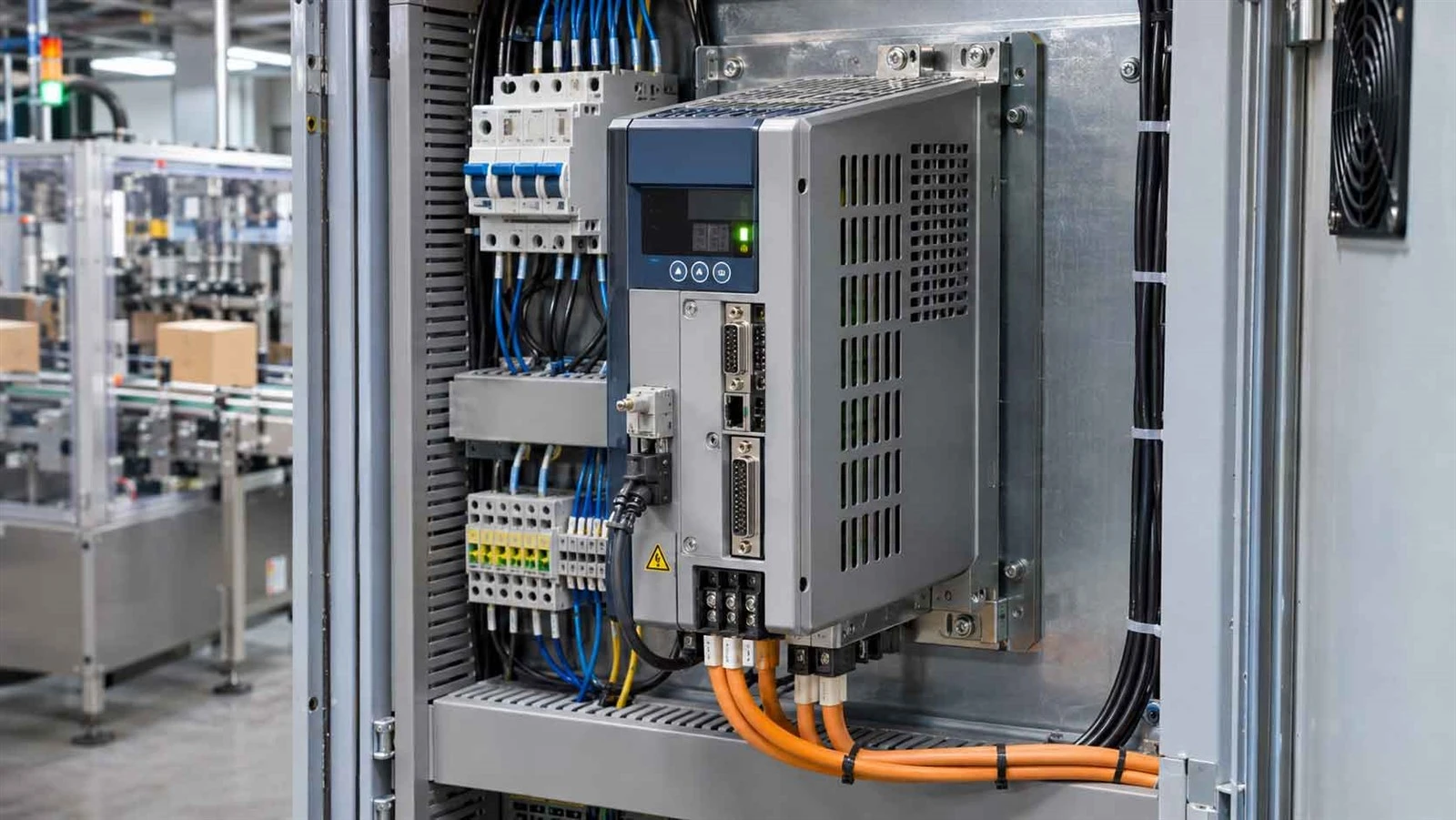
An Allen-Bradley Kinetix 300 servo drive can keep an indexing machine running for years, but replacing one after a fault is no longer a routine catalog purchase. The Bulletin 2097 Kinetix 300 is a Rockwell Automation EtherNet/IP indexing servo drive used in single-axis positioning applications. With the series discontinued, the next maintenance decision matters more than a feature overview.
For maintenance engineers and industrial buyers, the practical questions are specific: Which 2097 model is installed? Is a matching unit still obtainable? Would a qualified repair be reasonable, or should the machine move to a newer drive platform?
This guide covers model identification, replacement choices, Kinetix 5100 migration checks, and sourcing inquiries. It is not an installation manual.
Quick answer
|
Question |
Answer |
|
Product |
Allen-Bradley Kinetix 300, Bulletin 2097 |
|
Manufacturer lifecycle |
Discontinued; check the exact catalog number for its date |
|
Rockwell's recommended migration family |
Kinetix 5100 |
|
Before ordering or migrating |
Confirm the complete drive number, motor, controller, feedback, and operating requirements |
Is the Kinetix 300 Discontinued? What You Should Know First
Current Lifecycle Status of the Bulletin 2097 Series
Yes. Rockwell Automation lists the Kinetix 300 servo drive family as discontinued and recommends the Kinetix 5100 for migration. Its documentation states that the Bulletin 2097 Kinetix 300 line was discontinued as of July 2024. However, individual catalog numbers have different recorded dates. For example, Rockwell lists July 31, 2024 for 2097-V31PR0, while 2097-V34PR5 shows August 4, 2023.
That distinction matters when confirming a specific part. Use Rockwell's Kinetix 300 product page and its catalog-level lifecycle information rather than relying on a distributor's older listing.
What Discontinuation Means for Existing Machine Owners
Discontinued does not mean an installed drive immediately stops operating. A properly maintained machine may continue using its existing control system. The concern is what happens when the drive fails, another spare is required, or an OEM plans a long production run.
Maintenance teams must assess legacy inventory, delivery uncertainty, product condition, and repair options. Document settings and components before an urgent breakdown.
Three Options After Discontinuation
Most owners can start with three possible paths. Each has different implications for downtime, engineering effort, and sourcing risk.
|
Path |
Usually worth evaluating when |
First question |
|
Source the same model |
The existing machine must retain its configuration |
Is a suitable exact unit available? |
|
Evaluate repair |
The failed drive may be recoverable |
Can a qualified provider diagnose, repair, and test it? |
|
Plan migration |
Long-term support or machine modernization matters |
Can the system accommodate engineering changes? |
None of these choices should be approved before the installed model and application are understood.
How to Identify the Correct Kinetix 300 Model
Read the Complete 2097 Catalog Number
Start at the drive nameplate, not a photo of a similar product online. "Kinetix 300" identifies a family; the full catalog number identifies a particular electrical configuration. Record the complete marking, including any visible revision or series information, and photograph the label if characters are hard to read.
Typical examples include 2097-V31PR0, 2097-V32PR0, 2097-V33PR3, and 2097-V34PR5. Do not shorten these to "2097 drive" when requesting a spare. Bulletin 2097 also includes Kinetix 350 products, making the drive family and operating architecture important identification details.
Rockwell's individual product pages are useful for confirming what a specific number represents. CHENTUO's Allen-Bradley model library can provide broader brand context, but it should not be treated as a dedicated Kinetix 300 availability list.
Compare Input Voltage, Output Power, and Current Ratings
A matching power figure does not establish interchangeability. Start by comparing AC input voltage, number of supply phases, output power, continuous and peak output current, and the actual motor load. The catalog number groups below provide a useful orientation; final checks must use the data for the exact part.
|
Example model |
Rockwell-listed input class |
Listed power |
Important distinction |
|
2097-V31PR0 |
120/240V AC, single-phase |
400 W |
Supply class and output rating |
|
2097-V32PR0 |
240V AC, single-phase |
400 W |
Integrated AC EMC line filter |
|
2097-V33PR3 |
240V AC, three-phase |
1.0 kW |
Different supply and power class |
|
2097-V34PR5 |
480V AC, three-phase |
2.0 kW |
Higher voltage class |
These are individual examples, not a substitute for a full Kinetix 300 specifications table. Confirm continuous current, peak current, supply tolerances, filtering, and other requirements against the current manufacturer technical data before accepting an alternative.
Check the Motor, Feedback Device, and Accessories
The drive label is only the beginning of a useful replacement record. An engineering review also needs the connected servo motor, encoder or feedback device, power and feedback cables, motor brake arrangement, relevant accessories, and controller details. Save existing drive parameters and program records when safely available.
Before requesting a part, collect eight fields: full drive catalog number; nameplate photo and series; input supply; motor catalog number; feedback and cable details; controller model; brake and accessory details; and existing configuration or fault information. These details help distinguish an exact hardware purchase from a system migration request.
How the Kinetix 300 Works in Existing Motion Systems
EtherNet/IP Indexing Motion Explained
An indexing axis moves to a defined position, stops, and waits for its next command. Consider a packaging line that advances a product carrier to a filling station. The controller initiates an action, the drive executes the programmed motion, and motor feedback supports position control. The Kinetix 300 is designed around this kind of indexing application using EtherNet/IP communication.
EtherNet/IP connectivity alone does not mean two drives implement the same motion architecture. That distinction becomes important when considering a different drive family.
Common Machine Applications
Kinetix 300 applications may include packaging mechanisms that advance materials by a fixed distance, rotary indexing tables that move between assembly stations, and automated assembly equipment with repeated positioning tasks. The relevant engineering question is not simply what industry uses the drive, but how its motion commands, load, and feedback are configured in the specific machine.
Key Technical Capabilities and Limitations
The Kinetix 300 combines indexing functions, Ethernet communication, motor feedback, and a Safe Torque Off feature within its documented design. Functionality depends on model and configuration, and should not be equated with integrated motion in other Kinetix families.
For a broader explanation of servo architecture and family selection, read CHENTUO's existing Allen-Bradley Kinetix selection and compatibility guide. This article focuses instead on decisions involving an installed Kinetix 300.
Kinetix 300 vs 350: Why the Difference Matters
Indexing Control vs Integrated Motion
The Kinetix 300 emphasizes drive-based indexing control. The Kinetix 350 is associated with Logix integrated motion applications, where controller and motion system integration are central to the design. The two products share a Bulletin 2097 connection, but their control approaches are not automatically interchangeable.
Communication and Controller Requirements
Before comparing these drives, identify the PLC or motion controller, its firmware, the programming environment, and how motion commands are generated. For example, an existing CompactLogix project using an integrated motion architecture presents a different replacement problem from a machine that issues indexing commands to a drive. Network compatibility must be evaluated alongside program logic and hardware support.
Can a Kinetix 350 Replace a Kinetix 300?
Not as an assumed direct substitute. Similar power ratings or enclosure appearance cannot establish compatibility. The motion program, controller, communication methods, motor interface, and safety functions all need review.
|
Consideration |
Kinetix 300 |
Kinetix 350 |
|
Main control focus |
Indexing motion |
Logix integrated motion |
|
Key replacement concern |
Index logic and drive configuration |
Controller and motion program integration |
|
Lifecycle |
Discontinued |
Discontinued |
|
Rockwell migration direction |
Kinetix 5100 |
Kinetix 5300 |
Selecting an engineering replacement requires more than matching a catalog's electrical ratings.
Repair, Source the Same Model, or Upgrade: Which Path Should You Choose?
Option 1: Source a Matching Legacy Drive
A matching legacy drive may be the preferred starting point when production must resume quickly and the existing controller, motor, and motion program will remain unchanged. This approach minimizes the intended redesign scope, but it does not eliminate verification. Confirm the complete catalog number, series and condition of the offered unit, documented testing where available, and any configuration recovery requirements.
For a 2097-V31PR0 replacement inquiry, for example, ask whether the offered item is the exact catalog number and what evidence supports its stated condition. Availability, price, and delivery must be confirmed for the specific offer rather than inferred from a product listing.
Option 2: Evaluate Repair Before Replacement
Repair may be worth considering when a qualified service provider can diagnose the failed drive, define the repair scope, and verify the result against appropriate test criteria. Compare repair cost, return time, reliability expectations, and the consequences of another failure.
A repair decision must also consider whether machine settings can be recovered and whether the repaired unit can undergo the required operational and safety checks. CHENTUO's sourcing inquiry should not be interpreted as a promise that CHENTUO performs drive repairs.
Option 3: Plan an Engineered Migration to Kinetix 5100
For equipment expected to operate over a longer horizon, an engineered migration can reduce dependence on legacy components. Rockwell recommends the Bulletin 2198 Kinetix 5100 family for Kinetix 300 migration and provides publication 2198-RM004 to guide the review.
This is not a plug-in replacement. The migration guide identifies changes that may involve drive sizing, wiring interfaces, motors, cables, installation dimensions, and motion control methods. It also addresses conversion scenarios, including existing indexing applications mapped to Kinetix 5100 position register (PR) mode. An engineer must determine which scenario applies to the actual machine.
Compare the Three Options by Risk and Effort
|
Project situation |
Starting path |
Main risk to assess |
|
Urgent return to the original configuration |
Exact legacy drive |
Supply, condition, and configuration |
|
Failed drive with possible repair value |
Qualified repair review |
Diagnosis and validation |
|
Planned long-term modernization |
Kinetix 5100 migration study |
Redesign effort and commissioning |
|
Missing motor or controller information |
Identify the system first |
Incorrect purchase or incompatible design |
The lowest unit price is not always the lowest project cost. Include potential downtime, additional components, programming, and verification. Once the original number is confirmed, request a part-number and sourcing review from CHENTUO.
What to Check Before Migrating from Kinetix 300 to Kinetix 5100
Electrical and Mechanical Requirements
First document the existing input voltage and phase arrangement. Then compare the proposed drive's continuous and peak output current, load profile, braking and regeneration needs, protective devices, and cabinet thermal conditions. Confirm mounting dimensions, clearances, and available installation space. Similar kW labels do not establish a valid design.
Servo Motor, Encoder, and Cable Compatibility
Record the complete motor catalog number and its voltage, speed, torque, brake, and feedback requirements. Confirm whether the selected Kinetix 5100 combination supports that motor and feedback arrangement. Check the actual power and feedback cable numbers, connectors, length, and accessories. Some projects may require new cables or a different motor system, affecting both cost and planned downtime.
Controller, Software, and Motion Logic
Preserve the existing controller and drive configuration records before planning changes. Identify the PLC model, firmware, communication method, indexing sequence, relevant I/O, and machine interlocks. The new drive's control mode must support the intended operation, but identical network terminology does not guarantee identical commands or software behavior.
Rockwell's Kinetix 300 to Kinetix 5100 Migration Guide (2198-RM004) compares migration scenarios and provides a starting point for evaluating program changes. It is not a complete design approval for every machine.
Safety and Commissioning Validation
Review Safe Torque Off requirements, external safety circuitry, brakes, limit switches, fault responses, and the site's commissioning criteria. A new drive may require corresponding changes to safety-related interfaces or verification procedures. Electrical isolation, installation, functional safety testing, and recommissioning must be completed by qualified personnel following current manufacturer documents and applicable safety procedures.
Kinetix 300 Troubleshooting: Checks Before Replacing the Drive
Record the Displayed Fault and Operating Conditions
A Kinetix 300 fault is evidence of a problem, not proof that the power electronics are defective. Before requesting a replacement, record the exact displayed fault, the machine state when it occurred, load conditions, recent maintenance, and any relevant controller diagnostics. Save configuration records when available and appropriate.
Separate Drive, Motor, Cable, and Communication Problems
Use symptoms to organize further inspection without treating them as a final diagnosis.
|
Observation |
Information to retain |
Area for qualified review |
|
Drive fault displayed |
Exact message and operating stage |
Manufacturer fault guidance and system conditions |
|
Abnormal motor movement |
Motion sequence, load, and related alarms |
Motor, feedback, mechanics, and drive settings |
|
Communication loss |
Controller and network diagnostics |
Cabling, network configuration, and interfaces |
When to Escalate to a Qualified Technician
Do not rely on guessed fault codes or repeated resets. Refer to Rockwell publication 2097-UM001 for documented fault explanations. Work involving hazardous voltage, isolation, wiring, motor brakes, or safety circuits requires qualified personnel and appropriate site procedures. A recorded fault history makes both technical diagnosis and any later sourcing request more useful.
How to Source Kinetix 300 Spare Parts Responsibly
Check Product Condition and Traceability
Sourcing discontinued Kinetix 300 spare parts calls for more questions than a current catalog purchase. Ask the seller to identify the product condition, provide clear photographs of the actual unit and its label, and specify what traceability or testing records can be supplied. Clarify packaging, warranty terms, lead time, and the shipment destination.
Claims such as unused, refurbished, or tested require supporting evidence. A listing alone does not establish authenticity or suitability.
Verify Accessories and System Compatibility
Separate a drive-only order from an engineered replacement request. If an exact model is required, supply its number and confirm any series or configuration constraints. If an alternative is being proposed, an engineer must review the motor, feedback, cables, controller, and safety architecture before approving the change.
What Information Should You Provide for a Quote?
A well-prepared Kinetix 300 quote request reduces unnecessary exchanges and helps distinguish an urgent spare-parts inquiry from a migration project.
|
RFQ field |
Why it matters |
|
Full catalog number and nameplate photo |
Identifies the exact drive |
|
Quantity and acceptable condition |
Defines the sourcing requirement |
|
Supply voltage and motor model |
Supports initial technical review |
|
Controller and feedback details |
Helps identify system constraints |
|
Destination country and required date |
Defines delivery expectations |
|
Fault information or migration goal |
Explains the project's purpose |
Not every technical field must be available at the first contact. Provide what you know, then ask your maintenance team to fill remaining gaps. CHENTUO serves industrial automation buyers through its inquiry page, where you can submit the part number and project requirements for review. Any supply option remains subject to confirmation.
Practical Replacement Scenarios
Scenario A: Restoring an Existing Packaging Machine
Illustrative scenario. A packaging machine stops indexing after a drive fault. The maintenance team has no approved modernization window and wants to preserve its existing control arrangement. First, they record the exact 2097 catalog number, fault data, motor model, and configuration. They then investigate the fault and request a condition-specific quotation for a matching unit. Repair can be evaluated in parallel if technically and economically justified. The decision prioritizes restoring the original machine function without assuming the drive alone caused the fault.
Scenario B: Planning a Long-Term Motion Upgrade
Illustrative scenario. An OEM plans a scheduled overhaul of an assembly station using a Kinetix 300. Because programming time and commissioning access are available, the team evaluates a Kinetix 5100 migration. Its budget includes engineering design, potential cable or motor changes, software work, shutdown time, and acceptance tests. This is a different purchasing decision from replacing a failed spare, even when the original drive catalog number is identical.
FAQ

Is the Kinetix 300 servo drive discontinued?
What is the recommended replacement for Kinetix 300?
Can a Kinetix 350 replace a Kinetix 300 directly?
What does the 2097-V31PR0 catalog number identify?
Can I replace a Kinetix 300 without changing the PLC program?
What information is needed for a Kinetix 300 quotation?
Final Checklist: Choose Your Next Step
Before deciding on a Kinetix 300 replacement, complete three checks: identify the full 2097 catalog number, confirm the manufacturer's lifecycle status and existing system configuration, then compare an exact spare, qualified repair, and engineered migration against your project's downtime and budget.
If an urgent order is needed, prioritize part identification and supply verification. If modernization is planned, arrange a detailed motor, controller, wiring, and safety review before selecting the new drive.
Need help checking a Kinetix 300 part number or sourcing options? Send CHENTUO your 2097 model details and requirements for a quote review. Please include the nameplate photo and any available technical information so the inquiry can be assessed accurately.


