

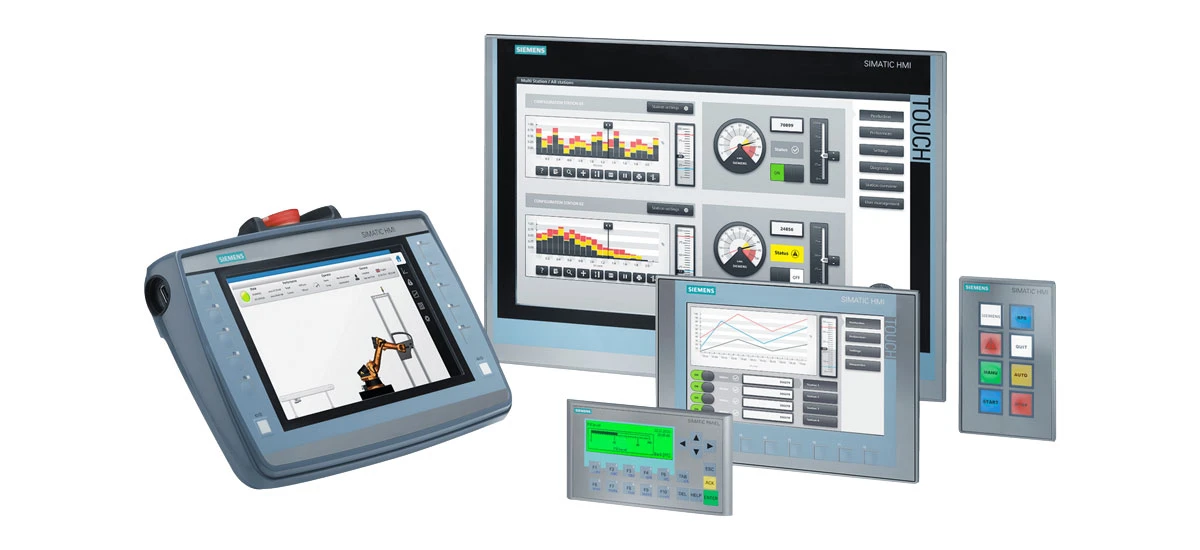
In the world of industrial automation, Siemens HMI (Human-Machine Interface) plays a key role as a bridge between operators and machines. It helps make complex industrial processes easier to control, monitor, and manage. Whether in small factories or large-scale production lines, Siemens HMI is widely used for its reliability and practicality. This guide will break down the main types, core features, and common industrial applications of Siemens HMI, helping you understand why it's a top choice for automation projects.
What Is Siemens HMI?
Siemens HMI refers to a series of human-machine interface products developed by Siemens, a leading brand in industrial automation. These devices let operators interact with industrial control systems (like PLCs) through visual displays, buttons, or touchscreens. With Siemens HMI, workers can check real-time data, adjust settings, and handle alarms quickly-all of which improve work efficiency and process stability. Unlike ordinary control panels, Siemens HMI is designed for industrial environments, with strong compatibility and durability. One popular option for small businesses is Siemens HMI basic panels for small factories, which offer essential functions at an affordable price.
Main Types of Siemens HMI
Siemens HMI has a variety of models to fit different industrial needs, from simple basic tasks to complex large-system operations. Below are the most common types:
1. Basic Panels
Basic panels are entry-level Siemens HMI devices, specifically designed for simple monitoring and control tasks that do not require complex data analysis. They are available in screen sizes ranging from 4 inches to 12 inches, offering both touch operation for quick navigation and physical key operation for precise control in environments where touchscreens may be inconvenient. These compact panels are equipped with 64,000-color high-resolution widescreens, adjustable brightness settings to adapt to different lighting conditions, and support vertical installation to save valuable space on the equipment dashboard. They also come with built-in USB interfaces, which allow easy connection of keyboards, mice, or barcode scanners for convenient data storage, input, and equipment operation. Popular models in this category include the SIMATIC HMI KTP400 Basic and KTP700 Basic, which are widely recognized for their stability. Siemens HMI basic panels for small factories are particularly prevalent in small machinery, packaging equipment, and simple production lines, as they balance cost-effectiveness with easy configuration that requires minimal technical expertise.
2. Comfort Panels
For more complex industrial applications that demand detailed data processing and comprehensive system control, Comfort Panels are the ideal Siemens HMI choice. They feature larger screen sizes (up to 22 inches) to display more operational data at once, higher processing performance to handle complex visualization tasks, and advanced functions such as detailed data visualization, real-time trend analysis, and custom report generation. These high-performance panels support multiple mainstream communication protocols such as PROFINET and PROFIBUS, enabling seamless connection with various PLCs, sensors, and other industrial devices in the production line. Models like the SIMATIC HMI TP1200 Comfort and TP1900 Comfort are equipped with 16 million-color high-definition screens, which make even the smallest process details clear and easy to identify. Siemens HMI comfort panels for complex systems are commonly used in large factories, high-precision manufacturing lines, and automated production cells where in-depth monitoring, precise control, and data-driven decision-making are essential.
3. Unified Panels
Unified Panels represent the latest generation of Siemens HMI, integrating cutting-edge web technologies with a user-centric design to meet the demands of modern smart factories. They support multi-touch control that works even when operators wear work gloves-a crucial feature for on-site industrial operations. Additionally, they come with integrated remote access capabilities, allowing authorized personnel to monitor and control production processes from anywhere via a secure network connection. These versatile panels are available in both basic and comfort variants, with screen sizes ranging from 4 inches for compact setups to 22 inches for large-scale monitoring. They operate on the SIMATIC Industrial OS, which provides maximum system security through regular updates and the ability to disable unused interfaces. Configuration and software updates can be easily completed via the TIA Portal, a unified engineering platform that simplifies the entire setup process. Siemens HMI unified panels remote access is a key advantage for businesses looking to modernize their operations, enable flexible work arrangements, and improve response times to on-site issues.
4. Mobile Panels
Mobile Panels are portable Siemens HMI devices that grant operators the freedom to move around the factory floor while maintaining full control over equipment. The SIMATIC KTP1000 Mobile Panel, for example, features a 10-inch high-resolution screen and integrated PROFINET connectivity, allowing workers to check process data, adjust settings, and troubleshoot issues directly at the machine location. Its robust, shock-resistant housing is designed to withstand the rigors of harsh industrial environments, including accidental impacts and dust exposure. Equipped with a long-lasting battery, it ensures continuous operation throughout a full work shift without frequent recharging. This type of Siemens HMI is particularly well-suited for large conveyor systems, robotic cells, and outdoor industrial areas where fixed control panels are impractical. By enabling on-site diagnostics and quick responses to equipment malfunctions, it significantly enhances workplace safety and reduces production downtime.
5. SIPLUS Panels
SIPLUS Panels are specialized Siemens HMI models engineered to perform reliably in extreme environmental conditions that would damage standard HMI devices. They are built to resist corrosive gases, salt fog, and condensation-common challenges in coastal, chemical, or mining industries. These rugged panels can operate stably in a wide temperature range from -25℃ to +70℃, making them suitable for both freezing cold storage facilities and high-temperature industrial sites. They also adapt to high altitudes, ranging from -1000 meters to +5000 meters above sea level, without compromising performance. With their IP65-rated protection against dust and water ingress, they ensure long-term stability in harsh outdoor or industrial settings. Siemens HMI SIPLUS models for extreme environments are essential for industries where environmental factors pose a significant risk to equipment, as they minimize downtime, reduce maintenance costs, and protect long-term investments.
Key Features of Siemens HMI
Siemens HMI stands out in the market due to its practical features that meet diverse industrial needs. These features focus on ease of use, scalability, and reliability:
1. Intuitive Visualization and Operation
All Siemens HMI devices are equipped with user-friendly interfaces featuring innovative controls and clear, easy-to-understand graphics. Their high-resolution screens and rich color displays ensure that critical process data, such as temperature, pressure, and production speed, are easy to read even in bright sunlight or dimly lit workshops. The dual option of touch and key operation caters to different operational preferences: touchscreens allow for quick, intuitive navigation through menus, while physical keys provide precise control in environments where gloves are mandatory or touchscreens may be contaminated. This intuitive design significantly reduces the time required to train new operators and minimizes human errors caused by complex or confusing interfaces, ultimately boosting overall productivity.
2. Flexible Compatibility and Connectivity
Siemens HMI is designed with exceptional compatibility, supporting a wide range of industrial communication protocols including PROFINET, PROFIBUS, and MPI. This versatility allows it to seamlessly connect with Siemens PLCs (such as the popular SIMATIC S7-1200, S7-1500 series) as well as third-party industrial devices, making it easy to integrate into existing automation systems without costly overhauls. Built-in USB and Ethernet interfaces further enhance connectivity, enabling convenient data transfer between devices, quick connection of external peripherals, and secure remote access. This flexible connectivity ensures that Siemens HMI can adapt to various industrial setups, from small standalone machines to large-scale integrated production lines.
3. Scalable Software and Easy Configuration
Siemens HMI can be easily configured using SIMATIC WinCC (TIA Portal), a unified, user-friendly engineering software that simplifies the creation of visualization applications. The software features a drag-and-drop interface, pre-built templates, and intuitive programming tools, allowing engineers to design custom HMI interfaces quickly-even without extensive technical expertise. What sets it apart is its scalability: businesses can start with a basic configuration for small-scale operations and later expand the system by adding more data tags, advanced functions, or upgrading to higher-performance Siemens HMI panels. This scalability eliminates the need for complete system replacements as production needs grow, helping businesses save costs and adapt to changing market demands.
4. Durability for Industrial Environments
Every Siemens HMI is built to withstand the harsh conditions of industrial environments, with durability as a core design principle. Most standard models feature rugged housings that resist dust, water splashes, and mechanical vibrations-common hazards in factories and workshops. The SIPLUS series takes durability a step further, with specialized designs to handle extreme temperatures, corrosive substances, and high altitudes. All Siemens HMI panels undergo rigorous testing to ensure long-term operation with minimal maintenance, even in continuous 24/7 production environments. This exceptional durability reduces the frequency of repairs and replacements, lowering total ownership costs and making Siemens HMI a reliable choice for tough industrial settings.
5. Advanced Safety and Remote Functions
Modern Siemens HMI devices, especially the Unified Panels, integrate advanced safety features to protect critical industrial systems from unauthorized access and cyber threats. The SIMATIC Industrial OS allows users to disable unused interfaces, set up role-based access controls, and install security updates regularly to address potential vulnerabilities. Remote access functions are secured through encrypted network connections, ensuring that only authorized personnel can monitor or control processes from off-site locations. These features not only enhance system security but also improve operational efficiency: operators can respond to alarms and adjust settings remotely, reducing the need for on-site visits and minimizing production downtime. They are particularly valuable for large factories, multi-site operations, or businesses with distributed production facilities.
Industrial Applications of Siemens HMI
Siemens HMI is widely used across various industries, thanks to its versatility and reliability. It helps optimize processes, improve safety, and enhance productivity in the following sectors:
1. Machinery Manufacturing
In the machinery manufacturing industry, Siemens HMI is extensively used to monitor and control a wide range of production machines, including grinders, filling machines, CNC lathes, and robotic arms. It provides operators with real-time visibility into machine performance, allowing them to adjust parameters, track production progress, and troubleshoot faults efficiently. For example, Italian machine manufacturer Davide Maternini SPA successfully integrated Siemens HMI into its equipment to replace traditional status LEDs, creating a more intuitive interface that simplifies machine operation and reduces training time for new employees. Comfort Panels and Mobile Panels are particularly popular in this sector, as they offer detailed data visualization for complex machinery and the flexibility to operate equipment from different locations on the factory floor.
2. Food and Beverage Industry
The food and beverage industry has strict requirements for production flexibility, high productivity, and strict hygiene standards-all of which Siemens HMI effectively delivers.Siemens HMI for food and beverage industry is used to monitor and control production lines for dairy products, bakery items, beverages, and processed foods. It helps track critical parameters such as temperature, humidity, and processing time, ensuring compliance with food safety regulations. For instance, a Swiss cheese dairy implemented a custom Siemens HMI visualization solution to streamline its production process, reducing operational errors caused by manual monitoring and optimizing the use of resources like milk and energy. Hygienic Siemens HMI models with IP69K protection are ideal for this sector, as they can withstand high-pressure, high-temperature cleaning with chemicals without damage, maintaining hygiene standards in food production environments.
3. Energy and Power Sector
In power plants, substations, and other energy facilities, Siemens HMI (such as the SICAM SCC series) plays a critical role in substation automation and real-time process monitoring. It communicates seamlessly with protection devices, bay units, and other energy management systems, providing operators with comprehensive real-time data on energy flow, voltage levels, and system status. This allows for timely detection of anomalies, quick response to faults, and efficient management of energy distribution. Unified Panels and Comfort Panels are well-suited for this sector due to their large, high-definition displays, which enable comprehensive visualization of complex energy systems, and advanced reporting functions that help optimize energy efficiency and ensure grid stability.
4. Automotive Industry
The automotive industry relies heavily on precise control, efficient production, and consistent quality-areas where Siemens HMI excels. It is integrated into various stages of automotive production, including assembly lines, paint shops, welding stations, and quality control processes. Siemens HMI enables seamless coordination between different production stages by connecting with PLCs, robotic systems, and quality inspection devices, ensuring that each step of the manufacturing process meets strict standards. For example, in automotive assembly lines, it monitors the installation of components, tracks production cycles, and alerts operators to any deviations from the standard process. This level of control helps reduce production downtime, minimize defects, and improve overall product quality in the competitive automotive industry.
5. Extreme Environment Applications
For outdoor industrial sites or harsh environments such as mines, oil fields, construction sites, and cold storage facilities, SIPLUS Panels are the go-to Siemens HMI solution. Their rugged design allows them to withstand extreme temperatures (from freezing cold to intense heat), corrosive gases, high humidity, and heavy vibrations-conditions that would render standard HMI devices inoperable. In mining operations, for example, they provide reliable control and monitoring of drilling equipment despite dust and vibration. In oil fields, they resist corrosive saltwater and extreme temperatures to ensure continuous operation. Their ability to maintain stable performance in these challenging conditions makes them essential for industries where environmental factors pose a significant risk to equipment and production continuity.
Why Choose Siemens HMI for Your Industrial Project?
Siemens HMI stands out as a top choice for industrial automation projects due to its unique combination of reliability, flexibility, and user-friendliness. Its extensive range of models-from basic entry-level panels to advanced unified and specialized SIPLUS panels-ensures that there is a tailored solution for every application, whether it's a small factory with simple needs or a large complex system in heavy industry. With intuitive operation that reduces training costs, scalable software that adapts to growing businesses, and strong durability that minimizes maintenance, Siemens HMI helps businesses improve operational efficiency, reduce human errors, and quickly adapt to changing production needs. Whether you need basic equipment monitoring, advanced data analysis, or remote control capabilities, Siemens HMI offers a comprehensive solution designed to meet the demands of modern industrial automation.


