

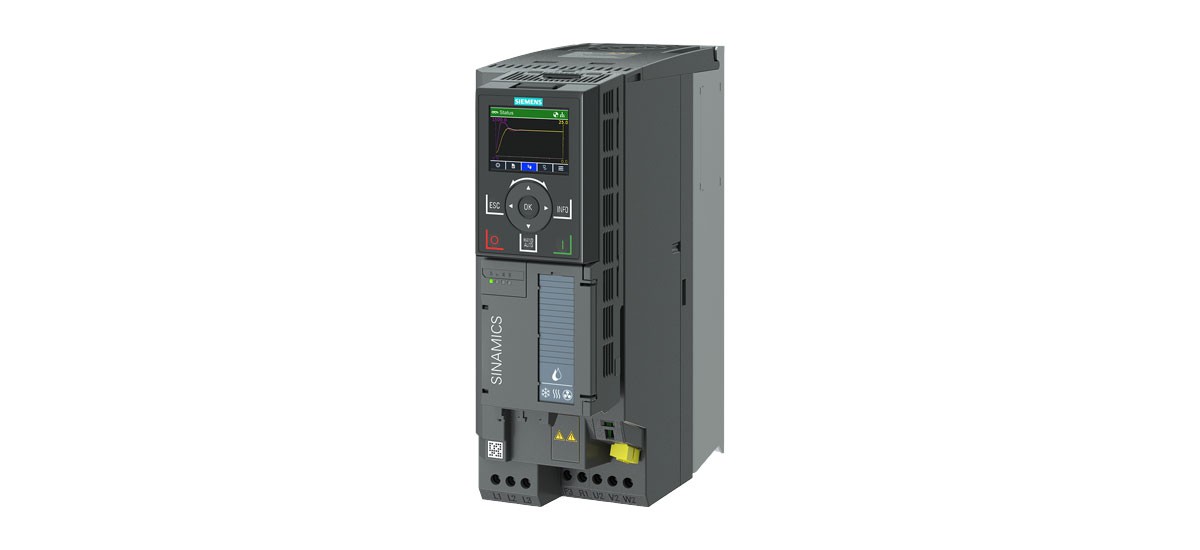
Siemens G120X is a highly reliable inverter series designed for industrial use, and the 6SL3220-2YE10-1AB0 model stands out for its efficiency in controlling motors in factories, warehouses, and production lines. While it's built to last, daily operation can bring unexpected fault codes that disrupt workflow. Knowing how to read these codes and act quickly is key to minimizing downtime. This blog dives deeper into the most common fault codes of the Siemens G120X 6SL3220-2YE10-1AB0, explaining their causes, signs, and step-by-step solutions to keep your equipment running smoothly.
Common Fault Codes of Siemens G120X 6SL3220-2YE10-1AB0
F0001 - Overcurrent Fault
The F0001 fault code in the Siemens G120X 6SL3220-2YE10-1AB0 is a critical alert that the current passing through the inverter has surged beyond its safe limit. This often happens when the motor gets stuck (a condition called "locked rotor") or when there's a sudden mechanical overload, like a jammed conveyor belt connected to the motor. You'll notice the motor making unusual humming noises before stopping, and the inverter's display will flash F0001 to warn operators. Even minor issues like a frayed motor cable touching the frame can cause a short circuit, triggering this fault.
F0002 - Overvoltage Fault
F0002 appears when the input voltage to the Siemens G120X 6SL3220-2YE10-1AB0 spikes above 110% of its rated voltage. This is common during thunderstorms, when lightning strikes can send power surges through the electrical grid. Another cause is a faulty braking resistor, which fails to dissipate excess energy when the motor slows down, leading to voltage buildup inside the inverter. Operators might see flickering lights in the area before the inverter shuts down, and the display will clearly show F0002 to indicate the voltage issue.
F0003 - Undervoltage Fault
When the input voltage drops below 90% of the Siemens G120X 6SL3220-2YE10-1AB0's rated level, F0003 lights up. This often occurs in areas with unstable power supplies, such as rural locations or factories sharing electricity with heavy machinery. Loose terminal screws in the power cabinet can also cause voltage drops-even a small gap in the connection reduces the electricity flowing to the inverter. Before shutting down, the motor may run slower than usual, and lights connected to the same circuit might dim, giving early warnings of F0003.
F0004 - Overload Fault
F0004 is triggered when the Siemens G120X 6SL3220-2YE10-1AB0 detects the motor drawing 150% or more of its rated current for longer than 60 seconds. This happens when the motor is forced to move heavier loads than it's designed for, like a crane lifting a weight beyond its capacity. The motor will feel hot to the touch, and you might smell a faint burning odor from the insulation. The inverter shuts down to prevent permanent damage, displaying F0004 to signal that the load needs reduction.
F0005 - Overheating Fault
F0005 warns that the Siemens G120X 6SL3220-2YE10-1AB0's internal temperature has exceeded 60°C (140°F). Poor ventilation is the top culprit-dust blocking the vents or boxes stacked too close to the inverter can trap heat. A broken cooling fan, which usually makes a low hum during operation, will stop spinning, causing temperatures to rise quickly. In hot climates, even a well-ventilated inverter can overheat if the room temperature exceeds 40°C (104°F), making F0005 a common issue in summer months.
Maintenance Solutions for Siemens G120X 6SL3220-2YE10-1AB0 Faults
Solving F0001 Overcurrent Fault
To fix F0001 in the Siemens G120X 6SL3220-2YE10-1AB0, start by pressing the "Reset" button on the inverter panel to clear the code. Then, disconnect the motor and check for mechanical jams-spin the motor by hand to see if it moves freely. If it's stuck, clear the obstruction (e.g., a piece of debris in a conveyor). Next, use a multimeter set to "ohms" to test motor windings: healthy windings should show equal resistance (typically 10-100 ohms). If readings are uneven or near zero, the motor needs repair. Finally, inspect all cables for cuts or exposed wires, replacing damaged ones with insulated cables rated for the motor's current.
Handling F0002 Overvoltage Fault
First, reset the Siemens G120X 6SL3220-2YE10-1AB0 by turning it off for 2 minutes, then back on. Use a voltmeter to measure the incoming voltage over 5 minutes-if spikes exceed 250V (for 230V models), install a surge protector rated for industrial use. Check the braking resistor: look for burns or cracks, and replace it if damaged. For persistent issues, access the inverter's settings via the control panel, navigate to "Overvoltage Limit," and set it to 110% of the rated voltage (e.g., 253V for 230V models) to give a small buffer against minor surges.
Fixing F0003 Undervoltage Fault
Begin by resetting the Siemens G120X 6SL3220-2YE10-1AB0 and measuring the input voltage with a voltmeter. If it's below 207V (for 230V models), contact the power company to check for grid issues. Tighten all terminal screws in the power cabinet using a torque wrench (follow the manual's specs, usually 10-15 Nm). For factories with frequent voltage dips, install a voltage stabilizer to keep the input steady. In the inverter settings, adjust the "Undervoltage Delay" to 3 seconds to allow temporary dips without triggering a shutdown.
Resolving F0004 Overload Fault
Reset the Siemens G120X 6SL3220-2YE10-1AB0 and reduce the motor's load immediately-unload excess items from conveyors or adjust machine settings to lower demand. Let the motor cool for 30 minutes, then measure its temperature with an infrared thermometer; it should be below 70°C (158°F). If overloading is frequent, check the motor's nameplate for its rated current, then compare it to the inverter's "Motor Current" reading in the display. If the motor is undersized, replace it with one matching the application's load requirements. Adjust the inverter's "Overload Class" to 10 (allowing 150% load for 60 seconds) for more flexibility.
Tackling F0005 Overheating Fault
Turn off the Siemens G120X 6SL3220-2YE10-1AB0 and let it cool for 1 hour. Use compressed air to blow dust out of the vents and cooling fins-hold the nozzle 15cm away to avoid damaging components. Check the cooling fan: spin it by hand; if it's stuck, apply a drop of lubricating oil to the axle. If it still doesn't work, replace it with a fan of the same voltage (usually 24V DC). Ensure the inverter is mounted at least 30cm away from walls or other equipment, and install a small exhaust fan in the cabinet if room temperatures exceed 35°C (95°F).
Preventive Measures for Siemens G120X 6SL3220-2YE10-1AB0
Regular Inspection
Perform weekly checks on the Siemens G120X 6SL3220-2YE10-1AB0: tighten loose connections with a torque wrench, look for rust on metal parts (clean with a dry cloth), and verify the cooling fan spins smoothly. Monthly, use a thermal camera to scan the inverter-hot spots (above 50°C) indicate potential issues. Keep a logbook to record voltage readings, temperatures, and any faults, making it easier to spot patterns.
Proper Cleaning
Clean the Siemens G120X 6SL3220-2YE10-1AB0 monthly with a soft brush to remove dust from vents. Every 3 months, use a vacuum with a HEPA filter to clean the internal cooling fins (turn off power first). Avoid water or solvents-they can damage electronics. For oily environments (e.g., factories with lubricants), install a dust cover over the inverter when not in use, removing it during operation to maintain airflow.
Correct Operation
Train operators to check the Siemens G120X 6SL3220-2YE10-1AB0's display before starting-note any lingering fault codes and reset them first. Never start the motor with a full load; instead, start it empty, then gradually add load. Follow the shutdown procedure: reduce speed to 0, wait 10 seconds, then turn off the inverter. Post a copy of the user manual near the equipment for quick reference to proper startup/shutdown steps.
Regular Maintenance
Schedule professional maintenance for the Siemens G120X 6SL3220-2YE10-1AB0 every 6 months. Technicians will test the current sensors, calibrate voltage readings, and replace worn parts like fan filters. Lubricate motor bearings annually to reduce friction and heat. For critical systems, install a remote monitoring device that sends alerts to a phone or computer when temperatures rise or faults occur, allowing proactive fixes.
Summary: Ensuring Reliable Performance of Siemens G120X 6SL3220-2YE10-1AB0
In summary, mastering the fault codes of the Siemens G120X 6SL3220-2YE10-1AB0-from F0001 (overcurrent) to F0005 (overheating)-is the first step toward minimizing industrial downtime. By understanding each code's root causes, such as mechanical jams for F0001 or poor ventilation for F0005, you can apply targeted fixes: clearing obstructions, replacing faulty fans, or adjusting voltage settings.
Pairing these solutions with preventive measures-regular inspections, proper cleaning, correct operation, and professional maintenance-creates a strong defense against breakdowns. These actions not only resolve current issues but also extend the inverter's lifespan, ensuring it runs efficiently in factories, warehouses, and production lines.
Remember: proactive troubleshooting and consistent care turn complex fault codes into manageable challenges, keeping your Siemens G120X reliable for years to come.


