


As a trusted supplier of ABB Variable Frequency Drives (VFDs), I've witnessed firsthand the transformative impact these devices have on industrial operations. ABB VFDs are at the forefront of energy - efficient motor control technology, offering unparalleled performance and reliability. In this blog, I'll delve into the inner workings of an ABB VFD, exploring its components, operation principles, and the benefits it brings to various applications.
Components of an ABB VFD
An ABB VFD is a complex electronic device composed of several key components, each playing a crucial role in its overall functionality.
Rectifier
The rectifier is the first stage of an ABB VFD. Its primary function is to convert the incoming alternating current (AC) power from the electrical grid into direct current (DC) power. This conversion is achieved using diodes or thyristors, depending on the design of the VFD. In simpler VFDs, a diode - based rectifier is commonly used, which provides a straightforward and cost - effective solution. In more advanced models, thyristor - based rectifiers are employed, allowing for better control of the DC voltage and power factor correction.
DC Link
Once the AC power is converted to DC power by the rectifier, it is stored in the DC link. The DC link consists of capacitors and sometimes inductors. The capacitors act as energy storage elements, smoothing out the DC voltage and reducing voltage ripple. Inductors, on the other hand, help to filter out high - frequency noise and provide additional stability to the DC power supply. The DC link is a critical part of the VFD, as it provides a stable power source for the inverter stage.
Inverter
The inverter is the heart of the ABB VFD. Its main task is to convert the DC power from the DC link back into AC power with a variable frequency and voltage. This is accomplished using power semiconductor devices such as insulated - gate bipolar transistors (IGBTs). By controlling the switching of these IGBTs, the inverter can generate an AC output voltage and frequency that can be adjusted according to the requirements of the connected motor. This variable output allows the VFD to control the speed, torque, and direction of the motor with high precision.
Control Circuitry
The control circuitry in an ABB VFD is responsible for monitoring and controlling the operation of the rectifier, DC link, and inverter. It uses a microprocessor or a digital signal processor (DSP) to process input signals from various sensors and user interfaces. These input signals can include speed references, torque commands, and feedback signals from the motor, such as current and speed sensors. Based on these inputs, the control circuitry calculates the appropriate switching patterns for the IGBTs in the inverter to achieve the desired motor performance.
How an ABB VFD Operates
The operation of an ABB VFD can be understood by following the flow of power and control signals through its components.
Power Flow
When the VFD is connected to the electrical grid, the rectifier converts the incoming AC power to DC power. This DC power is then stored in the DC link, where it is smoothed and stabilized. The inverter takes the DC power from the DC link and converts it back to AC power with a variable frequency and voltage. This AC power is then supplied to the motor, controlling its speed and torque.
Control Signals
The control signals in an ABB VFD are used to adjust the output of the inverter. The user can set the desired speed or torque of the motor using a control panel or a communication interface. The control circuitry receives these input signals and compares them with the feedback signals from the motor. If there is a difference between the desired and actual values, the control circuitry adjusts the switching patterns of the IGBTs in the inverter to correct the error. This closed - loop control system ensures that the motor operates at the desired speed and torque with high accuracy.
Applications of ABB VFDs
ABB VFDs are widely used in a variety of industrial and commercial applications due to their ability to provide precise motor control and energy savings.
Pumping Systems
In pumping systems, ABB VFDs can be used to control the speed of the pump motor. By adjusting the motor speed according to the demand for water or other fluids, the VFD can reduce energy consumption and prevent over - pumping. This not only saves energy but also extends the lifespan of the pump and reduces maintenance costs.
Fan Systems
In fan systems, ABB VFDs can control the speed of the fan motor. This allows for better control of air flow and ventilation, improving indoor air quality and energy efficiency. For example, in a large commercial building, the VFD can adjust the fan speed based on the occupancy of the building and the outdoor air conditions.

Conveyor Systems
In conveyor systems, ABB VFDs can control the speed and acceleration of the conveyor belt. This ensures smooth and efficient operation of the conveyor, reducing the risk of product damage and improving productivity.
Benefits of Using ABB VFDs
There are several benefits to using ABB VFDs in industrial and commercial applications.
Energy Savings
One of the most significant benefits of ABB VFDs is energy savings. By controlling the speed of the motor according to the load requirements, the VFD can reduce the energy consumption of the motor. In many cases, energy savings of up to 50% or more can be achieved compared to fixed - speed motor systems.
Improved Motor Performance
ABB VFDs provide precise control of motor speed, torque, and direction. This improves the overall performance of the motor, reducing wear and tear and extending its lifespan. Additionally, the VFD can protect the motor from over - current, over - voltage, and other electrical faults, further enhancing its reliability.
Process Control
In industrial processes, ABB VFDs allow for better control of the production process. By adjusting the speed of the motor, the VFD can optimize the process parameters, such as flow rate, pressure, and temperature. This leads to improved product quality and increased productivity.
Specific ABB VFD Models
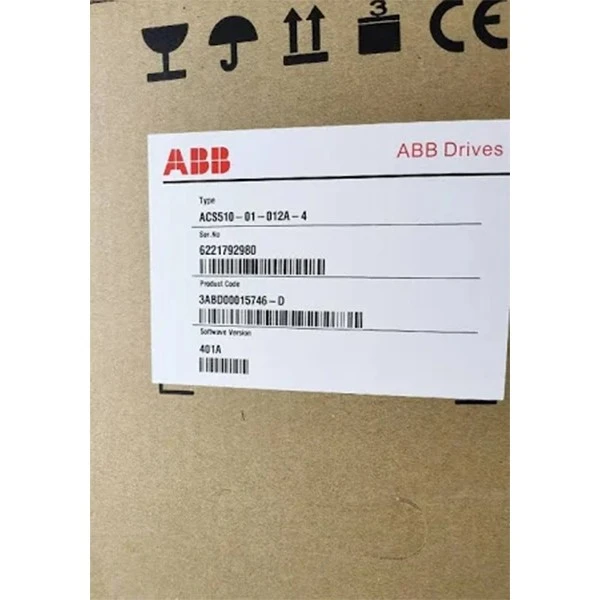
ABB offers a wide range of VFD models to meet the diverse needs of different applications. Some of the popular models include the ABB ACS355 - 03E - 01A9 - 4, the Abb Acs550 - 01 - 012a - 4 Inverter Drive, and the ABB ACS510 - 01 - 012A - 4 Inverter. These models are known for their reliability, performance, and ease of use.
Conclusion
In conclusion, ABB VFDs are sophisticated devices that offer precise motor control, energy savings, and improved process performance. Understanding how an ABB VFD works is essential for anyone involved in industrial automation, electrical engineering, or energy management. As a supplier of ABB VFDs, I am committed to providing high - quality products and excellent customer service. If you are interested in learning more about ABB VFDs or are considering a purchase for your application, I encourage you to contact me for a detailed discussion and to explore the best solutions for your needs.
References
- ABB Variable Frequency Drive Product Manuals
- Industrial Motor Control Textbooks
- Technical Papers on Power Electronics and Variable Frequency Drives


