


Hey there! As a supplier of Siemens PLC modules, I've seen firsthand how crucial it is to pick the right module for your application. It's not just about getting any old module; it's about finding the one that fits your specific needs like a glove. In this blog, I'm gonna walk you through the key factors to consider when choosing a Siemens PLC module, so you can make an informed decision.
Understanding Your Application Requirements
First things first, you need to have a clear understanding of what your application demands. What kind of tasks does your system need to perform? Are you dealing with simple on - off control, or do you need more complex analog processing? The nature of your application will dictate the type of PLC module you require.
For example, if you're working on a basic industrial automation project where you just need to control some motors on and off, a simple digital input/output (I/O) module might be sufficient. On the other hand, if you're involved in a process control application where you need to measure and regulate variables like temperature, pressure, or flow, you'll need an analog I/O module.
Think about the number of inputs and outputs you need. You don't want to end up with a module that has too few I/O points, as it will limit your system's capabilities. But at the same time, you don't want to over - spec and buy a module with way more I/O than you'll ever use, as it'll just cost you more money.
Compatibility with Your Existing System
Another important factor is compatibility. If you already have a Siemens PLC system in place, you need to make sure that the new module you're considering is compatible with it. This includes things like the communication protocol, the power supply requirements, and the physical form factor.

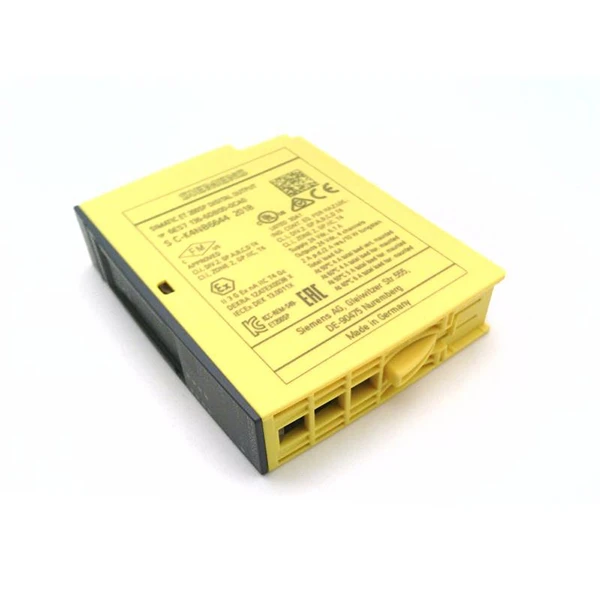
Siemens offers a wide range of PLC modules that are designed to work together seamlessly. However, it's still a good idea to double - check the compatibility specifications. For instance, if your existing system uses the Profibus communication protocol, you'll want to choose a module that supports Profibus.
Performance and Speed
The performance and speed of the PLC module can have a big impact on your application. In applications where real - time control is critical, you need a module that can process data quickly and accurately. Look at the cycle time of the module, which is the time it takes for the module to read inputs, execute the control program, and update the outputs.
Some applications, like high - speed packaging lines or robotic control systems, require very fast cycle times. In these cases, you might want to consider a high - performance module. Siemens has some great options for high - speed applications, such as the SIMATIC ET200SP. It offers fast processing speeds and high - density I/O, making it suitable for demanding applications.
Cost - Effectiveness
Cost is always a consideration. You want to get the best value for your money. When evaluating the cost of a Siemens PLC module, don't just look at the upfront purchase price. Consider the total cost of ownership, which includes things like installation, maintenance, and energy consumption.
Sometimes, a slightly more expensive module might actually be more cost - effective in the long run if it offers better performance, reliability, and lower maintenance requirements. For example, a module with a longer lifespan and fewer failures will save you money on replacement parts and downtime.
Reliability and Durability
In industrial environments, reliability is key. Your PLC module needs to be able to withstand harsh conditions such as high temperatures, humidity, vibration, and electrical noise. Siemens is known for manufacturing high - quality, reliable PLC modules.
Look for modules that have been tested and certified to meet industry standards. For example, modules that are rated for use in hazardous environments will have special certifications to ensure they can operate safely. A reliable module will reduce the risk of system failures and keep your production running smoothly.
Communication Options
Modern PLC systems often need to communicate with other devices and systems. Consider the communication options available on the PLC module. Siemens PLC modules support a variety of communication protocols, such as Ethernet, Profibus, and Profinet.
If you need to integrate your PLC system with a SCADA (Supervisory Control and Data Acquisition) system or other industrial devices, make sure the module has the right communication interfaces. For example, if you want to connect your PLC to a PC via Ethernet, you'll need a module with an Ethernet port.
Some Popular Siemens PLC Modules
Let's take a look at some popular Siemens PLC modules and their applications:
SIMATIC ET200SP
This is a modular and versatile I/O system. It's known for its high - density I/O, fast processing speeds, and easy installation. The SIMATIC ET200SP is suitable for a wide range of applications, from simple machine control to complex process automation. It can be used in both new and existing systems, thanks to its compatibility with various communication protocols.
Siemens 6ES7972 - 0BA42 - 0XA0
This is a communication module that is often used for connecting PLCs to other devices. It supports various communication interfaces, making it a flexible option for different applications. Whether you need to connect to a PC, a printer, or another industrial device, the Siemens 6ES7972 - 0BA42 - 0XA0 can help you do it.
SIMATIC S7 DP Electronic Module
The SIMATIC S7 DP Electronic Module is designed for use in distributed I/O systems. It offers high - performance I/O processing and is compatible with the Profibus DP communication protocol. This module is ideal for applications where you need to control and monitor devices over a long distance.
Conclusion
Choosing the right Siemens PLC module for your application is a multi - faceted decision. You need to consider your application requirements, compatibility, performance, cost, reliability, and communication options. By taking the time to evaluate these factors carefully, you can select a module that will meet your needs and help your system perform at its best.
If you're still not sure which Siemens PLC module is right for you, don't hesitate to reach out. As a supplier, I'm here to help you make the right choice. Whether you have questions about a specific module or need advice on your overall system design, I'm just a message away. Let's start a conversation and find the perfect Siemens PLC module for your application.
References
- Siemens Product Catalogs
- Industrial Automation Industry Reports
- Technical Documentation from Siemens


