


As a trusted supplier of Omron PLCs, I understand the importance of effectively utilizing material handling system control in Omron Programmable Logic Controllers (PLCs). In this blog post, I'll share insights on how to use the material handling system control in an Omron PLC, covering key concepts, programming steps, and practical applications.
Understanding Material Handling System Control
Material handling system control involves the automation of processes related to the movement, storage, and control of materials within a manufacturing or distribution environment. Omron PLCs are widely used in these systems due to their reliability, flexibility, and advanced features. The main goal of material handling system control is to optimize the flow of materials, improve efficiency, reduce errors, and enhance safety.
Key Components of an Omron PLC for Material Handling
Before diving into the programming, it's essential to understand the key components of an Omron PLC that are relevant to material handling system control.

1. Input and Output Modules
Input modules are used to receive signals from sensors such as proximity sensors, photoelectric sensors, and limit switches. These sensors detect the presence, position, and movement of materials and convey this information to the PLC. Output modules, on the other hand, send signals to actuators such as motors, solenoid valves, and conveyors to control their operation.
2. Central Processing Unit (CPU)
The CPU is the brain of the PLC. It processes the input signals received from the sensors, executes the programmed logic, and sends output signals to the actuators. Omron offers a range of CPUs with different processing capabilities and memory sizes to suit various application requirements. For example, the Omron CJ2M - CPU14 is a popular choice for medium - sized material handling applications due to its high - speed processing and extensive I/O capacity.
3. Memory
The memory of the PLC stores the program logic, input and output data, and other configuration information. There are different types of memory in an Omron PLC, including program memory, data memory, and backup memory. Program memory stores the ladder logic, function block diagrams, or structured text programs that define the operation of the material handling system.
Programming Steps for Material Handling System Control
1. Define the System Requirements
The first step in programming an Omron PLC for material handling system control is to clearly define the system requirements. This includes understanding the flow of materials, the sequence of operations, the safety requirements, and the performance goals. For example, if you are controlling a conveyor system, you need to determine the speed of the conveyor, the direction of movement, and the conditions for starting and stopping.
2. Select the Appropriate Programming Language
Omron PLCs support multiple programming languages, including ladder logic, function block diagrams (FBD), structured text, and sequential function charts (SFC). Ladder logic is the most commonly used language for material handling system control due to its simplicity and visual nature. It resembles electrical relay circuits, making it easy for engineers and technicians to understand and program.
3. Design the Program Logic
Once you have defined the system requirements and selected the programming language, you can start designing the program logic. This involves creating the ladder logic diagrams or other programming constructs that will control the operation of the material handling system. For example, you can use ladder logic instructions such as contacts, coils, timers, and counters to implement the following functions:
- Sensor Input Detection: Use contacts to detect the signals from the sensors. For example, a normally open (NO) contact can be used to detect the presence of a material on a conveyor.
- Actuator Control: Use coils to control the actuators. For example, a coil can be used to start or stop a motor.
- Sequential Operation: Use timers and counters to implement sequential operations. For example, you can use a timer to control the duration of a conveyor movement or a counter to count the number of materials passing through a certain point.
4. Implement Safety Features
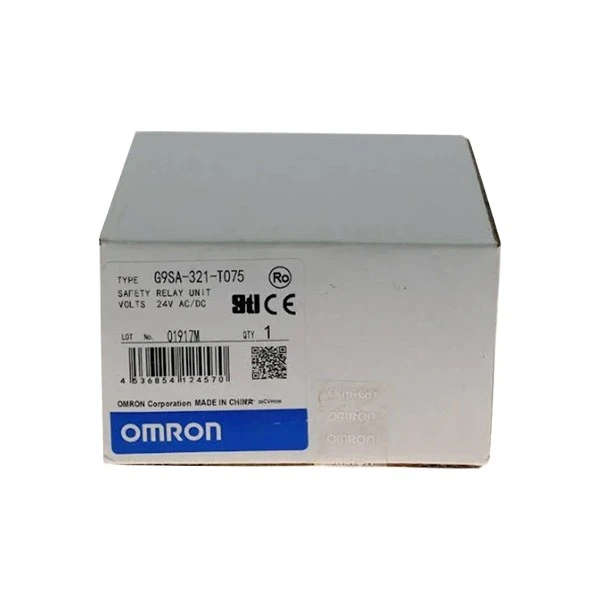
Safety is a critical aspect of material handling system control. Omron offers a range of safety products, such as the Omron G9SA - 321 - T075 Safety Relay, that can be integrated with the PLC to ensure the safety of the operators and the equipment. You can program the PLC to monitor safety sensors such as emergency stop buttons, safety gates, and light curtains. If a safety condition is detected, the PLC can immediately stop the operation of the material handling system.
5. Test and Troubleshoot the Program
After designing the program logic, it's important to test and troubleshoot the program. You can use simulation software provided by Omron to test the program without actually connecting the PLC to the physical system. This allows you to identify and fix any errors or logic flaws in the program before deploying it to the real - world application. Once the simulation test is successful, you can connect the PLC to the material handling system and conduct a live test. Monitor the operation of the system closely and make any necessary adjustments to the program.
Practical Applications of Omron PLCs in Material Handling
1. Conveyor Systems
Conveyor systems are one of the most common applications of Omron PLCs in material handling. The PLC can control the speed, direction, and operation of the conveyors based on the input from sensors. For example, it can start a conveyor when a material is detected at the input point and stop it when the material reaches the output point.
2. Automated Storage and Retrieval Systems (AS/RS)
AS/RS are used to automatically store and retrieve materials in a warehouse. Omron PLCs can be used to control the movement of the storage and retrieval machines, the operation of the conveyors within the AS/RS, and the storage location assignment. This ensures efficient and accurate storage and retrieval of materials.
3. Sorting Systems
Sorting systems are used to separate materials based on certain criteria such as size, weight, or color. Omron PLCs can control the operation of the sorting devices, such as diverters, pushers, and sorters, based on the input from sensors. This allows for high - speed and accurate sorting of materials.
Contact for Purchasing and Consultation
If you are interested in using Omron PLCs for your material handling system control or have any questions about the programming and application of Omron PLCs, we are here to help. We are a professional supplier of Omron PLCs with extensive experience in providing solutions for various material handling applications. Contact us to discuss your specific requirements and get a customized solution.
References
- Omron Corporation. Omron PLC Programming Manual.
- Material Handling Industry of America. Material Handling Handbook.
- Industrial Automation and Control Systems: A Practical Approach, Author: [Author's Name], Publisher: [Publisher's Name]


