


As a trusted supplier of Schneider PLCs, I've had the privilege of witnessing firsthand the transformative impact these programmable logic controllers (PLCs) have on industrial automation. In this blog, I'll delve into the process control functions of Schneider PLCs, exploring how they empower businesses to optimize their operations, enhance efficiency, and ensure reliability.
Understanding Process Control
Process control is the art and science of managing industrial processes to achieve desired outcomes. It involves monitoring and adjusting various parameters such as temperature, pressure, flow rate, and level to maintain a stable and efficient operation. PLCs play a crucial role in process control by collecting data from sensors, analyzing it, and making decisions to control actuators and other devices.
Key Process Control Functions of Schneider PLCs
Data Acquisition
The first step in process control is data acquisition. Schneider PLCs are equipped with a wide range of input modules that can interface with various sensors, including temperature sensors, pressure sensors, flow meters, and level sensors. These modules convert the analog signals from the sensors into digital data that can be processed by the PLC.
For example, in a chemical manufacturing plant, temperature sensors can be used to monitor the temperature of a reaction vessel. The PLC can then collect this data and use it to control the heating or cooling system to maintain the desired temperature.
Logic Control
Once the data is acquired, the PLC uses its built-in programming capabilities to implement logic control. Schneider PLCs support a variety of programming languages, including ladder logic, function block diagram (FBD), structured text (ST), and sequential function chart (SFC). These languages allow engineers to create complex control algorithms that can make decisions based on the input data.
For instance, in a water treatment plant, the PLC can be programmed to control the flow of water through different treatment stages based on the water quality parameters. If the pH level of the water is too high or too low, the PLC can adjust the dosage of chemicals to bring it back to the desired range.
PID Control
Proportional-Integral-Derivative (PID) control is a widely used control algorithm in process control. It calculates the error between the desired setpoint and the actual process variable and uses this error to adjust the control output. Schneider PLCs offer advanced PID control functions that can be easily configured to meet the specific requirements of different applications.
In a heating, ventilation, and air conditioning (HVAC) system, for example, a PID controller can be used to maintain a constant temperature in a room. The PLC continuously monitors the room temperature and adjusts the heating or cooling system to minimize the difference between the setpoint and the actual temperature.
Alarm Management
Alarm management is an essential part of process control. Schneider PLCs can be programmed to detect abnormal conditions and generate alarms to alert operators. These alarms can be configured to trigger based on various criteria, such as high or low temperature, pressure, or flow rate.
In a power generation plant, for example, the PLC can be set to generate an alarm if the generator temperature exceeds a certain limit. This allows operators to take immediate action to prevent equipment damage and ensure the safety of the plant.
Communication
Schneider PLCs support a variety of communication protocols, including Modbus, Ethernet/IP, Profibus, and CANopen. This allows them to communicate with other devices, such as human-machine interfaces (HMIs), sensors, actuators, and other PLCs.
In a large-scale industrial automation system, multiple PLCs can be networked together to share data and coordinate their operations. For example, in a manufacturing line, different PLCs can be used to control different sections of the line, and they can communicate with each other to ensure smooth and efficient production.
Real-World Applications of Schneider PLCs in Process Control
Manufacturing
In the manufacturing industry, Schneider PLCs are used to control various processes, such as assembly lines, conveyor systems, and robotic arms. They can optimize production efficiency, reduce downtime, and improve product quality.
For example, in an automotive manufacturing plant, Schneider PLCs can be used to control the movement of robotic arms during the assembly process. The PLCs can ensure that the robotic arms pick and place the components accurately, reducing the risk of errors and improving the overall quality of the vehicles.
Energy
In the energy sector, Schneider PLCs are used to control power generation, distribution, and consumption. They can monitor and manage the operation of power plants, substations, and renewable energy systems.
In a solar power plant, for instance, Schneider PLCs can be used to control the tracking system of the solar panels. The PLCs can adjust the angle of the panels to maximize the amount of sunlight they receive, increasing the efficiency of the power generation.
Water and Wastewater Treatment
In water and wastewater treatment plants, Schneider PLCs are used to control the treatment processes, such as filtration, disinfection, and sludge handling. They can ensure the quality of the treated water and the proper disposal of the wastewater.
For example, in a wastewater treatment plant, Schneider PLCs can be used to control the flow of wastewater through different treatment stages. The PLCs can monitor the water quality parameters and adjust the treatment processes accordingly to meet the regulatory standards.
Product Recommendations
If you're looking for reliable Schneider PLCs for your process control applications, I recommend considering the following products:
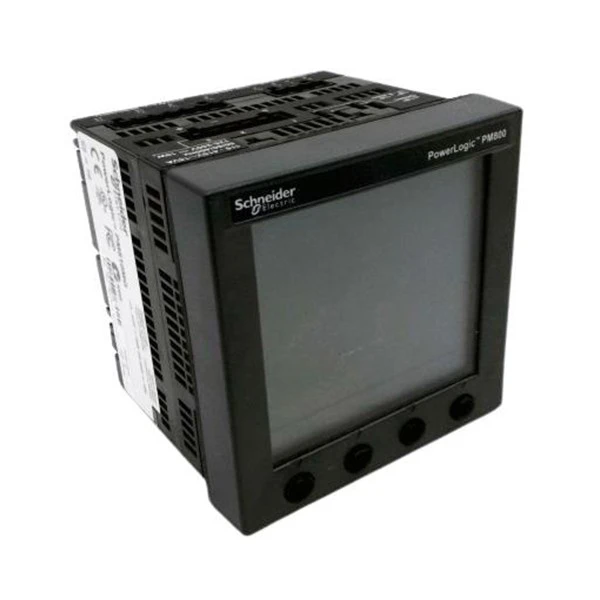
- Schneider Electric PM810MG: This is a high-performance power meter that can be used for energy management and process control applications. It offers advanced measurement and communication capabilities, making it suitable for a wide range of industrial applications.
- Schneider TWDLCAA24DRF Twido Controller: The Twido Controller is a compact and versatile PLC that is ideal for small to medium-sized applications. It offers a wide range of input and output options, as well as advanced programming capabilities.
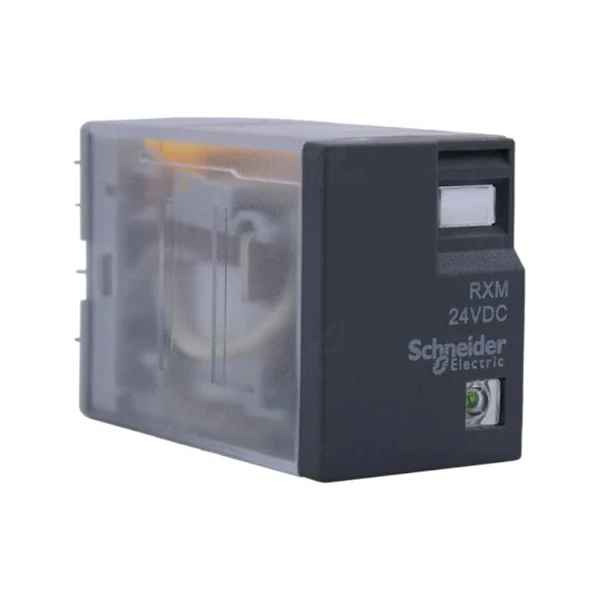
- SCHNEIDER RXM2LB2BD Miniature Relay: This miniature relay is a reliable and cost-effective solution for controlling electrical circuits. It can be used in conjunction with Schneider PLCs to control various devices, such as motors, solenoids, and valves.
Conclusion
Schneider PLCs offer a comprehensive set of process control functions that can help businesses optimize their operations, enhance efficiency, and ensure reliability. Whether you're in the manufacturing, energy, water and wastewater treatment, or any other industry, Schneider PLCs can provide the solution you need to achieve your process control goals.
If you're interested in learning more about Schneider PLCs or have any questions about our products and services, please don't hesitate to contact us. We're here to help you find the right solution for your specific needs and to support you throughout the entire process, from selection and installation to maintenance and troubleshooting.
References
- Schneider Electric. (n.d.). Programmable Logic Controllers. Retrieved from [Schneider Electric Website]
- Industrial Automation Handbook. (n.d.). Process Control Basics. Retrieved from [Industrial Automation Handbook Website]


