


Hey there! As a supplier of Allen - Bradley PLCs, I've been in the thick of the action when it comes to multi - PLC systems. In this blog, I'm gonna share some programming considerations for Allen - Bradley PLCs in such setups.
Communication Protocols
One of the first things to think about is the communication protocol. Allen - Bradley PLCs support a variety of protocols like Ethernet/IP, ControlNet, and DeviceNet. Ethernet/IP is super popular these days because it's fast and can handle a large amount of data. It's also well - integrated with modern IT networks, which makes it easier to connect to other systems.
For example, if you're using the Allen Bradley 1761 - L32BWA Programmable Controller, it can communicate over Ethernet/IP. This allows it to talk to other PLCs, HMIs, and even servers in a multi - PLC system. You need to make sure that all the devices in your system support the same protocol or at least have a way to translate between different protocols.

ControlNet is another option. It's a high - speed, deterministic network that's great for applications where timing is critical, like in manufacturing processes. DeviceNet, on the other hand, is more for connecting simple devices like sensors and actuators.
Memory Management
Memory is a big deal in a multi - PLC system. Each PLC has a certain amount of memory for storing programs, data, and variables. You need to plan your memory usage carefully.
First, figure out how much memory your program will need. This includes the code itself, as well as any data that needs to be stored during operation. For instance, if you're using the Allen Bradley 1756 - L75 Controller, it has a decent amount of memory, but you still need to use it efficiently.
You can use different memory types, like RAM and non - volatile memory. RAM is fast but loses its data when the power is turned off, while non - volatile memory keeps the data even without power. You might want to store important configuration data in non - volatile memory.
Also, consider how the PLCs will share data. You can use shared memory areas or data tables to exchange information between different PLCs. This way, you don't have to duplicate data in each PLC, which saves memory.
Program Structure
A good program structure is essential for a multi - PLC system. You want your programs to be easy to understand, maintain, and expand.
Start by dividing your program into smaller, modular functions. Each function should have a specific task, like reading sensor data, controlling a motor, or performing a calculation. This makes the code more organized and easier to debug.
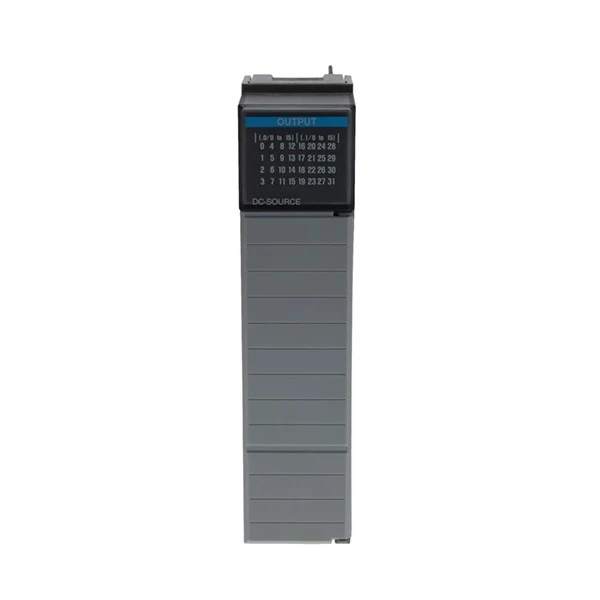
For example, if you're using the 1746 - OB32 Allen Bradley as an output module, you can create a separate function to control its outputs.
You also need to think about how the different PLCs will interact. You can use master - slave or peer - to - peer relationships. In a master - slave setup, one PLC is in charge and gives commands to the other PLCs. In a peer - to - peer setup, all the PLCs can communicate and share data equally.
Error Handling
Errors are inevitable in any system, and a multi - PLC system is no exception. You need to have a good error - handling strategy in place.
First, you should be able to detect errors. This can be done by monitoring the status of different devices and variables. For example, if a sensor is giving an out - of - range value, it could be a sign of an error.
Once an error is detected, you need to take appropriate action. This could include shutting down a process safely, sending an alarm to the operator, or trying to recover from the error automatically.
You can use error codes and messages in your program to make it easier to diagnose problems. For instance, if a communication error occurs between two PLCs, the error message can tell you which PLC and which communication link is affected.
Security
Security is becoming more and more important in industrial systems. A multi - PLC system is vulnerable to various security threats, like unauthorized access, data theft, and malware attacks.
You need to implement security measures at different levels. At the network level, you can use firewalls to block unauthorized access. You can also use encryption to protect the data that's being transmitted between the PLCs.
On the PLC side, you can set up user authentication and access control. Only authorized personnel should be able to modify the programs or access sensitive data.
Testing and Debugging
Before you deploy your multi - PLC system, you need to test and debug it thoroughly. This helps to find and fix any problems before they cause issues in a real - world environment.
You can use simulation tools to test your programs without having to connect to the actual hardware. This allows you to test different scenarios and see how the system behaves.
When you're debugging, you can use the diagnostic features of the Allen - Bradley PLCs. They provide information about the status of different components, variables, and communication links.
Scalability
As your business grows, you might need to expand your multi - PLC system. You should design your system with scalability in mind.
This means choosing PLCs and other devices that can be easily added or removed from the system. You also need to make sure that your program can handle the addition of new devices and functions without major modifications.
Integration with Other Systems
In many cases, a multi - PLC system needs to be integrated with other systems, like SCADA systems, ERP systems, or cloud - based platforms.
You need to make sure that your Allen - Bradley PLCs can communicate with these other systems. This might involve using APIs or other integration tools.
Conclusion
So, there you have it - some important programming considerations for Allen - Bradley PLCs in a multi - PLC system. From communication protocols to security, each aspect plays a crucial role in the success of your system.
If you're interested in purchasing Allen - Bradley PLCs for your multi - PLC system or have any questions about programming, feel free to reach out for a procurement discussion. We're here to help you build a reliable and efficient system.
References
- Allen - Bradley PLC User Manuals
- Industrial Automation Textbooks
- Online Resources on PLC Programming and Multi - PLC Systems


