


Yo, what's up! I'm a supplier in the PLC game, and I've been keeping my eyes peeled on what's coming down the pike for Programmable Logic Controllers. So, let's dig into what the future development trend of PLCs looks like.
1. The Rise of Industrial Internet of Things (IIoT)
The Industrial Internet of Things is like a game - changer for PLCs. In the future, PLCs are gonna be right in the thick of it. They'll be the key players in connecting various industrial devices and systems. With IIoT, PLCs can collect data from sensors, machines, and other equipment in real - time. This data can then be used for all sorts of cool stuff, like predictive maintenance.
For example, if a PLC is connected to a manufacturing machine through IIoT, it can monitor the machine's performance. If it detects any abnormal vibrations or temperature changes, it can send an alert to the maintenance team before a breakdown occurs. This not only saves time but also a ton of money on repairs.
PLCs will also need to be more compatible with different communication protocols to fit into the IIoT ecosystem. We're talking about protocols like OPC UA, which allows seamless data exchange between different industrial devices. As a supplier, I'm constantly looking for PLCs that can easily integrate with IIoT systems. Some of the popular models that are starting to support IIoT well include the Allen Bradley 1761 - L32BWA Programmable Controller. It has the potential to connect with other devices and share data in an IIoT environment.
2. Increased Computing Power
As industries become more complex, PLCs need to handle more sophisticated tasks. That means they're gonna have to pack more computing power. In the future, we'll see PLCs with faster processors and more memory.
This extra computing power will enable PLCs to perform complex algorithms on the fly. For instance, in a chemical plant, a PLC with high - end computing capabilities can quickly analyze the chemical reactions happening in a reactor. It can then adjust the process parameters in real - time to optimize the production.
With more computing power, PLCs can also handle multiple tasks simultaneously. Instead of just controlling one machine, a single PLC can manage an entire production line. This will lead to more efficient use of resources and better overall productivity. The Siemens 6ED1052 - 1MD00 - 0BA4 is a great example of a PLC that's moving in this direction, with its ability to handle relatively complex operations.
3. Enhanced Safety Features
Safety is always a top priority in industrial settings. In the future, PLCs will have even better safety features. They'll be designed to prevent accidents and protect both the equipment and the workers.
One of the ways this will happen is through the use of redundant systems. A redundant PLC system has multiple controllers that can take over if one fails. This ensures that the industrial process keeps running smoothly without any sudden shutdowns that could lead to safety hazards.
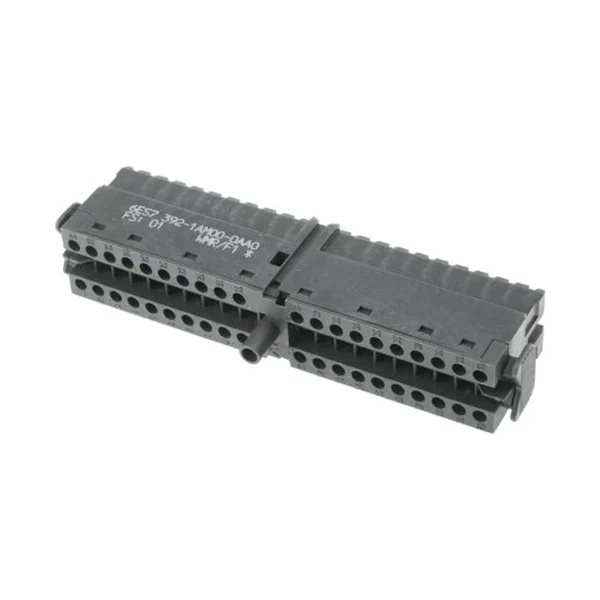
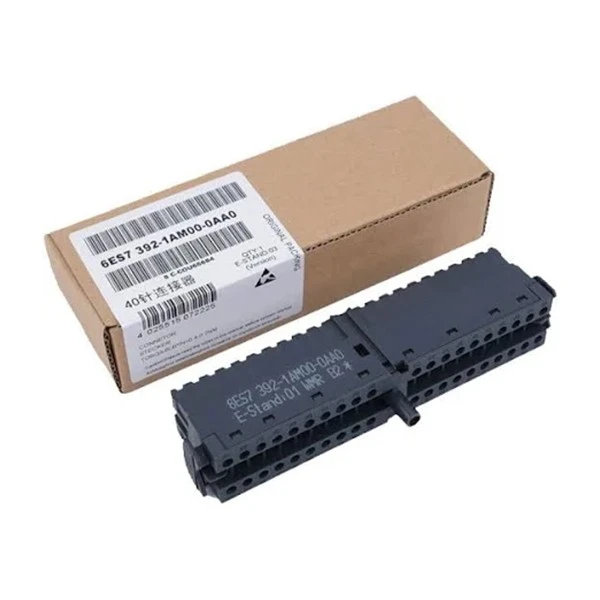
PLCs will also be able to detect and respond to abnormal conditions more quickly. For example, in a power plant, if there's a sudden spike in voltage, the PLC can immediately cut off the power supply to prevent damage to the equipment and potential electrocution risks. The 6ES7392 - 1AM00 - 0AA0 Siemens PLC has some built - in safety features, but we can expect future models to take it to the next level.
4. Cloud Integration
Cloud technology is making its way into the industrial world, and PLCs are no exception. In the future, PLCs will be integrated with cloud platforms. This will allow for remote monitoring and control of industrial processes.
Let's say you have a factory in another city or even another country. With cloud - integrated PLCs, you can access the data and control the machines from anywhere in the world. You can check the production status, adjust the settings, and troubleshoot problems without having to be physically present at the factory.
Cloud integration also provides a great way to store and analyze large amounts of data. The cloud has virtually unlimited storage capacity, so you can keep track of historical data over long periods. This data can be used for in - depth analysis to improve the efficiency of the industrial processes.
5. User - Friendly Programming
In the past, programming a PLC was a bit of a headache. It required specialized knowledge and skills. But in the future, PLC programming is gonna be a lot more user - friendly.
There'll be more graphical programming interfaces that make it easier for non - programmers to write and modify PLC programs. Instead of writing lines of code, users will be able to drag and drop icons to create logic sequences. This will open up the use of PLCs to a wider range of people, including technicians and operators on the factory floor.
Software tools will also become more intuitive, with features like auto - completion and error - checking. These tools will help users write correct and efficient programs more quickly.
6. Miniaturization
Space is often a premium in industrial environments. That's why miniaturization of PLCs is a big trend for the future. Smaller PLCs take up less space, which is great for installations where there's limited room.
Miniature PLCs can be easily integrated into small machines or equipment. They're also more energy - efficient, which is a plus for companies looking to reduce their energy consumption. Despite their small size, these PLCs will still have all the necessary functionality to control and monitor industrial processes.
7. Artificial Intelligence and Machine Learning
Artificial Intelligence (AI) and Machine Learning (ML) are starting to make an impact on PLCs. In the future, PLCs will be able to learn from the data they collect and make intelligent decisions.
For example, in a food processing plant, a PLC with AI capabilities can learn the optimal cooking time and temperature for different types of products. It can then adjust the cooking process automatically based on the characteristics of the incoming raw materials.
ML algorithms can also be used to predict the behavior of industrial systems. A PLC can analyze historical data to predict when a machine is likely to fail or when the production quality might decline. This allows for proactive measures to be taken to avoid problems.
Connect with Me for Your PLC Needs
As you can see, the future of PLCs is super exciting. There are so many new features and trends on the horizon that can really take your industrial processes to the next level. Whether you're looking for a PLC that's great for IIoT integration, one with high computing power, or something with enhanced safety features, I've got you covered.
If you're interested in learning more about the latest PLC models and how they can fit into your business, don't hesitate to reach out. We can have a chat about your specific requirements and find the perfect PLC solution for you. Let's work together to embrace the future of industrial automation!
References
- "Industrial Internet of Things: A Survey" by Lu, R., et al.
- "Programmable Logic Controllers: Principles and Applications" by K. M. Passino and S. Yurkovich.
- "Cloud Computing in Industrial Automation: Challenges and Opportunities" by Li, X., et al.


