


Hey there! As a supplier of Schneider PLCs, I often get asked about the memory capacity of these industrial workhorses. It's a crucial aspect, especially when you're planning your automation projects. So, let's dive right in and explore what the memory capacity of Schneider PLCs is all about.
First off, Schneider PLCs come in a wide range of models, each designed for different applications and requirements. The memory capacity of these PLCs can vary significantly depending on the specific model and its intended use. There are generally two main types of memory in a PLC: program memory and data memory.
Program Memory
Program memory is where the ladder logic, function block diagrams, or other programming languages you use to control the PLC are stored. It's like the brain of the PLC, holding all the instructions that tell it what to do. The amount of program memory you need depends on the complexity of your control program.
For smaller, more basic applications, you might not need a huge amount of program memory. For example, if you're just controlling a simple conveyor belt or a small pump, a PLC with a relatively modest program memory capacity could do the job. On the other hand, if you're working on a large - scale industrial process with multiple interrelated functions, you'll need a PLC with a much larger program memory.
Schneider offers a variety of PLCs with different program memory sizes. Some of their entry - level models might have program memory capacities in the range of a few kilobytes. These are great for small - scale projects where the control logic is not overly complex. As you move up to more advanced models, the program memory can go up to several megabytes. This allows you to handle complex control algorithms, extensive input/output (I/O) configurations, and advanced communication protocols.
Data Memory
Data memory, on the other hand, is used to store the variables, status information, and other data that the PLC needs to operate. This includes things like the current values of sensors, the state of outputs, and any intermediate calculation results.
The amount of data memory required depends on the number of I/O points you have, the frequency of data updates, and the amount of historical data you need to store. For a system with a large number of sensors and actuators, you'll need more data memory to keep track of all the information.
Schneider PLCs also offer different data memory capacities to suit various needs. In some of their smaller models, the data memory might be just a few hundred bytes. But for larger, more data - intensive applications, the data memory can be several megabytes. This allows you to store a large amount of data for monitoring, analysis, and troubleshooting purposes.
Factors Affecting Memory Requirements
Several factors can influence how much memory your Schneider PLC needs. Let's take a look at some of these:
Complexity of the Control Logic
As mentioned earlier, the more complex your control program is, the more program memory you'll need. If you're using a lot of conditional statements, loops, and function calls in your ladder logic, it will take up more space in the program memory.
Number of I/O Points
The number of input and output points in your system directly affects the data memory requirements. Each I/O point needs a certain amount of memory to store its current state and any associated data. So, if you have a large number of sensors and actuators, you'll need more data memory.
Communication Requirements
If your PLC needs to communicate with other devices, such as human - machine interfaces (HMIs), other PLCs, or industrial networks, it will require additional memory. This is because the communication protocols often involve buffering data, storing communication parameters, and handling error - checking information.
Data Logging and Monitoring
If you need to log data over time for analysis or compliance purposes, you'll need extra data memory. The more historical data you want to store, the larger the data memory capacity you'll need.
Examples of Schneider PLCs and Their Memory Capacities
Let's take a look at some specific Schneider PLC models and their memory capacities:

The Schneider Electric TM3TI4 Analog Input Module is a great example of a module that can be part of a larger PLC system. While it doesn't have a standalone memory capacity like a full - fledged PLC, it's an important component for handling analog input signals. When integrated into a PLC system, the overall memory requirements of the system need to be considered based on the number of these modules and other components.
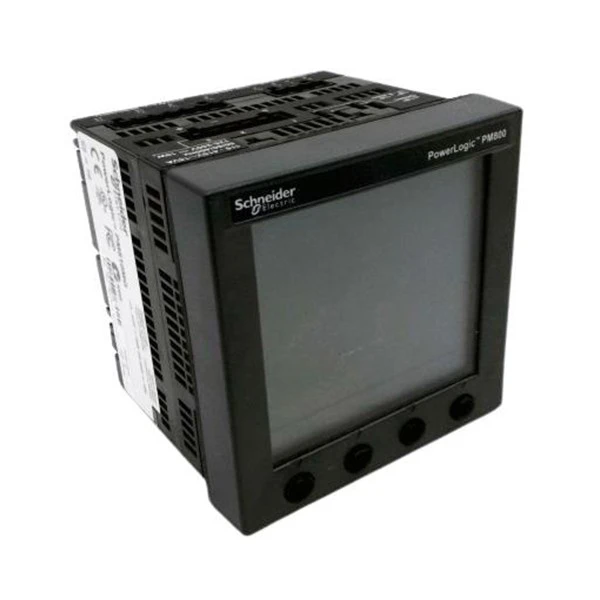
The Schneider Electric PM810MG is a more advanced device. It comes with its own set of memory requirements depending on the functions it's performing. This device is often used for power monitoring and control applications, and its memory is used to store power - related data, configuration settings, and control algorithms.
The Schneider Electric VW3A3627 Communication Module is used for enabling communication in a PLC system. It requires memory to handle communication buffers, protocol settings, and error - handling information. The memory usage of this module can impact the overall memory requirements of the PLC system it's part of.
Choosing the Right Memory Capacity
When it comes to choosing the right memory capacity for your Schneider PLC, it's important to do a thorough analysis of your application requirements. Here are some steps you can take:
- Understand Your Control Logic: Map out your control program and estimate how much space it will take up in the program memory. Consider all the functions, conditional statements, and loops you'll be using.
- Count Your I/O Points: Determine the number of input and output points in your system. This will give you an idea of how much data memory you'll need to store their states and associated data.
- Consider Communication Needs: If you plan to use communication protocols, research the memory requirements of those protocols and factor them into your calculations.
- Plan for Future Expansion: It's always a good idea to leave some room for future expansion. If you think you might add more I/O points, functions, or communication capabilities in the future, choose a PLC with a slightly larger memory capacity than you currently need.
Conclusion
In conclusion, the memory capacity of Schneider PLCs is a crucial factor to consider when planning your automation projects. With a wide range of models available, you can find a PLC that suits your specific program and data memory requirements. Whether you're working on a small - scale project or a large - scale industrial process, Schneider has options to meet your needs.
If you're in the market for a Schneider PLC and need help determining the right memory capacity for your application, don't hesitate to reach out. We're here to assist you in making the best choice for your project. Feel free to start a conversation with us to discuss your requirements and explore the options available.
References
- Schneider Electric product documentation
- Industry - standard automation textbooks on PLC programming and operation


