


Hey there! As a supplier of Siemens Variable Frequency Drives (VFDs), I often get asked about the overload capacity of these drives. It's a crucial topic because understanding the overload capacity helps in choosing the right VFD for your specific application. So, let's dive right in and explore what the overload capacity of Siemens VFDs is all about.
What is Overload Capacity?
First things first, let's clarify what overload capacity means. In simple terms, overload capacity refers to the ability of a VFD to handle a load that exceeds its rated capacity for a certain period. This is important because in real - world applications, there are often situations where the load on the motor driven by the VFD can spike. For example, in a conveyor system, when there is a sudden influx of heavy materials, the motor has to work harder, and the VFD needs to be able to handle this increased load without tripping or shutting down.
Overload Capacity in Siemens VFDs
Siemens offers a wide range of VFDs, each with its own set of features and overload capacity specifications. Let's take a look at some popular models.
SINAMICS V90
The SINAMICS V90 is a compact and high - performance drive. It has different overload capacity ratings depending on the model and configuration. Generally, it can handle short - term overloads. For instance, in some cases, it can tolerate an overload of up to 150% of its rated current for a short period, typically around 60 seconds. This short - term overload capacity allows it to handle sudden increases in load, like when a servo - driven machine starts up or when there are momentary jams in the process.
The SINAMICS V90 is designed for applications where precise control and quick response are required, such as in packaging machines and small - scale automation systems. Its overload capacity ensures that these applications can run smoothly even when there are unexpected load changes.
SINAMICS G120C
The SINAMICS G120C is another popular choice. It offers a good balance between performance and cost. The overload capacity of the SINAMICS G120C is also quite impressive. It can handle overloads of up to 110% of its rated current continuously and up to 150% for a limited time, usually around 60 seconds.
This drive is suitable for a wide range of applications, from simple fan and pump control to more complex conveyor and material handling systems. The ability to handle continuous and short - term overloads makes it a reliable option for industrial applications where load variations are common.
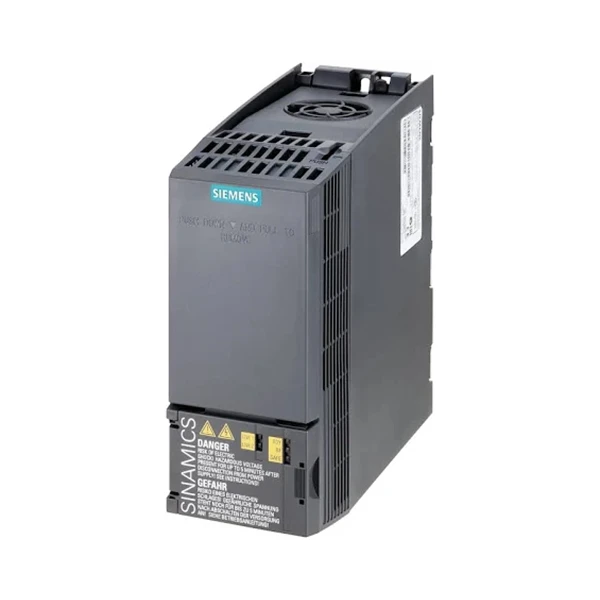

SINAMICS G120 Frequency Converter
The SINAMICS G120 Frequency Converter is a more versatile and powerful drive. It has a higher overload capacity compared to some of the other models. It can handle overloads of up to 150% for 60 seconds and even up to 200% for a very short period, around 3 seconds.
This high - end drive is used in heavy - duty applications such as large - scale industrial pumps, crushers, and mills. The ability to handle high - magnitude short - term overloads is essential in these applications, as the equipment often experiences significant load spikes during startup or when dealing with large chunks of material.
Factors Affecting Overload Capacity
There are several factors that can affect the overload capacity of Siemens VFDs.
Ambient Temperature
The temperature of the environment where the VFD is installed plays a crucial role. Higher ambient temperatures can reduce the overload capacity of the drive. This is because the internal components of the VFD generate heat during operation, and in a hot environment, they have less capacity to dissipate this heat. As a result, the drive may not be able to handle as high an overload as it can in a cooler environment.
Cooling Method
The cooling method used for the VFD also impacts its overload capacity. VFDs with better cooling systems, such as forced - air cooling or liquid cooling, can handle higher overloads. These cooling methods help to keep the internal components at a lower temperature, allowing the drive to operate more efficiently and handle increased loads.
Duty Cycle
The duty cycle of the application is another important factor. If the application requires the VFD to operate at a high load for long periods, the overload capacity needs to be carefully considered. For continuous - duty applications, a drive with a higher continuous overload rating should be selected. On the other hand, for applications with short - term, high - load requirements, a drive with a high short - term overload capacity may be sufficient.
Importance of Choosing the Right Overload Capacity
Choosing the right overload capacity for your Siemens VFD is crucial for several reasons.
Preventing Downtime
If the VFD does not have sufficient overload capacity, it may trip or shut down when faced with a load spike. This can lead to costly downtime in your production process. By selecting a VFD with an appropriate overload capacity, you can ensure that your equipment runs smoothly without unexpected interruptions.
Protecting the Equipment
Overloading a VFD beyond its capacity can damage the internal components. This not only leads to expensive repairs but can also shorten the lifespan of the drive. By choosing a drive with the right overload capacity, you can protect your investment and ensure the long - term reliability of your equipment.
Optimizing Performance
A VFD with the right overload capacity can optimize the performance of your motor and the overall system. It allows the motor to handle load variations efficiently, resulting in better energy efficiency and smoother operation.
How to Determine the Right Overload Capacity
When choosing a Siemens VFD, here are some steps to help you determine the right overload capacity.
Analyze the Load Profile
Understand the load profile of your application. Determine the normal operating load, as well as the maximum load that the motor may encounter. Consider factors such as startup loads, peak loads during operation, and any intermittent high - load situations.
Consider Future Expansion
If you plan to expand your production or change the application in the future, it's a good idea to choose a VFD with some extra overload capacity. This will give you some flexibility and ensure that the drive can handle any future load increases.
Consult the Manufacturer's Specifications
Refer to the manufacturer's specifications for each VFD model. These specifications provide detailed information about the overload capacity, including the percentage of overload and the duration for which it can be sustained.
Conclusion
In conclusion, the overload capacity of Siemens VFDs is an important factor to consider when selecting a drive for your application. Different models, such as the SINAMICS V90, SINAMICS G120C, and SINAMICS G120 Frequency Converter, offer varying levels of overload capacity to suit different applications.
Factors like ambient temperature, cooling method, and duty cycle can affect the overload capacity. Choosing the right overload capacity is essential for preventing downtime, protecting your equipment, and optimizing performance.
If you're in the market for a Siemens VFD and need help determining the right overload capacity for your specific application, don't hesitate to reach out for a consultation. We're here to assist you in making the best choice for your needs.
References
- Siemens official product documentation for SINAMICS V90, SINAMICS G120C, and SINAMICS G120 Frequency Converter.
- Industrial automation handbooks on variable frequency drives and motor control.


