


Sequential function chart (SFC) programming is a powerful and intuitive programming method widely used in industrial automation, especially when dealing with complex sequential control processes. As a trusted Schneider PLC supplier, I have witnessed firsthand the efficiency and flexibility that SFC programming brings to industrial control systems. In this blog post, I will delve into what sequential function chart programming is in Schneider PLCs, its benefits, and how it can be applied in real - world scenarios.
Understanding Sequential Function Chart Programming
Sequential function chart programming is a graphical programming language defined by the IEC 61131 - 3 standard. It represents a control process as a sequence of steps and transitions. Each step in an SFC corresponds to a specific state or operation in the control process, and transitions determine when the control moves from one step to the next.
In Schneider PLCs, SFC programming provides a clear and structured way to design and implement control logic. Instead of writing long and complex ladder logic or structured text programs, engineers can use SFC to break down a large control task into smaller, more manageable steps. For example, in a manufacturing line, an SFC can be used to control the sequence of operations such as material loading, processing, and unloading.
Components of Sequential Function Chart in Schneider PLC
Steps
Steps are the fundamental building blocks of an SFC. Each step represents a particular state or action in the control process. In Schneider PLCs, steps can be active or inactive. When a step is active, the actions associated with that step are executed. For instance, in a conveyor belt system, a step might be "Conveyor Belt Running", and when this step is active, the conveyor belt motor is energized.
Transitions
Transitions are used to determine when the control should move from one step to the next. Transitions are based on logical conditions. These conditions can be simple, such as a limit switch being activated, or more complex, involving multiple input signals. In Schneider PLCs, transitions are represented by horizontal or vertical lines with a condition associated with them. For example, if a sensor detects that a workpiece has reached a certain position, a transition can be triggered to move the control to the next step in the process.
Actions
Actions are the operations that are carried out when a step is active. Actions can be used to control outputs, set internal flags, or call sub - programs. In Schneider PLCs, actions can be written in different programming languages supported by the PLC, such as ladder logic or structured text. For example, an action in a step could be to turn on a solenoid valve to release a fluid.
Benefits of Using Sequential Function Chart Programming in Schneider PLC
Readability and Maintainability
One of the main advantages of SFC programming in Schneider PLCs is its high readability. Since SFC represents the control process in a graphical way, it is easier for engineers and technicians to understand the overall logic. This makes it simpler to troubleshoot problems and make modifications to the control program. For example, if a new operation needs to be added to a manufacturing process, it can be easily incorporated into the existing SFC by adding a new step and appropriate transitions.
Modularity
SFC programming promotes modularity. Each step and transition can be developed and tested independently. This allows for easier reuse of code and faster development cycles. In Schneider PLCs, engineers can create libraries of commonly used steps and transitions, which can be used in different projects. For example, a set of steps for controlling a robotic arm can be reused in multiple production lines.
Error Detection
SFC programming helps in early error detection. Since the control process is divided into steps and transitions, it is easier to identify where a problem might occur. If a step does not activate or a transition does not trigger as expected, it can be quickly traced back to the relevant part of the SFC. This reduces the time and effort required for debugging.
Real - World Applications of Sequential Function Chart Programming in Schneider PLC
Manufacturing Automation
In manufacturing, SFC programming is widely used to control the sequence of operations on production lines. For example, in an automotive assembly line, an SFC can be used to control the installation of different components such as engines, wheels, and seats. Each step in the SFC corresponds to a specific assembly operation, and transitions are based on the completion of previous operations. The TM258LD42DT Schneider Electric can be used in such applications, providing reliable control and high - speed processing.
Material Handling
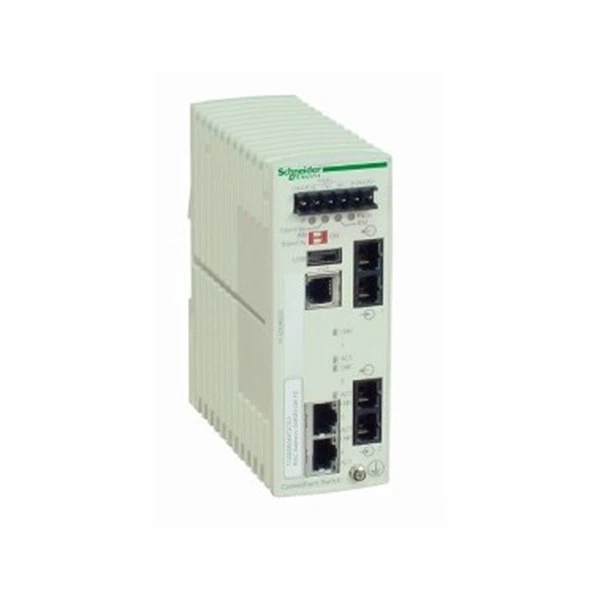
In material handling systems, SFC programming is used to control the movement of goods. For example, in a warehouse, an SFC can be used to control the operation of conveyor belts, cranes, and automated guided vehicles (AGVs). The SFC can ensure that materials are transported from one location to another in the correct sequence. The Schneider TCSESM043F2CS0 can be integrated into these systems to provide precise control and monitoring.
Process Control
In process industries such as chemical and food processing, SFC programming is used to control the sequence of chemical reactions, mixing, and heating processes. For example, in a chemical plant, an SFC can be used to control the addition of different chemicals at the right time and in the correct order. This helps to ensure the quality and safety of the final product.
Tools for Sequential Function Chart Programming in Schneider PLC
Schneider Electric provides a range of programming tools for creating and editing SFCs in their PLCs. One of the most popular tools is Unity Pro. Unity Pro allows engineers to create SFCs graphically, with a user - friendly interface. It also provides features such as simulation, debugging, and code generation. With Unity Pro, engineers can easily define steps, transitions, and actions, and test the SFC program before deploying it to the actual PLC.
Conclusion
Sequential function chart programming in Schneider PLCs is a powerful and flexible method for industrial control. It offers many benefits such as readability, modularity, and error detection. By using SFC, engineers can design complex control systems more efficiently and effectively. Whether it is in manufacturing, material handling, or process control, SFC programming can play a crucial role in optimizing industrial processes.
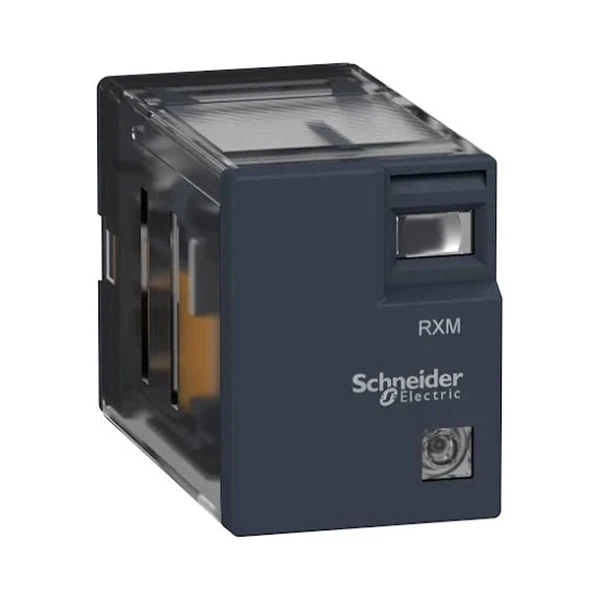
As a Schneider PLC supplier, we offer a wide range of Schneider PLC products, including the SCHNEIDER RXM2LB2BD Miniature Relay, TM258LD42DT Schneider Electric, and Schneider TCSESM043F2CS0. If you are interested in learning more about Schneider PLCs and sequential function chart programming, or if you have a project that requires our products and services, please feel free to contact us for procurement and further discussion.
References
- IEC 61131 - 3 Standard, International Electrotechnical Commission.
- Schneider Electric Unity Pro User Manual.
- Industrial Automation Handbook, various authors.


