


Hey there! As a Mitsubishi VFD supplier, I've seen firsthand how the acceleration and deceleration time settings in these variable frequency drives play a crucial role. So, what's the big deal about these settings? Let's dive in.
Understanding the Basics of Acceleration and Deceleration Time
First off, let's clarify what acceleration and deceleration time mean. Acceleration time is the duration it takes for the VFD to increase the output frequency from 0 Hz to the set frequency. On the flip side, deceleration time is how long it takes for the VFD to drop the output frequency from the set frequency back down to 0 Hz.
These times are not just random numbers; they have a profound impact on how the motor and the entire system operate. When you're adjusting these settings, you're essentially controlling how quickly the motor speeds up and slows down. And trust me, it's not as simple as just making it go fast or slow.
The Significance of Acceleration Time
1. Reducing Mechanical Stress
One of the most important reasons for adjusting the acceleration time is to reduce mechanical stress on the motor and the connected equipment. Think about it like this: if you suddenly start a car at full speed, it puts a huge strain on the engine and the transmission. The same goes for a motor. If you set the acceleration time too short, the motor has to go from a standstill to full speed in a flash. This can cause excessive wear and tear on the motor's bearings, belts, and other mechanical components.
For example, in a conveyor system, a short acceleration time could lead to the conveyor suddenly jerking forward, causing items on it to topple over. By setting a reasonable acceleration time, you allow the motor and the conveyor to gradually pick up speed, reducing the risk of damage and ensuring smooth operation.
2. Power Consumption
Believe it or not, the acceleration time also affects power consumption. When you accelerate the motor too quickly, it draws a large amount of current initially. This high inrush current can lead to increased energy costs and may even trip the circuit breakers if the electrical system isn't designed to handle it.

By increasing the acceleration time, the motor ramps up gradually, and the current draw is more evenly distributed over time. This not only saves energy but also helps prevent overloading the electrical system.
The Significance of Deceleration Time
1. Braking and Stop Control
Deceleration time is crucial for controlling how the motor stops. A short deceleration time means the motor will come to a halt quickly, which can be useful in some applications like emergency stops. However, in most cases, a sudden stop can cause problems.
For instance, in a elevator system, a short deceleration time could result in a jarring stop for the passengers. By setting an appropriate deceleration time, the elevator can slow down smoothly, providing a comfortable and safe ride.
2. Regenerative Energy
When a motor decelerates, it generates excess energy. This is known as regenerative energy. If the deceleration time is too short, the VFD may not be able to handle this excess energy properly, leading to overvoltage issues.
By adjusting the deceleration time, you can control the rate at which the motor decelerates and manage the regenerative energy more effectively. In some cases, this energy can even be fed back into the electrical system, reducing overall energy consumption.
Real-World Applications and Examples
Let's take a look at some specific Mitsubishi VFD models and how the acceleration and deceleration time settings are important in different applications.
FR-A840-00170-2-60 Mitsubishi
This high-performance VFD is often used in industrial applications where precise control is required. In a machine tool application, for example, the acceleration and deceleration time settings are crucial for ensuring accurate machining. A short acceleration time could cause the tool to move too quickly, resulting in poor surface finish or even tool breakage. By setting the appropriate acceleration and deceleration times, the machine can operate smoothly and produce high-quality parts.
Mitsubishi FR-E740-0.4K-CHT
This VFD is commonly used in small to medium-sized motors, such as those in fans and pumps. In a fan application, the acceleration and deceleration times can affect the airflow and noise levels. A sudden start or stop can cause the fan blades to make a loud noise and may also lead to uneven airflow. By adjusting these times, the fan can start and stop smoothly, reducing noise and providing a more consistent airflow.
Mitsubishi FR-D740-1.5K-CHT VFD
This drive is often used in simple motor control applications. In a conveyor belt system, the acceleration and deceleration times determine how smoothly the items are transported. If the acceleration time is too short, the items may slide or fall off the belt. On the other hand, if the deceleration time is too long, it can slow down the overall production process. Finding the right balance is essential for optimal operation.
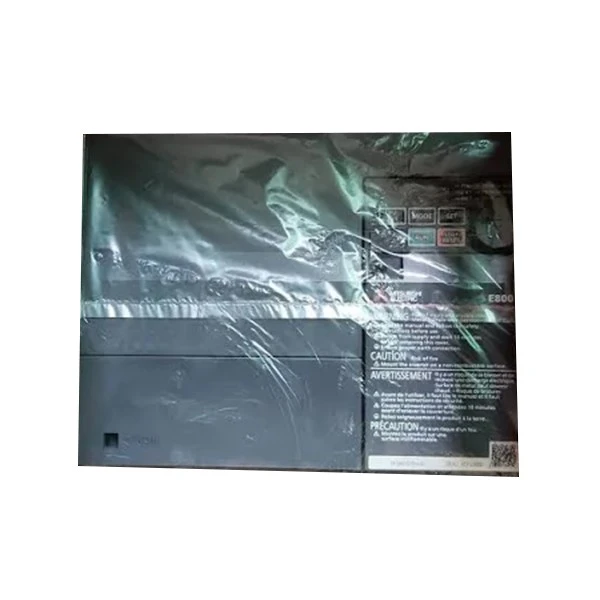
Mitsubishi Electric FR-E840-0120-4-60
This advanced VFD is suitable for a wide range of industrial applications. In a hoisting system, the acceleration and deceleration times are critical for safety. A sudden start or stop could cause the load to swing, posing a danger to the operators and the surrounding equipment. By carefully adjusting these times, the hoist can lift and lower the load smoothly and safely.
Mitsubishi Fr-e720-0.4k Inverter
This compact inverter is often used in applications where space is limited, such as in small machinery. In a packaging machine, for example, the acceleration and deceleration times affect the accuracy of the packaging process. A short acceleration time could cause the packaging materials to bunch up or misalign, while a long deceleration time could lead to inefficiencies.
Adjusting the Acceleration and Deceleration Times
Now that we understand the significance of these times, let's talk about how to adjust them. Most Mitsubishi VFDs come with a built-in parameter setting function. You can usually access these settings through the control panel or a programming device.
When adjusting the times, it's important to consider the specific requirements of your application. Start by referring to the manufacturer's recommendations and then make adjustments based on your actual operating conditions. You may need to test different settings to find the optimal values for your system.
Conclusion
In conclusion, the acceleration and deceleration time settings in Mitsubishi VFDs are not to be taken lightly. They have a significant impact on the performance, reliability, and energy efficiency of the motor and the entire system. Whether you're using a high-performance drive like the FR-A840 or a compact inverter like the Fr-e720, understanding and adjusting these times correctly can make a world of difference.
If you're in the market for a Mitsubishi VFD or need help with setting the acceleration and deceleration times, don't hesitate to reach out. We're here to assist you in finding the best solution for your application.
References
- Mitsubishi Electric VFD User Manuals
- Industrial Motor Control Handbook


