

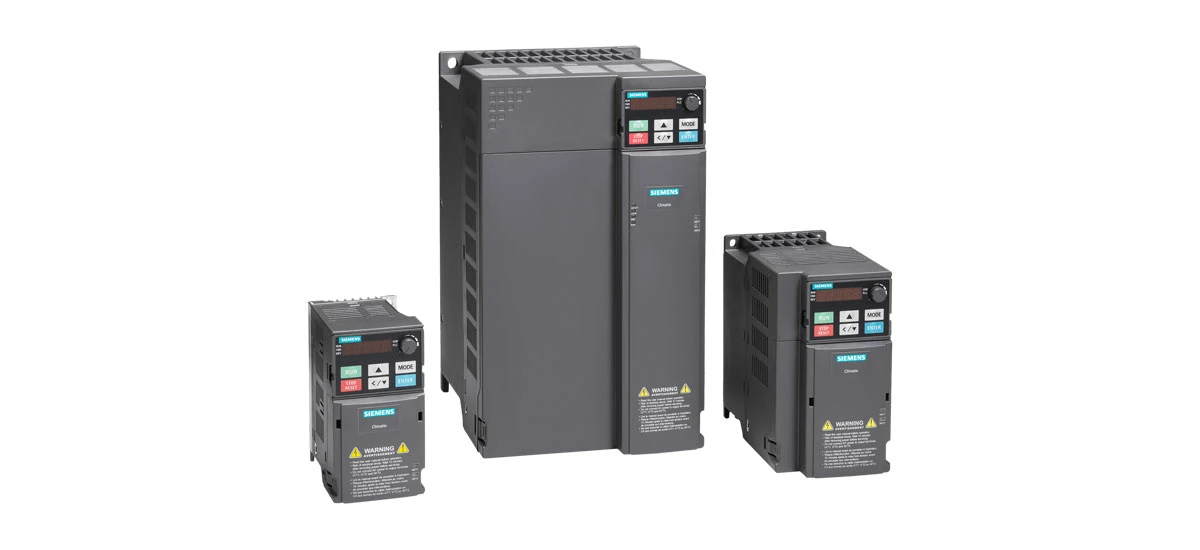
In the world of industrial automation, a Siemens VFD (Variable Frequency Drive) is a key tool that helps control electric motors efficiently. Siemens VFDs are widely used in factories, warehouses, and many other places because they can adjust a motor's speed and torque precisely, saving energy and making machines run more smoothly. Two advanced motor control algorithms used in Siemens VFDs are Field-Oriented Control (FOC) and Direct Torque Control (DTC). Both algorithms help Siemens VFDs work better, but they have different strengths and uses. In this blog, we will compare FOC and DTC in Siemens VFDs, explain how they work, and help you understand which one is better for different applications.
What Is a Siemens VFD and Why Are Control Algorithms Important?
First, let's make sure we understand what a Siemens VFD is. A Siemens VFD is an electronic device that controls the speed and torque of an electric motor by changing the frequency and voltage of the electricity supplied to the motor. Without a Siemens VFD, most motors run at a fixed speed, which wastes energy and can damage machines over time. Siemens VFDs solve this problem by adjusting the motor's speed to match the exact needs of the task-whether it's a slow-running conveyor belt or a fast-spinning pump.
Control algorithms are the "brain" of a Siemens VFD. They tell the Siemens VFD how to adjust the frequency and voltage to get the best performance from the motor. FOC and DTC are two of the most advanced algorithms used in Siemens VFDs, and choosing the right one can make a big difference in how well your machines work. This is why understanding the difference between FOC and DTC in Siemens VFDs is so important for anyone working with industrial equipment.
Field-Oriented Control (FOC) in Siemens VFDs
Field-Oriented Control, also known as vector control, is a popular advanced algorithm in Siemens VFDs. It was designed to make AC motors (the most common type of industrial motor) work as well as DC motors, which are known for their precise control. FOC achieves this by separating the motor's current into two parts: one that creates magnetic flux (the "field" part) and one that creates torque (the "power" part). By controlling these two parts separately, Siemens VFDs with FOC can adjust the motor's speed and torque with very high precision.
Working Principle of FOC in Siemens VFDs
The working principle of FOC in Siemens VFDs is not too complicated, even though it's advanced. Here's a simple breakdown: First, the Siemens VFD measures the current flowing into the motor. Then, it uses a mathematical process to split this current into two separate components: the flux current (which makes the motor's magnetic field) and the torque current (which makes the motor spin). The Siemens VFD then controls each component independently to get the exact speed and torque needed. This process is called "vector control" because it uses mathematical vectors to represent the current and magnetic field.
Siemens VFDs with FOC often use sensors to measure the motor's speed and position, which helps the algorithm adjust more accurately. For example, Siemens SINAMICS V20, a popular Siemens VFD model, can use FOC to provide smooth control even at very low speeds. This is important for applications like conveyor belts or mixers, where consistent speed is crucial.
Advantages of FOC in Siemens VFDs
There are many advantages to using FOC in Siemens VFDs. First, FOC provides very precise speed and torque control. This means the motor runs more smoothly, with less vibration and noise. Second, FOC works well at low speeds-Siemens VFDs with FOC can maintain full torque even when the motor is running very slowly, which is perfect for applications that need gentle, steady movement. Third, FOC is energy-efficient. By controlling the motor's current more precisely, Siemens VFDs with FOC waste less electricity, which saves money on energy bills.
Another advantage is that FOC is very reliable. Siemens VFDs are known for their durability, and FOC helps extend the life of both the VFD and the motor by reducing stress on the equipment. This makes Siemens VFDs with FOC a great choice for critical applications where downtime is not an option.
Direct Torque Control (DTC) in Siemens VFDs
Direct Torque Control (DTC) is another advanced algorithm used in Siemens VFDs. Unlike FOC, which separates the motor's current into flux and torque components, DTC controls torque and magnetic flux directly. This makes DTC faster and simpler in some ways, as it doesn't require the same mathematical processing as FOC. DTC is especially popular in applications where fast response times are needed, like in packaging machines or industrial robots.
Working Principle of DTC in Siemens VFDs
The working principle of DTC in Siemens VFDs is straightforward: the algorithm continuously measures the motor's torque and magnetic flux, then adjusts the voltage and frequency supplied by the Siemens VFD to keep these values at the desired level. DTC doesn't use complex vector transformations like FOC. Instead, it uses a "hysteresis controller" to make quick adjustments-this means the Siemens VFD can respond to changes in load almost instantly. For example, the Siemens MM440 series, a widely used Siemens VFD, uses DTC to provide fast response times, with sampling periods as low as 50 microseconds.
One of the key benefits of DTC's working principle is that it doesn't require a speed sensor in some cases. This makes Siemens VFDs with DTC simpler to install and maintain, as there are fewer parts to worry about. This is a big advantage for applications where sensors are hard to install or maintain.
Advantages of DTC in Siemens VFDs
DTC has several unique advantages that make it a great choice for many Siemens VFD applications. The biggest advantage is its fast response time. Siemens VFDs with DTC can adjust the motor's torque in just a few milliseconds, which is much faster than FOC. This is perfect for applications that need quick changes in speed or torque, like packaging machines or conveyor belts that start and stop frequently.
Another advantage is that DTC is more robust than FOC in some cases. It can handle changes in the motor's load or parameters without losing control, which makes Siemens VFDs with DTC more reliable in harsh industrial environments. DTC also uses less complex software than FOC, which makes the Siemens VFD easier to program and troubleshoot.
FOC vs. DTC: Key Differences in Siemens VFDs
Now that we understand how FOC and DTC work in Siemens VFDs, let's compare them side by side. This will help you choose the right algorithm for your Siemens VFD application.
Response Time
DTC has a much faster response time than FOC. Siemens VFDs with DTC can adjust torque in 1-5 milliseconds, while FOC typically takes 10-20 milliseconds. This makes DTC better for applications that need quick changes, like robots or packaging machines. FOC is slower but more precise, which is better for applications that need steady, consistent speed.
Precision
FOC is more precise than DTC. Siemens VFDs with FOC can control speed and torque with very high accuracy, which is important for applications like CNC machines or medical equipment. DTC is less precise but faster, so it's better for applications where speed of response is more important than perfect precision.
Energy Efficiency
Both FOC and DTC are energy-efficient, but FOC has a slight edge. Siemens VFDs with FOC can adjust the motor's current more precisely, which reduces energy waste. This is especially important for applications that run for long periods, like pumps or fans.
Installation and Maintenance
DTC is easier to install and maintain than FOC. Siemens VFDs with DTC often don't require speed sensors, which reduces the number of parts and makes installation simpler. FOC typically requires sensors, which adds to the installation and maintenance work. However, Siemens VFDs are designed to be easy to maintain overall, regardless of the algorithm.
Which Control Algorithm Is Best for Your Siemens VFD?
Choosing between FOC and DTC for your Siemens VFD depends on your application. Here's a simple guide to help you decide:
- Choose FOC if: You need precise speed and torque control (e.g., CNC machines, medical equipment, and conveyor belts that need steady speed). You need to run the motor at very low speeds with full torque. Energy efficiency is a top priority for long-running applications.
- Choose DTC if: You need fast response times (e.g., packaging machines, industrial robots, machines that start and stop frequently). You want simpler installation and maintenance (no sensors needed). You work in a harsh environment where robustness is important.
Remember, many Siemens VFD models, like the Siemens SINAMICS series, offer both FOC and DTC, so you can switch between them depending on your needs. This flexibility is one of the reasons why Siemens VFDs are so popular in industrial settings.
Conclusion
Siemens VFDs are powerful tools for industrial motor control, and Field-Oriented Control (FOC) and Direct Torque Control (DTC) are two advanced algorithms that make them even better. FOC is perfect for precise, energy-efficient control at low speeds, while DTC is ideal for fast response times and simple maintenance. By understanding the differences between FOC and DTC in Siemens VFDs, you can choose the right algorithm for your application, save energy, and make your machines run more smoothly.
Whether you're using a Siemens VFD for a small pump or a large industrial machine, the right control algorithm can make a big difference. Siemens VFDs are designed to be reliable, efficient, and easy to use, and FOC and DTC are just two examples of how Siemens continues to innovate in motor control technology. If you're still unsure which algorithm is right for your Siemens VFD, consult the Siemens user manual or contact a Siemens expert for guidance.


