

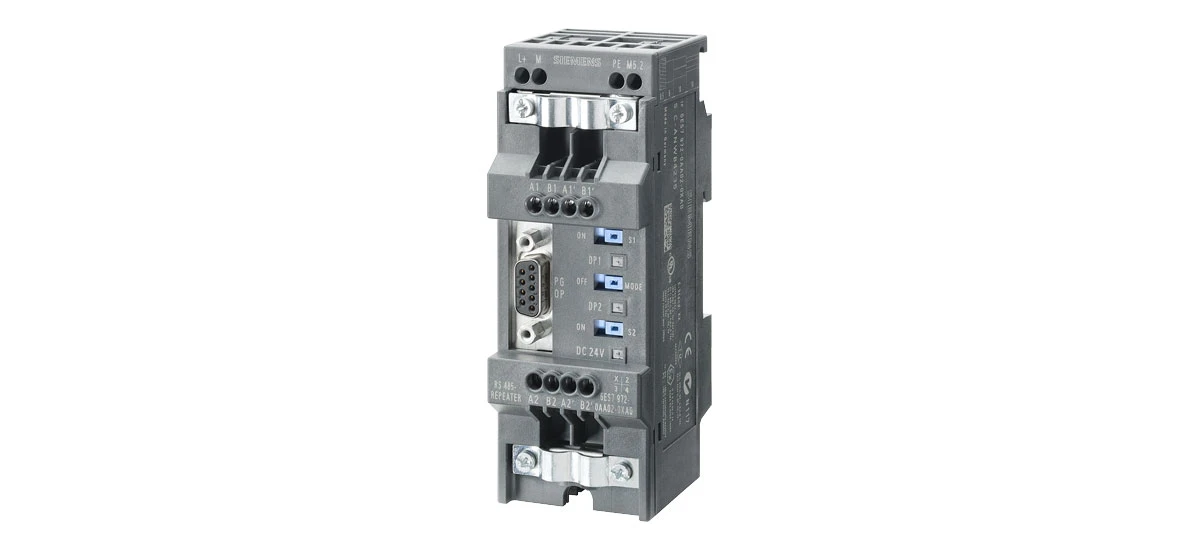
RS485 is a popular communication standard used in places like factories, home automation setups (think smart thermostats or lights), and security systems (such as cameras). It lets multiple devices-like sensors, controllers, or cameras-talk to each other over long distances. But two common issues often mess up RS485 networks: ground potential differences and noise. Many people ask: Can an RS485 repeater fix these problems? Let's break this down step by step, with simple explanations and real-life examples.
What Are Ground Potential Problems in RS485 Systems?
First, let's understand "ground potential difference." Every device in an RS485 network needs a "ground"-a safe path for electrical current to flow, like how a plug's third prong connects to the earth. But if two devices are far apart (say, a temperature sensor in a factory's warehouse and a controller in the office next door), their ground points might not have the same voltage. This difference is called "ground potential difference."
Here's a simple example: Imagine an RS485 network that connects 10 temperature sensors to a computer. The sensors are near a big machine, so their ground voltage is 2V. The computer is in a separate room, where its ground voltage is 0V. This 2V gap creates something called "common-mode voltage"-extra electrical "noise" in the RS485 signal. RS485 chips can only handle small common-mode voltages (usually between -7V and +7V). If the difference is too big, the signal gets distorted: devices stop communicating, or you get wrong data (like a sensor reading 50°C when the actual temperature is 25°C).
How Does an RS485 Repeater Fix Ground Potential Issues?
The good news is an RS485 repeater is built to solve ground potential problems. Here's how it works. Most RS485 repeaters have "isolated ports"-they separate the electrical ground of one part of the network from another. Think of the repeater as a "bridge" that won't let the ground voltage difference pass through.
Let's use the earlier example again: The sensors (with 2V ground) connect to one port of the RS485 repeater. The computer (with 0V ground) connects to another port. The repeater's isolated design blocks that 2V ground difference. Instead of passing the distorted signal, the repeater "cleans up" the RS485 signal and sends it again. This gets rid of the common-mode voltage caused by ground differences. For anyone asking how an RS485 repeater fixes ground potential issues, this isolation (separating grounds) and signal "refresh" is the key.
Not all RS485 repeaters have isolation, though. So if ground potential is your main problem, pick an "isolated RS485 repeater." These models make sure no unwanted ground current flows between parts of the network, keeping signals steady.
What Causes Noise in RS485 Networks?
Noise is another big problem for RS485. Noise is unwanted electrical interference that messes up the RS485 signal-like static on a radio. Common sources of noise include:
- Power cables: If RS485 cables run next to high-voltage power lines (like the ones powering factory machines or office lights), the power lines create "electromagnetic interference (EMI)" that leaks into the RS485 signal.
- Electronics: Devices like motors, transformers, or even Wi-Fi routers give off EMI that can disrupt RS485.
- Long cables: The longer the RS485 cable, the more it picks up noise from the air-kind of like how a long antenna picks up more radio stations (but here, it's bad "static").
Noise makes the RS485 signal "fuzzy." For example, a security camera using RS485 to send control signals might start freezing-like when you try to adjust the camera angle and it stops responding. Or a factory sensor might send random data (saying "off" one second, "on" the next) because noise is tricking the signal.
Can an RS485 Repeater Reduce Noise in RS485 Systems?
Yes, an RS485 repeater can cut down on noise a lot-and here's why. RS485 uses "differential signaling": it sends two opposite signals over two wires. Noise usually affects both wires equally, so the RS485 chip can subtract the noise to get a clean signal. But when noise is too strong, even this trick fails.
An RS485 repeater fixes this by boosting the strong, clean part of the RS485 signal and filtering out the weak, noisy part. It takes the distorted signal, amplifies the useful data, and sends a sharp, noise-free signal to the next part of the network. Let's say an RS485 cable runs 1000 meters past a row of loud motors (a big noise source). Adding an RS485 repeater halfway will clean the signal before it reaches the end device (like a controller).
For RS485 repeater noise reduction tips, remember two things: First, place the repeater close to noise sources (like near motors) to catch and filter noise early. Second, use an RS485 repeater with built-in EMI filters-these extra parts block more unwanted interference.
Other Benefits of an RS485 Repeater (Beyond Ground and Noise)
Fixing ground potential and noise is a big win, but an RS485 repeater has other useful jobs that make RS485 networks more reliable. These benefits help answer when to use an RS485 repeater for signal problems.
First, extending distance: RS485 can usually send signals up to 1200 meters (when it's set to a speed of 100 kbps-think of kbps as "how fast data travels"). But if you need to go farther-like connecting a sensor in a warehouse to a controller 2000 meters away-an RS485 repeater can double that distance. Each repeater adds another 1200 meters, and you can chain them (usually up to 4 repeaters) for very long networks.
Second, adding more devices: RS485 networks can have up to 32 devices by default. An RS485 repeater acts like a "hub" that lets you add 32 more devices per port. For example, a factory with 50 temperature sensors can use one repeater to connect all of them without losing signal.
Important Things to Know When Using an RS485 Repeater
An RS485 repeater works well, but you need to use it the right way to avoid new problems. Here are key tips:
Choose the Right Repeater for Your Needs
Not all RS485 repeaters are the same. If ground potential is your issue, pick an isolated RS485 repeater (look for "galvanic isolation" in the specs-this just means a special design that blocks unwanted ground current). If noise is worse, choose a repeater with EMI filtering. Also, check the speed: Make sure the repeater matches your RS485 network's speed (common speeds are 9600 bps or 115200 bps).
Install It Properly (For Noise Prevention)
RS485 repeater installation for noise prevention starts with where you put it. Place the repeater halfway between noisy sources (like motors) and sensitive devices (like controllers). Also, follow these steps:
- Keep RS485 cables away from power cables-at least 30 cm (about a foot) apart.
- Use "shielded" RS485 cables (these have a metal layer around them to block noise) and connect the shield to ground (the repeater's ground port can help here).
- Don't "daisy-chain" too many repeaters-"daisy-chain" means connecting one repeater after another. Stick to 3 or 4 maximum, because each one adds a tiny delay to the signal.
Know the Difference: RS485 Repeater vs. Ground Loop Isolator
Some people mix up RS485 repeaters with ground loop isolators. A ground loop isolator only fixes ground potential issues-it can't boost signals or reduce other types of noise. An RS485 repeater does more: it fixes ground problems, cuts down noise, extends distance, and lets you add more devices. So if you have multiple issues (like ground differences + noise + long distance), an RS485 repeater is better than a standalone isolator. This answers the common question of RS485 repeater vs ground loop isolator.
Final Answer: Yes, an RS485 Repeater Solves Ground Potential and Noise Problems
An RS485 repeater is a powerful tool for fixing the two most common RS485 issues. It solves ground potential problems with isolated ports and signal regeneration (refreshing the signal). It reduces noise by amplifying clean signals and filtering out interference. Plus, it extends network distance and lets you add more devices-making it a must-have for large or noisy RS485 setups (like factories or big homes with smart devices).
Just remember: Choose the right type of RS485 repeater (isolated if you need it), install it properly, and match it to your network's speed. With these steps, your RS485 network will stay stable-even in tough environments.


