

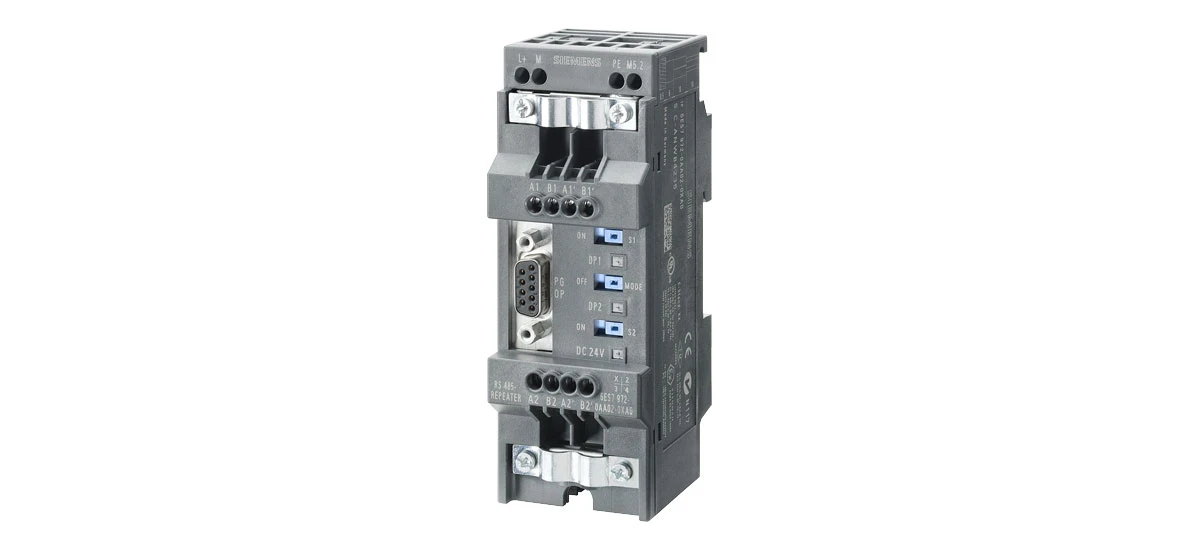
In today's world, many systems-from factory machines to security cameras-need to send data over long distances. One common technology for this is RS485, a standard that helps devices talk to each other across far spaces. But even RS485 has limits: its signal gets weaker over time, and it can't connect too many devices at once. That's where an RS485 repeater comes in. An RS485 repeater fixes these problems, making long-distance data communication reliable and efficient. Without it, many large-scale systems (like a big factory or a wide-area security network) would struggle to share data smoothly.
What Is RS485, and Why Does It Need Repeaters?
First, let's break down what RS485 is. RS485 is a communication standard-think of it as a set of rules-that lets devices (like sensors, controllers, or cameras) send data to each other. It's popular because it uses "differential signals," a type of signal that resists electrical interference (like the noise from big motors). It also works over longer distances than other standards, such as RS232.
But RS485 isn't perfect. It has two key limits that make an RS485 repeater necessary:
- Distance limits: Without a repeater, RS485 can only send data about 1,200 meters (around 3,900 feet) before the signal becomes too weak to read. For systems that need to cover more ground-like a farm with sensors spread across a field or a factory with machines in different buildings-this distance is too short.
- Device limits: RS485 can connect up to 32 devices on a single "bus" (the wire that carries data). If you need more devices-like 50 security cameras in a shopping mall-you'll hit a wall.
This is why RS485 repeaters are essential, especially for multi-device data communication. The question "why RS485 repeater is necessary for multi-device data communication" has a simple answer: it removes both distance and device limits, making RS485 work for bigger, more complex systems.
How Does an RS485 Repeater Work?
An RS485 repeater is like a "signal refresh station" for RS485 networks. Its job is to take weak, distorted data signals and turn them into strong, clear ones-so they can keep traveling farther or reach more devices. Here's how it works in 3 simple steps:
- Receive the weak signal: The RS485 repeater connects to the RS485 bus. When a weak or noisy signal comes through (after traveling a long distance or past many devices), the repeater picks it up.
- Clean and strengthen the signal: Inside the repeater, electronics "clean" the signal-removing interference like electrical noise from nearby machines. Then, it boosts the signal's strength back to its original level, just like turning up the volume on a quiet song.
- Send the fresh signal onward: The repeater sends the strong, clean signal to the next part of the RS485 bus. This lets the data travel another 1,200 meters (or connect more devices) without losing quality.
Crucially, an RS485 repeater works both ways. It can refresh signals going in either direction on the RS485 bus, so devices at both ends of a long network can talk to each other easily.
Key Roles of RS485 Repeaters in Long-Distance Communication
An RS485 repeater doesn't just do one job-it solves multiple problems that break long-distance RS485 communication. Below are its most important roles, with real-world examples.
1. Extending the Maximum Communication Distance
The biggest job of an RS485 repeater is to make RS485 networks longer. As we said earlier, RS485 can only go 1,200 meters alone. But adding one RS485 repeater lets the signal travel another 1,200 meters-so 2,400 meters total. Add a second repeater, and you can go 3,600 meters, and so on (most systems use 8-10 repeaters max to avoid small delays).
For example, a water treatment plant might have sensors placed 2,000 meters apart to monitor water quality. Without an RS485 repeater, the sensor's data would never reach the main control room. But with a repeater in the middle, the signal stays strong, and the plant can track water levels reliably.
2. Strengthening Weak Signals to Avoid Data Loss
Even if a network is shorter than 1,200 meters, signals can still get weak. This happens because wires absorb some of the signal's energy over time-a problem called "attenuation." Weak signals lead to data errors (like a sensor reading "25°C" instead of "35°C") or even lost data.
An RS485 repeater fixes this by boosting signals back to full strength. For instance, a grocery store might use RS485 to connect temperature sensors in freezers across a 800-meter store. Without a repeater, the freezer sensors' data might be wrong, leading to spoiled food. With an RS485 repeater, the signals stay clear, and the store can keep freezers at the right temperature.
Sometimes, even with a repeater, signals might still be weak. This is where troubleshooting common RS485 repeater connection issues helps-often, the problem is a loose wire or a repeater placed too far from the weak signal source.
3. Supporting More Devices on the Network
RS485 can only connect 32 devices on one bus. But many systems need more-like a school with 40 security cameras or a factory with 50 machine controllers. An RS485 repeater solves this by acting as a "splitter" for the network.
Each RS485 repeater creates a new "segment" of the RS485 bus. Each segment can connect up to 32 devices. So, if you have one repeater, you can connect 32 devices on the first segment and 32 more on the second-64 total. This is perfect for large systems.
When setting up a system like this, RS485 repeater installation steps for long-distance security systems are key. For example, you'd place the repeater between the first 32 cameras and the next 32, making sure the wires are properly connected to avoid device dropouts.
4. Reducing Electrical Interference
Many places where RS485 is used-like factories or construction sites-have lots of electrical interference. Big motors, power tools, and generators create "noise" that messes up RS485 signals. This noise can turn a clear data signal into a garbled mess.
Most RS485 repeaters have built-in "isolation" features. Isolation keeps the repeater's electronics separate from the noisy wires, so the noise doesn't get into the refreshed signal. For example, a car factory with large assembly line motors uses RS485 to connect robot controllers. Without an isolated RS485 repeater, the motors' noise would crash the robot communication. With a repeater, the signals stay clean, and the robots work smoothly.
Real-World Applications of RS485 Repeaters
RS485 repeaters are used in almost every industry that needs long-distance, multi-device communication. Below are the most common uses, with details on how repeaters make these systems work.
Industrial Automation
Factories and manufacturing plants rely on RS485 to connect PLCs (programmable logic controllers), sensors, motors, and conveyor belts. These systems often span hundreds or thousands of meters, and they need 50+ devices to talk to each other.
An RS485 repeater is non-negotiable here. For example, a smartphone factory might have a 1,500-meter assembly line with 40 sensors tracking part quality. A repeater in the middle extends the distance and supports all 40 sensors. When choosing equipment, how to choose a reliable RS485 repeater for industrial use is critical-industrial repeaters need to handle dust, heat, and vibration, so you can't use a cheap home-grade model.
Security Surveillance Systems
Security cameras (especially analog ones) often use RS485 to send control signals-like zooming in or moving the camera. In large areas (like a university campus, a warehouse, or a city park), cameras are spread 1,000+ meters apart.
An RS485 repeater ensures these control signals reach every camera. For example, a warehouse with 35 cameras spread across 2,500 meters would use two repeaters. The first repeater covers the first 1,200 meters, the second covers the next 1,300 meters, and all 35 cameras can be controlled from a single room. This is where RS485 repeater installation steps for long-distance security systems matter-you need to place repeaters where signals start to weaken, not wait until they're already lost.
Agricultural Monitoring
Farms and greenhouses use RS485 to connect sensors that track soil moisture, temperature, and sunlight. These sensors are often spread across large fields-sometimes 2,000+ meters apart.
An RS485 repeater lets farmers collect data from all these sensors. For example, a 50-acre corn farm might have 25 soil moisture sensors placed 80-100 meters apart. A single RS485 repeater in the center of the farm extends the signal to all sensors, so the farmer can see which areas need more water. Without the repeater, the farmer would only get data from the closest sensors, leading to overwatering or underwatering.
Building Automation
Tall buildings (like skyscrapers or shopping malls) use RS485 to control HVAC (heating, ventilation, air conditioning), lighting, and access control systems. These systems have devices on every floor, and the total distance from the basement to the top floor can be 1,000+ meters.
An RS485 repeater ensures all these devices talk to the main control panel. For example, a 30-story office building might have HVAC controllers on each floor. A repeater placed every 10 floors keeps the RS485 signal strong, so the building can adjust temperature on every floor from one room. Without the repeater, the top floors' HVAC systems would stop responding to commands.
How to Choose the Right RS485 Repeater (Tips for Beginners)
Not all RS485 repeaters are the same. To pick the best one for your system, follow these simple tips-they'll help you avoid wasting money on a repeater that doesn't work for your needs.
- Match the distance to your system: Check how far the repeater can extend the RS485 signal. If your network is 1,800 meters, choose a repeater that can handle at least 1,200 meters (so it covers the extra 600 meters beyond the original RS485 limit).
- Count your devices: Make sure the repeater supports the number of devices you have. If you have 40 devices, pick a repeater that lets you split into two segments (32 + 8 devices, for example).
- Look for interference protection: If you're using the repeater in a noisy place (like a factory or near power lines), choose one with "isolated" ports. Isolation blocks electrical noise and keeps your signals clean.
- Pick a durable model for harsh environments: For outdoor use (like farms) or industrial use (like factories), get a repeater with a tough case. It should resist dust, water, and extreme temperatures (hot or cold).
- Don't confuse it with a signal booster: Some people mix up RS485 repeater vs signal booster: key differences. A signal booster only makes weak signals louder-it doesn't clean up noise or split device segments. An RS485 repeater does both, so it's better for RS485 networks.
Common Myths About RS485 Repeaters (And the Truth)
There are a lot of wrong ideas about RS485 repeaters. Let's clear up the most common myths to help you use repeaters correctly.
- Myth 1: "RS485 repeaters slow down data transmission."
Truth: Good RS485 repeaters don't slow down data. They refresh signals in a split second-so fast you won't notice a delay. Only cheap, low-quality repeaters cause slowdowns, so stick to trusted brands.
- Myth 2: "You can add as many repeaters as you want."
Truth: While you can add multiple repeaters, most experts recommend no more than 8-10. Each repeater adds a tiny delay (a few microseconds), and too many delays can make data arrive out of order. For most systems (like factories or schools), 8-10 repeaters are more than enough.
- Myth 3: "All RS485 repeaters work with every RS485 device."
Truth: Some repeaters are made for specific RS485 speeds (like 9600 bps or 115200 bps). If your device uses a faster speed than the repeater, the data will get corrupted. Always check the repeater's speed range to match your devices.
- Myth 4: "RS485 repeaters don't need power."
Truth: Every RS485 repeater needs its own power source (usually 12V or 24V DC). It can't run on the RS485 bus's power alone-so make sure you have a power outlet near where you place the repeater.
Conclusion
For anyone using RS485 for long-distance data communication, an RS485 repeater is not just helpful-it's essential. It extends communication distance, strengthens weak signals, supports more devices, and blocks interference-fixing all of RS485's key limits. From factories to farms, security systems to skyscrapers, RS485 repeaters keep data flowing smoothly, making big, complex systems work reliably.
When choosing or using an RS485 repeater, remember to match it to your system's distance and device count, pick a durable model for harsh places, and avoid common myths. With the right repeater, your RS485 network can handle almost any long-distance communication need.


