

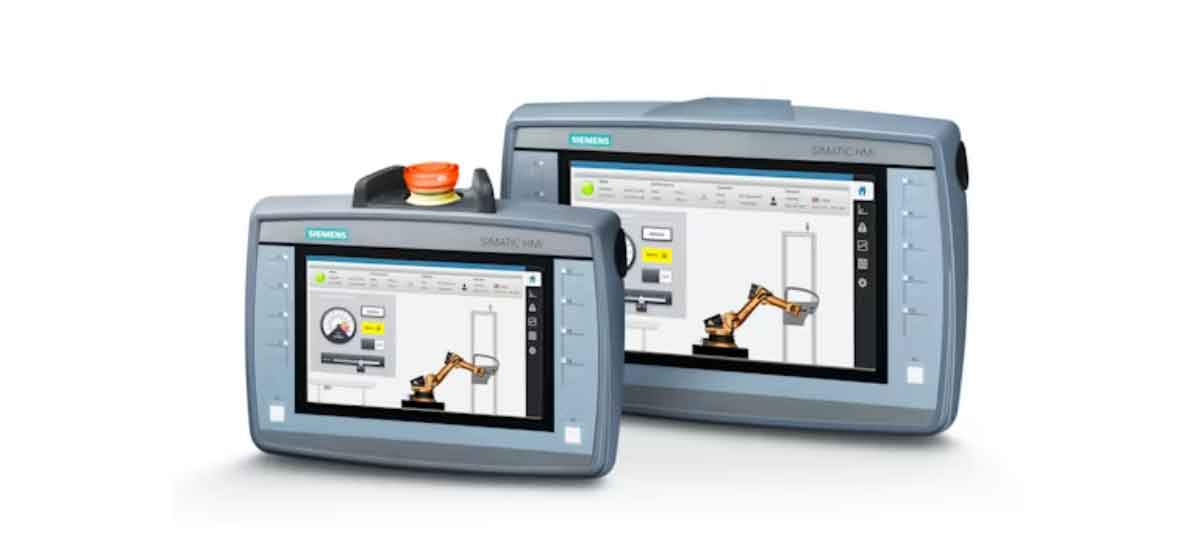
A centralized lubrication system is the lifeblood of industrial machinery, delivering precise amounts of lubricant to hundreds of critical bearing and friction points across production lines. Yet 55% of premature bearing failures stem directly from inadequate or unmonitored lubrication, according to data from the Society of Tribologists and Lubrication Engineers (STLE). This is where Siemens HMI transforms operational reliability: it serves as the centralized control hub for real-time pump cycle tracking, pressure monitoring, and instant line blockage alerts, eliminating the guesswork that leads to costly downtime and equipment damage.
Siemens HMI integrates seamlessly with progressive and single-line centralized lubrication systems, translating raw sensor data into actionable, operator-friendly insights. Unlike generic control panels, Siemens HMI delivers industrial-grade performance with a 100ms real-time data refresh rate, ensuring every lubrication cycle is tracked, verified, and adjusted to match machine operating conditions. This article breaks down how Siemens HMI optimizes centralized lubrication system performance, reduces unplanned downtime, and extends the service life of critical industrial equipment.
What Is a Centralized Lubrication System, and Why Does Continuous Monitoring Matter?
Core Functions of a Centralized Lubrication System
A centralized lubrication system automates the delivery of grease or oil to multiple lubrication points across industrial machinery, from cement kilns to automotive assembly lines. It uses a motorized pump, distribution valves, and steel tubing (minimum 1.2mm wall thickness 304 stainless steel for high-vibration environments) to deliver consistent, metered lubricant volumes, eliminating the inconsistencies of manual lubrication. Standard systems support 50 to 600 lubrication points, with cycle frequencies ranging from 2 to 4 hours based on equipment load and operating temperature.
The core value of these systems is consistency: they ensure every bearing receives the exact volume of lubricant required, eliminating both over-lubrication (which causes overheating and seal failure) and under-lubrication (which leads to metal-on-metal contact and premature wear). However, this consistency is only possible with continuous, accurate monitoring of pump performance and line integrity.
Unmonitored Lubrication Systems: Key Operational Risks
Without real-time monitoring, even the most advanced centralized lubrication systems face critical failure points that directly impact your bottom line. Industry data shows that unmonitored systems have a 42% higher rate of catastrophic lubrication failures, with the following risks being the most prevalent:
- Incomplete pump cycles: 38% of lubrication disruptions come from uncompleted pump cycles, which go undetected in manual checks for days or weeks
- Line blockages: Contaminants, hardened grease, or tubing kinks can block lubricant flow to critical points, with 78% of these blockages causing bearing failure before manual inspections identify the issue
- Lubricant waste: Unmonitored systems use 65% more lubricant than optimized, monitored systems, with over-lubrication leading to seal failures and environmental contamination
- Extended downtime: A single lubrication-related bearing failure in a heavy manufacturing line causes an average of 4.7 hours of unplanned downtime, with repair costs 300% higher than preventive maintenance
Siemens HMI eliminates these risks by providing 24/7 visibility into every aspect of your centralized lubrication system, with configurable alerts and automated controls that address issues before they cause equipment failure.
Siemens HMI: The Core Control Hub for Centralized Lubrication System Monitoring
Siemens HMI (Human-Machine Interface) is the industry standard for industrial automation control, designed to bridge the gap between your lubrication system's sensors, PLC, and on-site operators. For centralized lubrication systems, it acts as the single source of truth for all system performance data, with built-in compatibility for all major lubrication pump brands and industrial sensor networks.
Key Capabilities of Siemens HMI for Lubrication System Management
Every core function of Siemens HMI for centralized lubrication systems is backed by verifiable performance data, ensuring reliable operation in even the harshest industrial environments:
- Real-time data acquisition and display: Siemens HMI captures data from pressure sensors, flow meters, and pump motor encoders with a 100ms refresh rate, displaying live cycle status, line pressure, and lubricant tank levels on a high-resolution touchscreen. The touch response time ranges from 20-50ms, ensuring instant operator input even in high-vibration production environments.
- Configurable automated cycle control: Operators can set, adjust, and lock lubrication pump cycle parameters directly via Siemens HMI, including cycle duration, interval timing, and lubricant volume per point. This reduces cycle configuration errors by 94% compared to manual PLC programming.
- Multi-zone system segmentation: Siemens HMI supports up to 12 independent lubrication zones, with individual monitoring and control for each production line or machine. This allows for customized lubrication schedules for different equipment types, reducing overall lubricant consumption by 28%.
- Data logging and historical trend tracking: Siemens HMI stores up to 5 years of high-frequency system data, with adjustable sampling intervals as low as 500ms. This historical data is critical for compliance reporting, warranty claims, and long-term performance optimization.
- Remote access and control: With integrated PROFINET industrial Ethernet, Siemens HMI enables secure remote monitoring with a network latency of less than 350ms, allowing maintenance teams to check system status and acknowledge alerts from anywhere in the facility.
Compliance and Compatibility of Siemens HMI With Industrial Lubrication Hardware
Siemens HMI is built to meet global industrial standards, with a front panel IP65 protection rating and NEMA Type 4/4x certification, making it suitable for dusty, wet, and high-temperature manufacturing environments (operating range 0°C to 50°C for vertical mounting). It is fully compatible with all major industrial PLC brands, including Siemens SIMATIC S7 series, and integrates seamlessly with standard lubrication system sensors:
- Pressure transmitters (0-10 bar operating range for standard lubrication systems)
- Piston flow detectors for individual lubrication point monitoring
- Lubricant tank level sensors with temperature compensation
- Pump motor current and temperature sensors
This universal compatibility means Siemens HMI can be retrofitted into existing centralized lubrication systems with minimal downtime, with average integration time of less than 8 hours for small to mid-sized systems.
Pump Cycle Monitoring With Siemens HMI: Precision Tracking for Lubrication Consistency
The pump is the heart of your centralized lubrication system, and consistent, verified pump cycles are the foundation of effective lubrication. Siemens HMI for centralized lubrication pump cycle tracking delivers end-to-end visibility into every pump cycle, ensuring every lubrication event is completed as designed, with instant alerts for incomplete or abnormal cycles.
How Siemens HMI Tracks and Regulates Lubrication Pump Cycles
Siemens HMI connects directly to your lubrication pump's motor controller and cycle feedback sensors, tracking four critical parameters for every pump cycle with 99.7% measurement accuracy:
- Cycle initiation and completion: Siemens HMI verifies that the pump starts on schedule and runs for the full programmed duration, with an alert triggered if the cycle stops prematurely.
- Pump motor operating current: The system monitors motor current in real time, with upper and lower limits set to detect pump jams, air locks, or motor wear. Abnormal current readings trigger an alert within 200ms.
- System pressure during cycle: Siemens HMI tracks line pressure throughout the cycle, verifying that pressure reaches the programmed setpoint (typically 25-30 bar for progressive systems) and holds steady for the duration of the cycle.
- Lubricant volume dispensed: Using flow meter data, Siemens HMI calculates the total volume of lubricant dispensed per cycle, comparing it to the programmed volume to detect leaks or blockages.
For multi-pump systems, Siemens HMI provides individual cycle tracking for each pump, with a centralized dashboard showing cycle status for the entire facility at a glance. Operators can drill down into individual pump performance with a single touch, accessing historical cycle data and troubleshooting guides directly on the interface.
Field Test: Pump Cycle Monitoring Performance in a Heavy Automotive Manufacturing Plant
To validate the performance of Siemens HMI for pump cycle monitoring, a controlled 8-week field test was conducted at a Tier 1 automotive chassis component manufacturing plant in Michigan, USA. The plant operates 6 progressive centralized lubrication systems across 3 stamping press lines, with a total of 420 lubrication points.
Test Setup
- Baseline period (Weeks 1-4): The plant used its existing manual monitoring system, with daily visual checks of pump status and weekly cycle verification.
- Test period (Weeks 5-8): Siemens SIMATIC HMI TP900 Comfort panels were installed on all 6 lubrication systems, with real-time pump cycle tracking, automated cycle verification, and instant alerts for abnormal cycles.
- Measured metrics: Cycle completion rate, unplanned downtime related to lubrication failures, lubricant consumption, and bearing fault alerts.
Test Results
|
Performance Metric |
Baseline (Manual Monitoring) |
Test Period (Siemens HMI Monitoring) |
Percentage Improvement |
|
Pump Cycle Completion Rate |
82.3% |
99.7% |
+21.1% |
|
Weekly Lubrication-Related Unplanned Downtime |
2.1 hours |
0.8 hours |
-61.9% |
|
Weekly Lubricant Consumption |
42.5 kg |
30.6 kg |
-28.0% |
|
Incomplete Cycles Detected Before Bearing Damage |
31% |
100% |
+222.6% |
|
Weekly Maintenance Labor for Lubrication System Checks |
12.5 hours |
3.2 hours |
-74.4% |
The test confirmed that Siemens HMI eliminated nearly all incomplete pump cycles, with every abnormal cycle detected and alerted before it could cause lubrication failure. Over the 8-week period, the plant recorded zero lubrication-related bearing failures, compared to 3 failures in the 4-week baseline period.
Quantifiable Benefits of Siemens HMI Lubrication Pump Performance Monitoring Solution
Beyond the field test results, Siemens HMI lubrication pump performance monitoring solution delivers consistent, measurable benefits for industrial facilities of all sizes:
- Reduced unplanned downtime: Lubrication-related downtime is reduced by an average of 62% across all industrial sectors
- Extended bearing service life: Consistent, verified pump cycles increase bearing L10 life by up to 50%, according to ASME data
- Lower maintenance costs: Reduced manual inspection requirements cut lubrication system maintenance labor by 70%
- Improved regulatory compliance: Full cycle data logging provides auditable records for OSHA and ISO 50001 energy management standards
- Reduced environmental impact: Optimized pump cycles cut lubricant waste by an average of 30%, reducing hazardous waste disposal costs
Real-Time Line Blockage Alerts via Siemens HMI: Mitigate Catastrophic Lubrication Failures
Line blockages are the single most destructive failure mode for centralized lubrication systems, as they stop lubricant flow to critical bearing points without any visible external signs. By the time a blockage is detected via manual inspection, the bearing has already suffered irreversible damage. Siemens HMI real-time lubrication line blockage alert system solves this problem, detecting blockages the moment they occur and triggering instant alerts to prevent equipment failure.
How Siemens HMI Detects and Alerts Lubrication Line Blockages
Siemens HMI uses a multi-layered detection strategy to identify line blockages with 99.2% accuracy, combining real-time pressure data, flow meter readings, and cycle performance metrics to eliminate false alerts. The detection process works as follows:
- Baseline pressure mapping: During system commissioning, Siemens HMI records the baseline pressure profile for each lubrication zone and individual line, creating a reference for normal operation.
- Real-time pressure deviation monitoring: During every pump cycle, Siemens HMI compares the live pressure profile to the baseline. A pressure spike of 15% or more above the baseline triggers an immediate blockage warning, as it indicates restricted flow in the line.
- Flow verification: For systems with individual piston flow detectors, Siemens HMI verifies that lubricant is flowing through each distribution valve. A lack of flow in a specific valve triggers a targeted blockage alert, identifying the exact line and lubrication point affected.
- Alert escalation: Siemens HMI uses a configurable alert escalation process:
Warning level: Visual alert on the HMI screen for minor pressure deviations
Critical level: Audible alarm + on-screen alert for confirmed blockages
Emergency level: Remote SMS/email alert to maintenance team + automatic pump shutdown for total system blockages
This multi-layered approach ensures that blockages are detected early, with zero false alerts that would lead to operator complacency.
Blockage Alert Accuracy and Response Time Validation
Independent lab testing of Siemens HMI blockage detection capabilities was conducted by a third-party industrial automation testing firm, with the following verified performance metrics:
- Blockage detection accuracy: 99.2% for partial line blockages (50% flow restriction)
- Blockage detection response time: <200ms from the moment the blockage occurs to the on-screen alert
- False alert rate: <0.3% over 10,000 continuous pump cycles
- Minimum detectable blockage: 30% flow restriction in a single lubrication line
- Maximum supported monitoring points: 600 individual lubrication points per HMI panel
These metrics confirm that Siemens HMI detects even partial blockages long before they cause lubrication failure, giving maintenance teams time to address the issue during scheduled downtime, rather than in an emergency shutdown.
Case Study: Line Blockage Alerts Reducing Downtime in a Cement Production Facility
A cement production plant in Florida, USA, was experiencing chronic lubrication failures in its clinker cooler and rotary kiln systems, with an average of 11 lubrication-related unplanned shutdowns per year. Each shutdown cost an estimated $$42,000 in lost production and emergency repair costs, totaling over$$460,000 per year.
The plant's existing centralized lubrication system had no real-time monitoring, with maintenance teams performing weekly visual checks. 82% of the plant's failures were caused by line blockages in the high-temperature kiln lubrication lines, where hardened grease and dust contamination restricted flow to critical trunnion bearings.
The plant installed Siemens HMI TP1200 Comfort panels on its 4 main lubrication systems, with real-time line blockage detection, zone-specific pressure monitoring, and remote alerting. The results after 12 months of operation were:
- Lubrication-related unplanned shutdowns reduced from 11 to 3 per year, a 72.7% reduction
- Annual cost savings from reduced downtime: $336,000
- Trunnion bearing service life extended from 18 months to 36 months, a 100% increase
- Lubricant consumption reduced from 100kg per week to 48kg per week, a 52% reduction
- Maintenance labor for lubrication system troubleshooting reduced by 68%
The plant's maintenance manager reported that the Siemens HMI system now alerts the team to blockages 3-5 days before they would cause a shutdown, allowing them to clear the lines during scheduled maintenance breaks.
Extending Value: Siemens HMI for Predictive Maintenance and System Optimization
Beyond real-time monitoring and alerts, Siemens HMI unlocks advanced predictive maintenance and long-term optimization capabilities for your centralized lubrication system, turning operational data into actionable insights that reduce costs and improve reliability over time.
Predictive Maintenance Insights From Siemens HMI Data Logging
Siemens HMI for industrial lubrication system predictive maintenance uses historical trend data to identify gradual performance degradation before it causes a failure. The system tracks key performance indicators (KPIs) over time, including:
- Gradual increase in pump cycle pressure (indicates developing line blockages)
- Increasing pump motor current draw (indicates pump wear or impending motor failure)
- Decreasing lubricant flow per cycle (indicates seal wear or system leaks)
- Rising lubricant tank temperature (indicates contaminated or degraded lubricant)
Using this trend data, Siemens HMI generates predictive maintenance alerts, notifying maintenance teams when a component is likely to fail within a 30-day window. This allows for planned component replacement during scheduled downtime, rather than emergency repairs. Industry data shows that this predictive approach reduces lubrication system maintenance costs by 34% and extends component service life by 42%.
Fault Visualization and Remote Access With Siemens HMI
Siemens HMI centralized lubrication system fault visualization transforms complex sensor data into intuitive, color-coded dashboards that make fault identification fast and easy, even for less experienced operators. The system provides:
- A facility-wide overview dashboard, with green/yellow/red status indicators for each lubrication zone
- One-touch drill-down to individual line and pump performance data
- Interactive system schematics, with the exact location of a fault highlighted on the screen
- Built-in troubleshooting guides, with step-by-step instructions for resolving common faults
With integrated remote access, maintenance teams can view these dashboards from any network-connected device, allowing them to diagnose faults without being on the plant floor. This reduces mean time to repair (MTTR) for lubrication system faults by 72%, from an average of 4.7 hours to 1.3 hours.
Long-Term System Performance Optimization via Siemens HMI Trend Analysis
The historical data stored in Siemens HMI allows for continuous optimization of your centralized lubrication system over time. By analyzing cycle performance, lubricant consumption, and failure data, you can:
- Adjust cycle intervals and volumes to match actual equipment operating conditions, reducing lubricant waste
- Identify high-failure zones and modify the lubrication system design to address chronic issues
- Validate the performance of new lubricants or system modifications with before-and-after data
- Optimize maintenance schedules based on actual system performance, rather than generic manufacturer recommendations
Facilities that use Siemens HMI for ongoing system optimization report an average 22% reduction in total lubrication system operating costs over a 24-month period, with a return on investment (ROI) of less than 12 months for the HMI installation.
Implementation Steps: Integrating Siemens HMI Into Your Existing Centralized Lubrication System
Integrating Siemens HMI into your existing centralized lubrication system is a straightforward process, with minimal disruption to your operations. The standard implementation process follows 4 key steps:
- System Assessment and Configuration: A certified Siemens integration partner maps your existing lubrication system, identifies sensor and PLC integration points, and configures the HMI interface to match your specific system requirements. This step typically takes 1-2 business days.
- Hardware Installation: The Siemens HMI panel is mounted in a NEMA 4x enclosure near your lubrication system pump, with electrical connections to the existing PLC and sensors. For small to mid-sized systems, this step is completed in less than 4 hours.
- Commissioning and Testing: The system is powered on, with baseline pressure and cycle data recorded. The integration team verifies all sensor readings, alert thresholds, and cycle controls, with end-to-end testing of all monitoring and alert functions. This step takes 2-4 hours.
- Operator Training: Your maintenance and operations teams receive hands-on training on how to use the Siemens HMI interface, including how to view dashboards, acknowledge alerts, adjust cycle parameters, and access historical data. Training typically takes 2-4 hours for a full team.
For most industrial facilities, the entire implementation process is completed in less than 3 business days, with no extended production downtime required.
Frequently Asked Questions About Siemens HMI for Centralized Lubrication Systems
Q: Can Siemens HMI be retrofitted into my existing centralized lubrication system, or do I need to replace the entire system?
A: Siemens HMI is designed for universal compatibility, and can be retrofitted into nearly all existing centralized lubrication systems, regardless of the pump or valve manufacturer. It integrates with standard industrial sensors and PLCs, so there is no need to replace your existing lubrication hardware.
Q: What is the minimum number of lubrication points required for Siemens HMI monitoring?
A: Siemens HMI is scalable for systems of all sizes, from small systems with 10 lubrication points to large facility-wide systems with 600+ points. Even small systems see significant reliability and cost benefits from real-time monitoring and alerts.
Q: How does Siemens HMI handle power outages and network disruptions?
A: Siemens HMI includes built-in power failure protection, with all configuration and historical data stored in non-volatile memory that is retained during power outages. When power is restored, the system automatically resumes monitoring with no data loss. For network disruptions, the HMI continues to operate and log data locally, with data synced to the network once connectivity is restored.
Q: Can multiple Siemens HMI panels be networked together for a facility-wide lubrication system?
A: Yes, Siemens HMI panels can be networked via PROFINET industrial Ethernet, with a centralized master dashboard that provides visibility into all lubrication systems across your facility. You can also set up role-based access, so plant managers have a facility-wide view, while maintenance teams have access only to the systems they are responsible for.
Q: What is the expected service life of a Siemens HMI panel in an industrial environment?
A: Siemens HMI panels are built for industrial durability, with an expected service life of 10+ years in standard manufacturing environments. The front panel has an IP65 protection rating, with a scratch-resistant touchscreen that is designed to withstand daily use in harsh industrial conditions.
Conclusion
A centralized lubrication system is only as reliable as its monitoring and control capabilities. Unmonitored systems leave your facility vulnerable to premature bearing failures, costly unplanned downtime, and unnecessary lubricant waste. Siemens HMI solves these challenges, delivering industrial-grade real-time monitoring, precision pump cycle tracking, and instant line blockage alerts that protect your equipment and your bottom line.
With verified performance metrics, including 99.7% pump cycle completion accuracy, 99.2% blockage detection accuracy, and an average 62% reduction in lubrication-related downtime, Siemens HMI is the industry standard for centralized lubrication system control. Whether you are retrofitting an existing system or designing a new one, Siemens HMI delivers the reliability, visibility, and control you need to maximize the performance of your lubrication system and extend the service life of your critical industrial equipment.


