

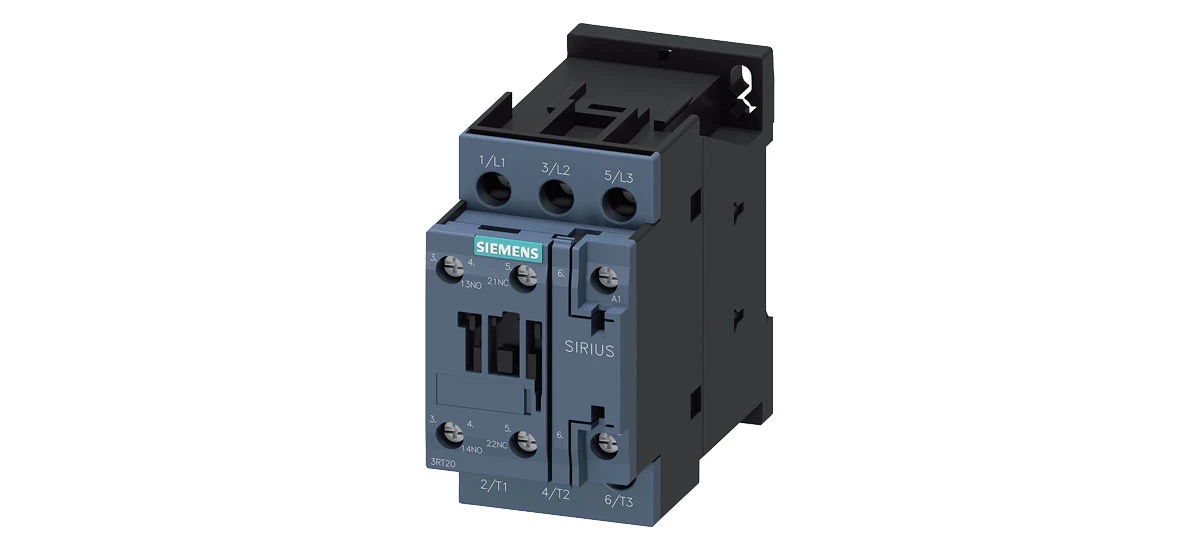
Industrial control systems are the "brains" behind factories, plants, and warehouses-they keep machines running on time and safely. A critical component of these systems is the contactor: a device that acts like a heavy-duty switch to control electricity flow to large equipment. Siemens, a company with over 175 years of experience in industrial technology, designs the Sirius 3RT2 series contactors. These contactors are a top choice for workers because they're reliable (they rarely break down), durable (they handle rough conditions), and easy to integrate into existing systems. Siemens 3RT2 contactors work in places with dust, moisture, and temperature changes-making them perfect for real-world industrial use. Let's explore their most common and important roles in industrial control systems.
Motor Control: The Top Job for Sirius 3RT2 Series Contactors
Motors are the "muscles" of industry-they power everything from small ventilation fans to large assembly-line robots. But motors are sensitive: if they get too much electricity (called an overload) or if voltage suddenly spikes (from grid changes), they can burn out or stop working forever. To prevent this, industrial teams rely on Sirius 3RT2 series contactors to manage and protect motors.
How Sirius 3RT2 Contactors Protect Motors
When a motor starts, it uses 3-5 times more current than when it's running-this is called "inrush current." Most cheap contactors can't handle this surge, but Sirius 3RT2 series contactors are built with strong metal contacts that resist wear from inrush current. They also have built-in overload protection: if the motor's current gets too high (for example, if a robot arm gets stuck), the contactor cuts power in less than 0.5 seconds. This stops the motor from overheating and breaking. Siemens 3RT2 contactors also stay cool even when powering motors for 12+ hours a day, thanks to their heat-dissipating casing.
Real-World Motor Uses
You'll find Siemens 3RT2 contactors in almost every industry that uses motors. In a car factory, they control the motors that move robotic arms to weld car frames-these arms need precise, steady power to make strong welds. In a water treatment plant, they run the motors for mixers that stir chemicals to clean water. Even in a textile mill, Siemens 3RT2 contactors power the motors of looms that make fabric. When learning how to use Sirius 3RT2 series contactors in motor control, you'll notice they work with small motors (like 1 HP fans) and medium motors (like 20 HP conveyor motors)-so factories don't need to buy different contactors for different machines.
Siemens 3RT2 Contactors in Industrial Pump Systems
Pumps are everywhere in industry: they move clean water to factories, oil to refineries, and even thick chemicals to mixing tanks. The problem with pumps is that they need constant power-if they stop suddenly, fluids can back up, pipes can burst, or production lines can shut down. Siemens 3RT2 contactors solve this by keeping pumps running smoothly.
Why Pumps Need Siemens 3RT2 Contactors
Pumps often work in harsh spots: near water (like in a wastewater plant) or in dusty warehouses. Siemens 3RT2 contactors have a sealed casing made of engineering plastic that keeps out water, dust, and even small particles of dirt. This means they don't short-circuit or rust, even in wet areas. They also provide "soft starting" for pumps: instead of turning the pump on full power instantly (which can damage pipes), the contactor slowly increases power. This reduces stress on the pump's parts and makes them last longer.
Examples of Pump System Use
Many food-processing plants use Siemens 3RT2 contactors for industrial pump systems to move liquid ingredients. For example, a candy factory uses pumps to move hot syrup from storage tanks to mixing bowls-if the pump stops, the syrup cools and hardens, ruining the batch. In a mining site, these contactors control the pumps that remove water from underground tunnels-without these pumps, mines would flood, and workers couldn't do their jobs. Even in a brewery, Siemens 3RT2 contactors power the pumps that move beer from fermentation tanks to bottles.
Controlling Conveyor Belts with Sirius 3RT2 Series Contactors
Conveyor belts are the "highways" of industry-they move boxes in warehouses, luggage at airports, and parts in factories. A broken conveyor belt can stop an entire production line, so they need contactors that are reliable and fast to respond. Sirius 3RT2 series contactors are perfect for this job.
How Contactors Help Conveyor Belts
Conveyor belts don't just run-they start and stop hundreds of times a day (for example, when a worker loads a heavy box or when a sensor detects an empty belt). Most contactors wear out quickly from all these on-off cycles, but Sirius 3RT2 series contactors have durable contacts that can handle 100,000+ cycles. They also work with sensors: many factories use photoelectric sensors that detect if a box is stuck on the belt. When the sensor sends a "jam" signal, the Sirius 3RT2 contactor stops the belt in 0.3 seconds-before the jam breaks the belt or damages other parts.
Where You'll See This
In a grocery distribution center, Siemens 3RT2 contactors in conveyor belt control systems move food boxes from trucks to storage shelves. These belts run 24/7, so the contactors need to be reliable-and they are. At an airport, they power the conveyor belts that move luggage from check-in desks to planes. If a belt stops, luggage could miss flights, so the contactors' fast response time is key. Even in a toy factory, Siemens 3RT2 contactors run the belts that carry plastic toy parts to assembly stations-they make sure parts arrive on time, so workers can build toys quickly.
Heating Equipment Regulation with Siemens 3RT2 Contactors
Many industries use heating equipment: bakeries use ovens to bake bread, metal shops use furnaces to melt steel, and plastic factories use heating tanks to melt plastic pellets. The key to good heating equipment is precise temperature control-too hot, and products burn; too cold, and they're not usable. Siemens 3RT2 contactors help keep temperatures steady.
Temperature Control for Heating Tools
Heating equipment uses heating elements (like the coils in an oven) that need electricity to get hot. A thermostat measures the temperature, and when it's too low, it tells the Siemens 3RT2 contactor to turn on the power. When the temperature reaches the set level (like 200℃ for bread ovens), the contactor turns the power off. This "on-off" cycle happens every few minutes, and Sirius 3RT2 series contactors do it without wearing out. They're also heat-resistant: even when mounted near a hot furnace (which can reach 1,000℃), their casing stays strong and doesn't melt.
Industrial Examples
A bakery uses Siemens 3RT2 contactors to control bread ovens. The ovens need to stay at 180-220℃-if the temperature drops by 10℃, the bread takes longer to bake; if it rises by 10℃, the crust burns. The contactors keep the temperature within this range, so every loaf is perfect. In a metal shop, they regulate furnaces that melt steel for car parts-steel needs to be 1,538℃ to melt, and the contactors make sure the furnace doesn't get too hot (which would waste energy) or too cold (which would leave solid steel). Even in a candle factory, Siemens 3RT2 contactors control the heating tanks that melt wax-this keeps the wax liquid but not too hot, so it pours easily into candle molds.
Sirius 3RT2 Series Contactors Compatibility with PLCs
Modern factories use PLCs (Programmable Logic Controllers)-small computers that automate machines. For example, a PLC can be programmed to start a motor at 8 AM, stop it at 12 PM for lunch, and start it again at 1 PM. But PLCs only work if the parts they control (like contactors) can "talk" to them. Sirius 3RT2 series contactors are compatible with almost all PLC brands (like Siemens S7, Allen-Bradley, and Mitsubishi), making them a favorite for automated factories.
How They Work with PLCs
PLCs send digital signals (like "on" or "off") to contactors through wires. Sirius 3RT2 series contactors have a special input port that reads these signals quickly-they respond in less than 0.1 seconds. For example, a PLC in a car assembly plant might send a "start" signal to a contactor at 8:00 AM. The contactor then turns on the power to a robotic arm, which starts welding car frames. At 5:00 PM, the PLC sends a "stop" signal, and the contactor cuts power to the arm. This automation means workers don't have to press buttons all day-they can focus on other jobs.
Benefits of This Compatibility
Factories that use Sirius 3RT2 series contactors compatibility with PLCs save time and money. A study by Siemens found that automated factories with these contactors have 30% fewer mistakes (like missed welds or wrong temperatures) than factories with manual controls. They also save energy: PLCs and contactors work together to turn off machines when they're not needed (like at night), which cuts electricity bills by 15-20%. For example, a beverage factory uses PLCs and Siemens 3RT2 contactors to run bottle-filling machines-they turn the machines off during night shifts, saving thousands of dollars in energy costs each year.
Maintenance Tips for Sirius 3RT2 Series Contactors
Even the best contactors need regular care to last. Siemens 3RT2 contactors can work for 10+ years if you follow simple maintenance steps-this saves factories money because they don't have to buy new contactors often.
Regular Cleaning
Dust and dirt are the biggest enemies of contactors. Over time, dust builds up on the metal contacts, which can cause electrical problems (like the contactor not turning on). Once a month, turn off the power to the contactor (never clean it while it's on!) and wipe it with a dry cloth. For contactors near pumps or wet areas, use a soft brush to remove dirt from the casing's small gaps. If you see cracks in the casing, replace it right away-cracks let water in, which can short-circuit the contactor.
Check Connections and Test
Loose wires can cause contactors to overheat or stop working. Every three months, use a torque wrench (a tool that measures how tight a screw is) to tighten the wires connected to the contactor. Follow Siemens' instructions-most wires need to be tightened to 5 N·m (a unit of torque). Then, test the contactor: turn the power on and press the "start" button. The contactor should click and turn on the connected machine (like a motor or pump) smoothly. If it makes a buzzing noise or doesn't turn on, check the wires again or call a Siemens technician for help. Following these maintenance tips for Sirius 3RT2 series contactors will keep your industrial control system running without unexpected stops.
Why Choose Sirius 3RT2 Series Contactors?
Siemens 3RT2 contactors aren't just another industrial part-they're designed to make factories safer, more efficient, and more reliable. They're durable: their metal contacts and sealed casings handle dust, moisture, and heat that would break other contactors. They're flexible: they work with motors, pumps, conveyors, heating equipment, and PLCs-so factories only need one type of contactor for multiple machines. They're also safe: their overload protection and fast response times prevent machine damage and keep workers safe from electrical hazards. Plus, Siemens has a global service network-if you have a problem with a Sirius 3RT2 contactor, you can call a technician in almost any country. Whether you're running a small bakery or a large car factory, Siemens 3RT2 contactors are a smart choice for your industrial control system.


