

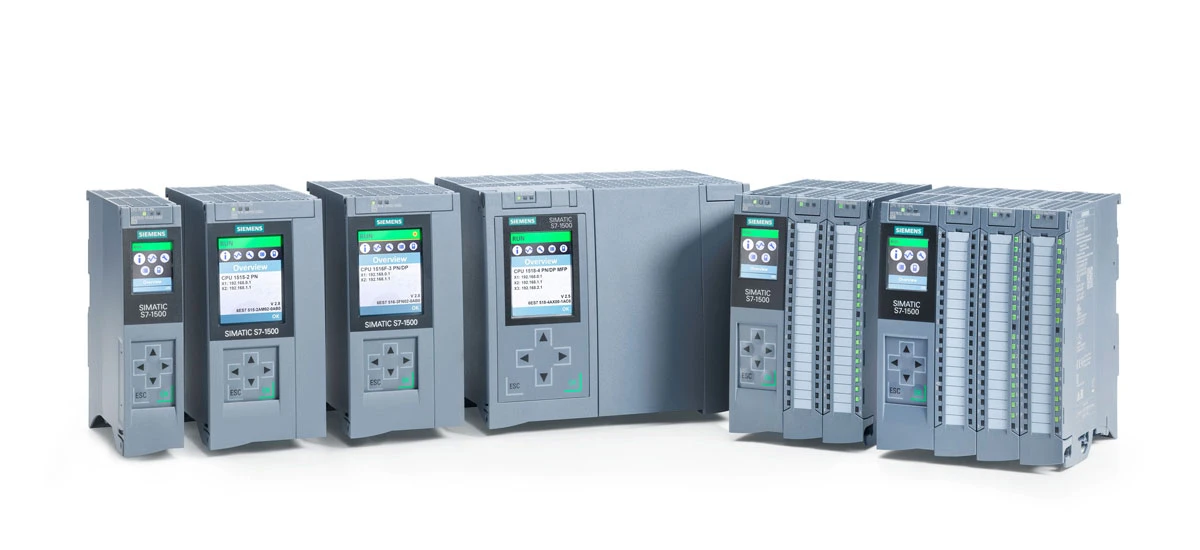
In today's smart factories, machines and systems need to "talk" to each other smoothly. At the center of this communication is the Programmable Logic Controller (PLC), and Siemens PLC stands out as a reliable choice for many manufacturers. To make Siemens PLC work seamlessly with other factory equipment, different communication protocols are used. These protocols act like common languages that let Siemens PLC share data, send commands, and keep the entire production line running efficiently. In this blog, we'll explore three key Siemens PLC communication protocols-Profinet, MPI, and OPC UA-and how they help connect the dots in factory integration. Whether you're new to industrial automation or looking to optimize your factory's communication setup, understanding these protocols is essential for getting the most out of your Siemens PLC.
Understanding the Basics: What Are Siemens PLC Communication Protocols?
Before diving into specific protocols, let's clarify what a communication protocol is in the context of Siemens PLC. A protocol is a set of rules that governs how data is transmitted between devices. For a factory, this means ensuring that a Siemens PLC can send information to sensors, motors, human-machine interfaces (HMIs), and even upper-level management systems without errors or delays. Siemens PLC supports multiple protocols, each designed for different needs-some for fast real-time communication, some for simple device connections, and others for secure data exchange across different systems. The right protocol choice depends on your factory's size, the type of equipment you use, and your integration goals.
Profinet: High-Speed, Real-Time Communication for Siemens PLC
Profinet is one of the most widely used Ethernet-based protocols for Siemens PLC, especially in modern smart factories. It's designed for high-speed, real-time communication, making it perfect for applications where every millisecond counts-like assembly lines, robotics, and packaging systems. Unlike older protocols that use specialized cables, Profinet uses standard Ethernet cables, which makes installation and maintenance easier and more cost-effective for factories.
Key Features of Profinet for Siemens PLC Integration
One of the biggest advantages of Profinet is its compatibility with Siemens PLC models such as the S7-1200, S7-1500, and S7-300/400 series. It supports both cyclic communication (regular, repeated data exchange) and acyclic communication (one-time data transfer for setup or diagnostics). For example, a Siemens PLC using Profinet can continuously send speed commands to a robotic arm (cyclic) and occasionally receive firmware update data (acyclic). Another key feature is its ability to handle large numbers of devices-up to 1000 nodes per network-making it suitable for large-scale factory integration.
Real-World Applications of Profinet with Siemens PLC
Many automotive factories rely on Siemens PLC and Profinet for their production lines. For instance, a car assembly plant might use Siemens S7-1500 PLCs connected via Profinet to control robotic welders, conveyor belts, and quality inspection cameras. The real-time communication ensures that each step of the assembly process is synchronized-when a conveyor belt moves a car chassis into position, the PLC immediately sends a signal to the welder to start working. This synchronization reduces production delays and improves product quality. Another application is in food and beverage manufacturing, where Siemens PLC with Profinet monitors temperature sensors and control valves to maintain consistent product quality. The use of standard Ethernet also makes it easy to integrate these systems with factory management software for better visibility into production data.
MPI: Simple, Cost-Effective Communication for Legacy Siemens PLC
MPI (Multi-Point Interface) is an older communication protocol used primarily with legacy Siemens PLC models, such as the S7-200 and S7-300. While it's not as fast or feature-rich as Profinet, MPI is still relevant in many factories that use older automation systems. It's a simple, cost-effective protocol designed for small-scale communication between a Siemens PLC and a limited number of devices-usually up to 32 nodes per network.
How MPI Works with Siemens PLC
MPI uses a proprietary cable (MPI cable) to connect Siemens PLCs to HMIs, programming devices, or other PLCs. It operates at a maximum baud rate of 187.5 kbps, which is slower than Profinet but sufficient for simple applications. For example, a small packaging machine using a Siemens S7-200 PLC might use MPI to communicate with a local HMI that displays production counts and allows operators to adjust settings. MPI is also used for programming and debugging Siemens PLCs-technicians can connect a laptop to the PLC via MPI to upload or download program code. While MPI is being phased out in new installations, understanding it is important for factories that need to maintain or upgrade their existing Siemens PLC systems.
When to Use MPI with Siemens PLC
MPI is best suited for small factories or standalone machines where the communication needs are simple. It's a good choice if you're using older Siemens PLC models that don't support Profinet or if you have a limited budget for automation upgrades. However, if you need real-time communication or plan to integrate multiple devices, MPI may not be the best option. In such cases, many factories choose to upgrade their Siemens PLC systems to support Profinet or use a gateway to connect MPI-based PLCs to newer protocols. Despite its limitations, MPI remains a reliable choice for many small-scale applications, and Siemens still provides support for MPI in its legacy PLC models.
OPC UA: Secure, Interoperable Communication for Siemens PLC and Beyond
OPC UA (Open Platform Communications Unified Architecture) is a modern, platform-independent protocol that solves a major challenge in factory integration: interoperability. Unlike Profinet and MPI, which are primarily used with Siemens devices, OPC UA allows Siemens PLC to communicate with devices from other manufacturers-such as Rockwell, Schneider, or Allen-Bradley. It's also designed with security in mind, making it ideal for transmitting sensitive data across factory networks and even to cloud-based systems.
Key Advantages of OPC UA for Siemens PLC Integration
One of the biggest benefits of OPC UA is its platform independence-it works on Windows, Linux, and even embedded systems, which means it can connect Siemens PLC to a wide range of devices and software. It also uses a secure communication channel with encryption and authentication, protecting data from unauthorized access. For example, a Siemens PLC in a chemical plant can use OPC UA to send production data to a cloud-based analytics platform without worrying about data breaches. Another advantage is its scalability-OPC UA can handle small-scale communication between a few devices and large-scale integration across multiple factories.
Integrating OPC UA with Siemens PLC
Most modern Siemens PLC models, such as the S7-1200, S7-1500, and TIA Portal, support OPC UA natively. This makes integration easy-technicians can configure OPC UA communication directly through the TIA Portal software, without the need for additional hardware. For legacy Siemens PLC models that don't support OPC UA, gateways are available to convert signals between MPI/Profinet and OPC UA. OPC UA is also used to connect Siemens PLC to enterprise resource planning (ERP) systems, allowing factory data to be integrated with business processes. For example, production data from a Siemens PLC can be sent via OPC UA to an ERP system to update inventory levels and production schedules in real time.
Connecting the Dots: Choosing the Right Protocol for Siemens PLC Factory Integration
Choosing the right communication protocol for your Siemens PLC depends on several factors: your factory's size, the age of your equipment, your communication speed needs, and your integration goals. Here's a quick guide to help you decide:
- Use Profinet if you need high-speed, real-time communication for modern smart factory applications. It's ideal for large-scale integration with multiple devices and works with most new Siemens PLC models.
- Use MPI if you're maintaining legacy Siemens PLC systems or have small-scale communication needs. It's cost-effective but limited in speed and scalability.
- Use OPC UA if you need secure, interoperable communication between Siemens PLC and devices from other manufacturers, or if you want to integrate factory data with cloud-based systems or ERP software.
Many factories use a combination of these protocols to meet their diverse needs. For example, a large manufacturing plant might use Profinet for real-time control of production lines, MPI for maintaining legacy machines, and OPC UA for integrating all factory data with a central management system. The key is to understand your specific requirements and choose the protocols that best support your factory's integration goals.
Conclusion: The Role of Siemens PLC Communication Protocols in Modern Factories
Siemens PLC communication protocols-Profinet, MPI, and OPC UA-are the backbone of factory integration. They enable Siemens PLC to connect with sensors, motors, HMIs, and management systems, ensuring that production processes are efficient, synchronized, and secure. Profinet offers speed and real-time performance for modern smart factories, MPI provides a cost-effective solution for legacy systems, and OPC UA ensures interoperability and security across diverse devices and platforms. By understanding these protocols and choosing the right ones for your needs, you can unlock the full potential of your Siemens PLC and create a more connected, efficient factory. Whether you're upgrading your existing system or building a new smart factory, Siemens PLC and its supported protocols are essential tools for success in industrial automation.


