

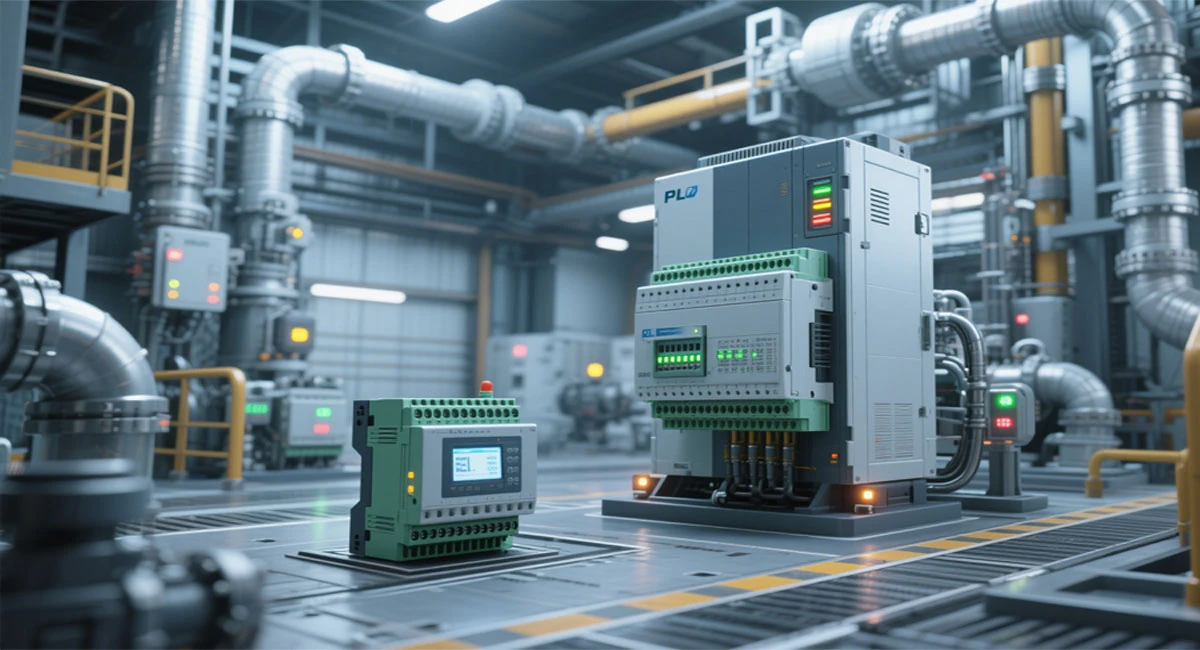
Development Trends of Micro PLCs
Miniaturization and High Density
With significant improvements in semiconductor technology, micro PLCs are becoming smaller and more integrated. Initially, micro PLCs just had basic digital input/output operations, but they now include functionality such as analog processing, communication interfaces, and even motion control within compact devices. For example, in smart agricultural greenhouse control systems, a certain brand of micro PLC, due to its small size, can be readily put inside control cabinets positioned in greenhouse corners.
It can use digital input/output ports to control devices like shade curtains and irrigation valves, as well as its integrated analog inputs to collect temperature and light sensor data. It uses built-in PID algorithms to automatically alter fan speeds and illumination settings. Compared to standard installations that use many independent controllers, this mini PLC saves more than 60% of installation space, decreases device wiring complexity, and improves overall system reliability.
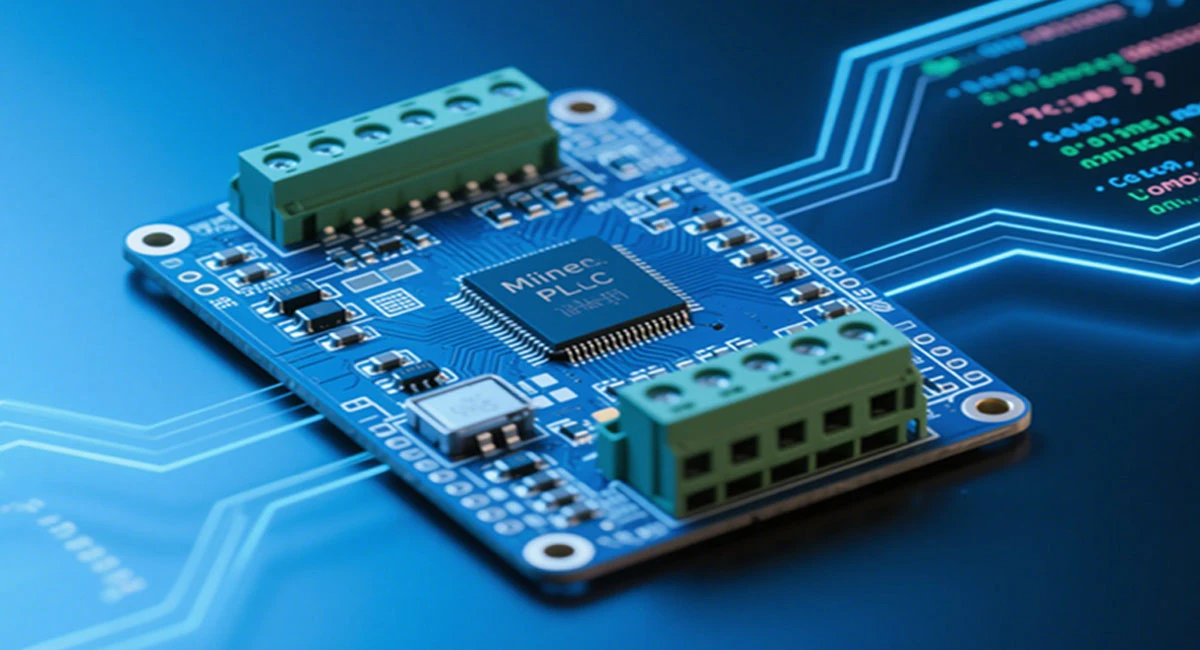
Cost Efficiency Optimization
When it comes to automation technology, many small and medium-sized businesses prioritize cost, and mini PLCs provide distinct advantages in this area. For example, when a small food processing firm was renovating its biscuit packaging line, the company employed free basic-function micro PLC programming software for the early development. Engineers employed free ladder diagram programming features to quickly complete the packing machine's control logic, which included conveyor start/stop, film cutting, and biscuit counting.
When more complicated services like defect diagnosis and production data analysis were required, they ordered premium modules. This strategy lowered the entire automation conversion cost by about 25% when compared to traditional PLC solutions. Furthermore, the hardware cost of this mini PLC was significantly lower, priced at only two-thirds of identical regular PLCs, dramatically relieving financial burden on small and medium-sized businesses.
Expanded Application Scenarios
The spectrum of micro PLC applications has expanded beyond classic simple logic control. In smart building elevator systems, micro PLCs can act as the primary controller for intelligent elevator dispatching. Real-time data on elevator functioning and passenger demand can be obtained by connecting to floor buttons, door magnetic sensors, and weighing sensors. Micro PLCs, using preset scheduling algorithms, can fairly arrange elevator stops, minimizing superfluous trips and extended wait times and thereby boosting internal building travel efficiency.
Furthermore, micro PLCs can communicate with property management systems to upload elevator operation data, allowing property workers to monitor and receive failure alarms remotely. In logistics and warehousing, mini PLCs are commonly employed to control automatic sorting carts. In an e-commerce company's tiny warehouse, these carts fitted with micro PLCs can precisely control motors to travel along designated paths based on scanned order information, accurately sorting goods into the respective shipping outlets, significantly boosting sorting efficiency and accuracy.
Development Trends of Large PLCs
High-Performance Computing and Complex Control
Large PLCs are typically employed in critical industrial systems requiring high control precision, rapid response times, and stability, such as car manufacturing, steel metallurgy, and petrochemicals. Large PLCs serve as the primary control system in a battery production line for new energy vehicles. The line has to build hundreds of battery modules each minute, which requires precision operations such as welding, liquid injection, and testing.
Large PLCs, with multi-core processors and sophisticated floating-point processing capabilities, can process real-time data from hundreds of devices, including vision inspection systems, pressure sensors, and temperature sensors, in milliseconds. They use advanced control algorithms to precisely manage the trajectories of robotic arms, enable real-time adjustment of injection pump flow rates, and maintain accurate electrolyte injection. If an irregularity is identified in any process, huge PLCs can react quickly to halt the production line and activate alarms, preventing the creation of large quantities of substandard items.
Powerful Communication and Networking Capabilities
As Industry 4.0 and smart manufacturing concepts evolve, industrial IoT (IIoT) has become an unavoidable trend in industry, necessitating increased communication and networking capabilities from massive PLCs. In a significant steel joint venture, the entire production process-mining, beneficiation, ironmaking, steelmaking, and rolling-consists of thousands of devices managed by huge PLCs spread across multiple plants. These PLCs enable fast data transfer and coordination between devices using industrial Ethernet, PROFIBUS, and other communication protocols.
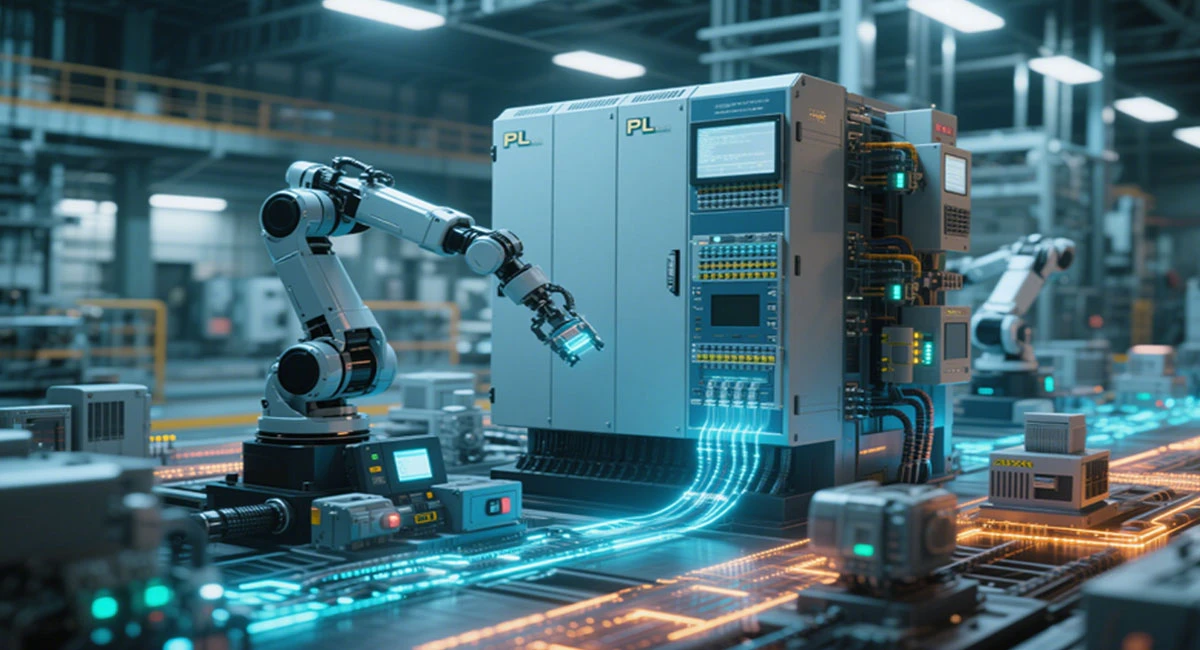
They also communicate smoothly with the company's ERP and MES systems, uploading real-time information including production plans, equipment condition, and quality inspection reports. After management gives production instructions using these systems, massive PLCs can swiftly decompose and communicate commands to multiple pieces of equipment, allowing for full-process intelligent management from planning to execution. Furthermore, remote monitoring allows personnel at headquarters to monitor equipment characteristics in real time, perform remote diagnostics, and update programs, resulting in increased operational efficiency.
High Reliability and Redundancy Design
In large-scale industrial production, system reliability is crucial for both safety and economic efficiency; any breakdown can result in severe losses. Large PLCs are used in the ethylene cracking plant of a major petrochemical business. They have redundant power supplies, CPUs, and communication modules. If the primary CPU fails while in operation, the redundant CPU immediately takes over control within 5 milliseconds, with no influence on the plant's routine operations. This ensures that the ethylene cracking process operates continuously.
Furthermore, these huge PLCs include self-diagnostic software, which performs dozens of system checks per second. If sensor data anomalies or communication link interruptions are noticed, alarms are promptly activated, and the defect is documented. Maintenance personnel may promptly discover faults and execute repairs using these records, eliminating production downtime and safety incidents caused by device failures. This redundancy design increased the ethylene cracking unit's continuous operation period from 300 to over 500 days, significantly increasing the plant's production.
Micro PLCs
Micro PLCs can accomplish the same automation duties as large-series PLCs; simply select the appropriate version for your project. When making a decision, keep normal I/O counts in mind, and movement control is often an important consideration. Some systems only support variable frequency drives (VFDs), while others allow servo drives with a limited number of axes. Another key component to examine is how the system interacts with machinery, namely the Human-Machine Interface (HMI) capabilities. Most mini PLCs cannot communicate directly with regular HMIs; however, many PLC manufacturers provide micro HMI products with connectivity options.
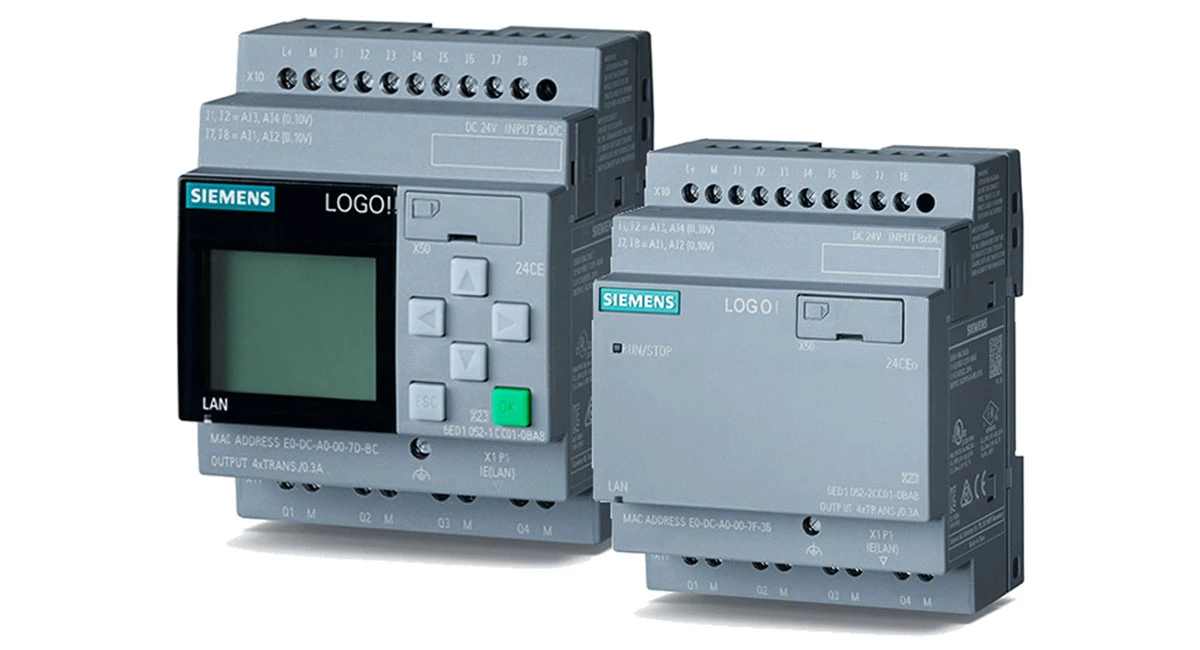
Siemens' LOGO! series, for example, includes specific HMI designs that enable developers to alter display text and change backdrop colors directly from programming environments. In contrast, B&R and Beckhoff systems use HTML5 programming languages, which allow any web browser to operate as an HMI interface.
After selecting the micro PLC and HMI based on I/O, motion control, and hardware, data storage requirements become a critical issue. Memory constraints become crucial when storing recipes or huge lists of persistent variables. Large devices or automation projects often necessitate the storage of large amounts of program code, which can surpass the processing capabilities of a tiny PLC. Some micro PLC systems allow for the storage of recipe data via USB ports or Micro SD card slots, although they frequently do not handle variable data. To completely comprehend the functional restrictions of your chosen micro PLC, thoroughly research its technical specifications.
Collaborative Development of Micro PLCs and Large PLCs
Although micro PLCs and large PLCs have different capabilities, application scenarios, and other characteristics, they are seldom used separately in practical industrial automation projects. Instead, they show a trend toward synergistic development. For example, in a large automobile manufacturing enterprise's welding shop, large PLCs are in charge of controlling the overall production line pacing and scheduling, as well as coordinating work sequences at various stations to ensure that each vehicle's welding process runs as planned. Meanwhile, at each welding station, micro PLCs manage the welding robots' particular movements. Based on the large PLC's instructions, the micro PLC accurately handles welding current, speed, and angle to ensure constant weld quality.
Looking ahead, both micro and large PLCs will continue to innovate along their individual development routes while also attaining closer collaboration in new domains. Whether small businesses seek cost savings and flexibility or huge corporations require great performance and dependability, their expanding capabilities will better match these objectives. This ongoing innovation will provide sustained momentum to industrial automation, allowing the manufacturing industry to progress toward greater intelligence and efficiency.


