

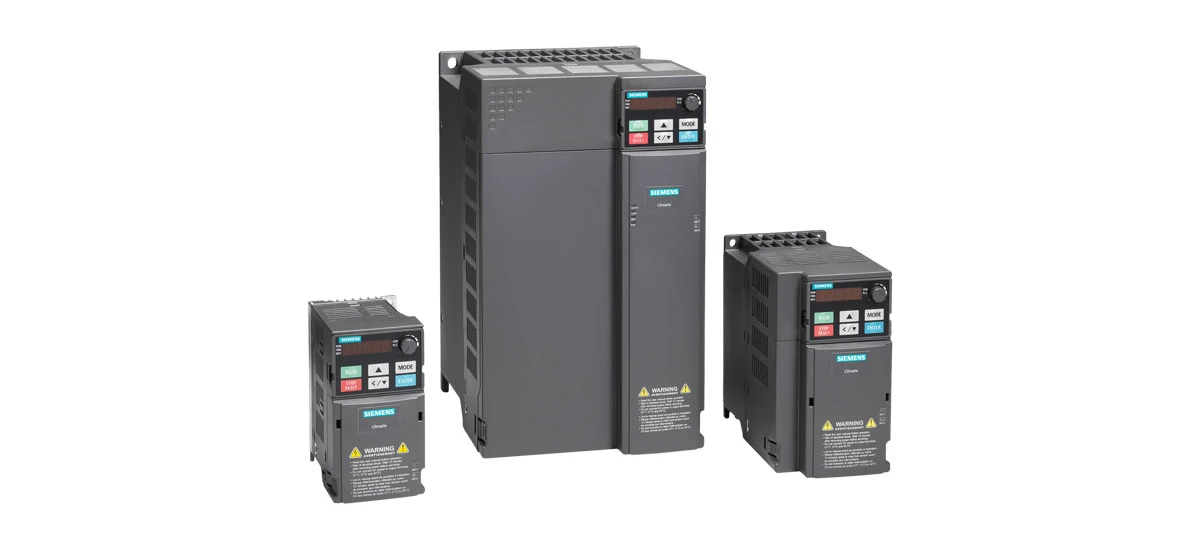
In many industrial places, like factories and warehouses, we often use multiple motors to do different jobs. For example, conveyor belts, pumps, and machine tools all need several motors to work together. But using one variable frequency drive (VFD) for each motor is expensive and takes up a lot of space. That's where the Siemens VFD comes in. The Siemens VFD is a smart device that can control multiple motors at the same time, saving money and making operations easier. Today, we will talk about how to use a single Siemens VFD to control multiple motors, including its configurations, load sharing methods, advantages, and practical tips. If you want to know how to control multiple motors with a single Siemens VFD, this blog is for you.
What Is a Siemens VFD and Why Use It for Multi-Motor Control?
First, let's understand what a Siemens VFD is. VFD stands for Variable Frequency Drive, and it is a device that controls the speed and torque of an electric motor by changing the frequency of the power supply. The Siemens VFD is one of the most reliable and popular VFDs in the industry, made by Siemens, a world-famous company for industrial equipment. It has many models, such as SINAMICS V20, SINAMICS G120, and MICROMASTER 440, which are all suitable for multi-motor control tasks.
Using a single Siemens VFD to control multiple motors has many benefits. First, it reduces costs-you don't need to buy a separate VFD for each motor. Second, it saves space because one Siemens VFD takes up less room than several small VFDs. Third, it is easier to maintain and operate, as you only need to set up and check one Siemens VFD instead of many. Finally, the Siemens VFD is energy-efficient, which can help you save electricity bills. Many industrial users choose Siemens VFD multi-motor parallel configuration to cut costs and improve efficiency.
Common Configurations of Multi-Motor Control with Single Siemens VFD
There are three main configurations to control multiple motors with a single Siemens VFD. Each configuration is suitable for different industrial needs, and you can choose the right one based on your motors and tasks. All these configurations use the Siemens VFD as the core control device, ensuring stable and reliable operation.
1. Parallel Configuration
The parallel configuration is the simplest and most common way to use a single Siemens VFD for multi-motor control. In this setup, all motors are connected directly to the output of the Siemens VFD. The Siemens VFD sends the same voltage and frequency to all motors, so they run at the same speed and share the load evenly. This configuration is perfect for motors that need to work at the same speed, such as conveyor belts, fans, and pumps.
When using the parallel configuration with a Siemens VFD, there are a few important things to remember. First, all motors should have the same voltage, power, and speed ratings. If the motors are different, they may not share the load properly. Second, the total current of all motors must be less than the output current of the Siemens VFD. For example, if you have 10 small motors with a total current of 20A, your Siemens VFD should have an output current of at least 20A (it's better to choose a Siemens VFD with a 20% higher current to avoid overloading). Third, each motor needs its own overload protection, because the Siemens VFD can only protect the total load, not individual motors. This is one of the key points of Siemens VFD multi-motor parallel configuration.
Siemens VFD models like SINAMICS V20 and G120 are ideal for parallel configuration. They support V/f control mode (P1300=0), which is perfect for multi-motor parallel operation. You also need to set the Siemens VFD's motor parameters to the sum of all motors' parameters, such as total power and total current, to ensure proper control.
2. Master-Slave Configuration
The master-slave configuration is used when motors need to work together but have different roles. In this setup, one motor is the "master" and the others are "slaves." The Siemens VFD controls the master motor's speed, and the slave motors follow the master's torque or speed signal. This configuration is often used for mechanically coupled motors, such as conveyor belts with multiple sections or machines with multiple axes.
Here's how it works with a Siemens VFD: The master motor is connected to the Siemens VFD's main output, and it uses speed control mode. The slave motors are connected to the Siemens VFD's auxiliary outputs or other signal ports. The Siemens VFD sends the master motor's torque signal to the slave motors, so the slaves adjust their torque to match the master. This ensures that all motors share the load evenly, even if the load changes.
For example, in a conveyor belt system with two motors, the master motor controls the main speed, and the slave motor helps pull the belt. The Siemens VFD (like SINAMICS G120 or MICROMASTER 440) ensures that both motors work together without fighting each other. You can set the Siemens VFD's parameters to make the slave motor follow the master's torque, which is a key part of load sharing methods for Siemens VFD in multi-motor systems.
3. Cascaded Configuration
The cascaded configuration is less common but useful for complex systems where motors need to work in a sequence. In this setup, the output of one motor (or its signal) is connected to the input of another motor, and the Siemens VFD controls the first motor (the "leader"). The leader motor's speed or torque signal controls the next motor, and so on. This configuration is often used in machines with multiple stages, such as production lines with different processing steps.
The Siemens VFD plays a key role in the cascaded configuration by controlling the leader motor's speed and torque. It ensures that each motor in the sequence works in sync, so the entire system runs smoothly. For example, in a food processing line, the first motor (controlled by the Siemens VFD) moves the food to the next stage, and the second motor adjusts its speed based on the first motor's signal. This prevents jams and ensures efficient production.
Load Sharing in Multi-Motor Control with Siemens VFD
Load sharing is the process of distributing the total load evenly among multiple motors controlled by a single Siemens VFD. It is very important because if one motor takes too much load, it can overheat and break down. The Siemens VFD has built-in features to help with load sharing, making it easy to keep all motors working properly. Load sharing methods for Siemens VFD in multi-motor systems are simple to implement and reliable.
What Is Load Sharing and Why It Matters?
When multiple motors work together, they need to share the load. For example, if two motors are pulling a conveyor belt, each should pull about half of the total weight. If one motor pulls 80% of the load and the other only 20%, the first motor will wear out faster and may fail. Load sharing ensures that each motor takes its fair share of the load, extending the life of the motors and the Siemens VFD.
Without proper load sharing, motors can work against each other, causing vibrations, noise, and even system failure. The Siemens VFD solves this problem by adjusting the voltage and frequency sent to each motor, ensuring that the load is distributed evenly. This is one of the reasons why the Siemens VFD is so popular for multi-motor control.
How Siemens VFD Enables Load Sharing
The Siemens VFD uses several methods to enable load sharing, depending on the configuration. Here are the most common ones:
- Torque Coupling: In the master-slave configuration, the Siemens VFD controls the master motor's speed and sends its torque signal to the slave motors. The slave motors adjust their torque to match the master, so the load is shared evenly. This method is simple and effective for mechanically coupled motors.
- Speed Override with Torque Limit: The Siemens VFD sets a maximum torque for each motor, so no single motor takes too much load. If one motor's torque exceeds the limit, the Siemens VFD reduces its speed slightly to balance the load.
- Droop and Compensation: The Siemens VFD uses a "droop" feature, which reduces the speed of a motor when its load increases. This allows other motors to take more load, balancing the total load. The Siemens VFD also has compensation features to adjust for small speed differences between motors.
All these methods are built into the Siemens VFD, so you don't need extra equipment. You just need to set the right parameters on the Siemens VFD to enable load sharing. Siemens VFD parameter setting for multi-motor load sharing is straightforward, even for beginners.
Common Load Sharing Challenges and Siemens VFD Solutions
Even with a Siemens VFD, you may face some load sharing challenges. Here are the most common ones and how to solve them with the Siemens VFD:
- Motor Differences: If motors have different power or speed ratings, they may not share the load evenly. Solution: Use motors with the same ratings, or adjust the Siemens VFD's parameters to compensate for the differences. The Siemens VFD allows you to set different torque limits for each motor, ensuring fair load sharing.
- Cable Length Issues: If the cables from the Siemens VFD to each motor are different lengths, the signal may be delayed, causing load imbalance. Solution: Keep the cable lengths as equal as possible. If that's not possible, use output chokes with the Siemens VFD to extend the cable length and reduce signal delay.
- Faulty Motors: If one motor is faulty, it may not take its share of the load, putting more stress on the other motors. Solution: The Siemens VFD has built-in fault detection features. If a motor fails, the Siemens VFD can shut down the system or adjust the load to the remaining motors, preventing further damage.
Advantages of Using Single Siemens VFD for Multi-Motor Control
Using a single Siemens VFD to control multiple motors has many advantages, which is why it's widely used in industry. These advantages make the Siemens VFD a top choice for multi-motor control systems. Advantages of using single Siemens VFD for multi-motor control include cost savings, easy operation, and energy efficiency.
1. Cost Savings
The biggest advantage is cost savings. Buying one Siemens VFD is much cheaper than buying multiple VFDs for each motor. You also save money on installation, wiring, and maintenance. For example, a factory with 6 motors can save thousands of dollars by using one Siemens VFD instead of 6 separate VFDs. This is especially useful for small and medium-sized businesses.
2. Easy Operation and Maintenance
Operating and maintaining one Siemens VFD is much easier than managing multiple VFDs. You only need to learn how to use one device, and you can set up all motors from the Siemens VFD's control panel or software. Maintenance is also simpler-you only need to check and service one Siemens VFD, which saves time and labor.
3. Energy Efficiency
The Siemens VFD is designed to be energy-efficient. It adjusts the frequency and voltage based on the load, so it uses only the electricity needed. When controlling multiple motors, the Siemens VFD optimizes the energy use of all motors, reducing electricity bills. For example, if the load is light, the Siemens VFD reduces the frequency, making the motors run slower and use less energy.
4. Stable and Reliable Performance
Siemens is known for its high-quality industrial equipment, and the Siemens VFD is no exception. It is built to handle harsh industrial environments and has a long service life. The Siemens VFD's load sharing features ensure that all motors work stably, reducing the risk of breakdowns and downtime. This makes the entire system more reliable and efficient.
Practical Tips for Siemens VFD Multi-Motor Control
If you are planning to use a single Siemens VFD to control multiple motors, here are some practical tips to help you get the best results. These tips will help you set up the Siemens VFD correctly and ensure smooth operation. Siemens VFD parameter setting for multi-motor load sharing is a key part of these tips.
1. Choose the Right Siemens VFD Model
Not all Siemens VFD models are suitable for multi-motor control. Choose a model that supports multi-motor operation, such as SINAMICS V20, SINAMICS G120, or MICROMASTER 440. Consider the total power and current of your motors when choosing the Siemens VFD. The Siemens VFD's rated current should be at least equal to the total current of all motors, and it's better to choose a model with a 20% buffer to avoid overloading.
2. Set Up the Siemens VFD Parameters Correctly
Proper parameter setting is crucial for multi-motor control with the Siemens VFD. Here are some key parameters to set:
- Control Mode: Use V/f control mode (P1300=0) for parallel configuration, and vector control or torque control for master-slave configuration.
- Motor Parameters: Enter the total power, total current, and other parameters of all motors into the Siemens VFD. For parallel configuration, set the motor parameters to the sum of all motors.
- Load Sharing Parameters: Enable the load sharing feature on the Siemens VFD and set the torque limits for each motor. This ensures that the load is distributed evenly.
You can find detailed parameter setting guides in the Siemens VFD's user manual, or you can consult a Siemens technician for help.
3. Install Proper Protection for Each Motor
As mentioned earlier, the Siemens VFD can only protect the total load, not individual motors. So, each motor needs its own overload protection, such as a thermal relay or motor temperature sensor. This prevents individual motors from overheating and breaking down.
4. Check Cable Lengths and Connections
Make sure the cables from the Siemens VFD to each motor are as equal in length as possible. This prevents signal delays and load imbalance. Use high-quality cables to reduce interference, and avoid connecting or disconnecting motors while the Siemens VFD is running-this can cause voltage surges and damage the Siemens VFD.
5. Test the System Before Full Operation
Before running the system at full load, test it with a light load. Check if all motors are running at the same speed, if the load is shared evenly, and if the Siemens VFD is working properly. Make any necessary adjustments to the Siemens VFD's parameters before putting the system into full operation.
Conclusion
Using a single Siemens VFD to control multiple motors is a cost-effective, efficient, and reliable solution for many industrial applications. The Siemens VFD offers three main configurations-parallel, master-slave, and cascaded-each suitable for different needs. Its built-in load sharing features ensure that all motors work together smoothly, extending their life and reducing downtime. Whether you are controlling conveyor belts, pumps, or machine tools, the Siemens VFD can help you save money, energy, and time.
If you want to implement multi-motor control, the Siemens VFD is the perfect choice. Remember to choose the right model, set the parameters correctly, and follow the practical tips we discussed. With the Siemens VFD, you can easily control multiple motors and improve the efficiency of your industrial system. Whether you're looking to learn how to control multiple motors with a single Siemens VFD or want to optimize your existing system, the Siemens VFD has everything you need.


