


A programmable logic controller (PLC) is the decision-making core of almost every automated line, and the advantages of PLC in industrial automation are well established: higher throughput, less downtime, stronger safety, and a clear return on investment. What most guides skip is the part that decides whether you actually capture those gains. That part is choosing the right PLC type and brand, then sourcing genuine hardware at a lead time your production can live with. This guide covers both the benefits and the buying decision behind them.

What Is a PLC and Why It Still Powers Industries
A PLC in one minute
A PLC is an industrial-grade computer built to control machines and processes in real time. It reads signals from field devices through input modules, runs your control logic on a CPU, and switches outputs to drive motors, valves, and actuators. Unlike an office computer, it is designed to run for years in heat, dust, and vibration, and unlike fixed relay wiring, its behavior is defined in software, so the same hardware can run different logic.
Where a PLC sits in a modern control stack
A PLC rarely works alone. It is the brain that holds the logic, while the HMI gives operators a screen to monitor and adjust the process, the variable frequency drive (VFD) regulates motor speed and torque, and sensors feed the controller live data from the line. Together these four parts form a working production cell: sense, decide, display, and drive. Understanding that division of labor makes the next question easier, which is what the controller itself actually buys you.
7 Core Advantages of PLCs in Industrial Automation
These are the benefits that bring buyers to the topic. They are the entry ticket, not the differentiator, so each one below also lands on what it means for your selection or purchase.

1. Higher efficiency and throughput
Automated logic runs continuously with consistent cycle times, removing the variation that comes with manual handling and shift fatigue. A packaging or bottling line under PLC control holds a steady pace across a full shift, where manual operation drifts. The exact gain depends on the line and the product, so treat any single percentage with caution. For buyers, throughput targets translate directly into a hardware requirement: faster cycles need a CPU with enough scan speed and memory for your program.
2. Less downtime and predictive maintenance
A PLC does more than run the process; it watches it. By tracking abnormal trends in temperature, vibration, or motor current, the controller can flag a developing fault hours or days before it stops the line, depending on the failure mode. That shifts maintenance from reactive to planned. The buying implication is concrete: if predictive maintenance matters to you, plan for the diagnostic and communication modules that collect and report that data, not just the base CPU.
3. Safety and compliance
Safety logic in a PLC reacts faster and more consistently than a human operator. Interlocks prevent a machine from starting when a guard is open, and emergency routines isolate faulty equipment in milliseconds. Standards shape how this is done. IEC 61131 defines how PLCs are programmed and built; functional safety standards such as IEC 61508 and ISO 13849 govern safety-rated control; and in the United States, OSHA rules under 29 CFR 1910 cover machine safeguarding. The takeaway for buyers: safety-critical applications call for a safety-rated PLC, not a standard one.
4. Flexibility and fast changeover
Because logic lives in software, switching a line to a new product or recipe is a program change rather than a rewiring job. What once took days of physical rework can become a controlled software update measured in hours. This is the single biggest reason high-mix, low-volume plants favor PLCs. If you change formats often, weigh reprogrammability and recipe handling heavily when you specify the controller.
5. Reliability in harsh environments
Industrial PLCs are built with solid-state construction and no mechanical relays to wear out, so they hold up where dust, moisture, and vibration would disable ordinary electronics. Ratings tell you how far you can push them: the IP rating describes sealing against dust and water, and the spec sheet states the operating temperature range. For buyers, the rule is simple. Match the IP rating and temperature range on the datasheet to the real conditions on your floor, not to an average.
6. Scalability and easy integration
Where flexibility is about software, scalability is about hardware. A modular PLC lets you add input and output modules, or extra stations, as the line grows, instead of replacing the whole controller. That protects your investment when production expands. The decision point is timing: if you expect to add I/O or functions later, choose a modular platform now rather than buying a fixed unit you will outgrow.
7. Strong return on investment
A PLC pays back through saved labor, less unplanned downtime, lower scrap, and reduced energy use. A practical way to frame it is payback period equals total installed cost divided by annual savings, where savings combine labor, downtime, and energy. The honest answer is that the result depends on your line, the model you pick, and the cost of keeping it supplied. That last point matters more than most buyers expect, which is why the real decision sits in the next three sections, not in the benefits list.
Those advantages are only as good as the controller you choose to deliver them. The part most articles leave out, and the part that decides your results, is selecting the right type, the right brand, and the right source. That is where the rest of this guide focuses.
How the Advantages Differ by PLC Type, and Which to Choose
Before branding, decide the class of controller. Picking the wrong type is the most common and most expensive sizing mistake.
Compact vs modular vs distributed PLCs
|
PLC type |
Best for |
Typical I/O scale |
Expandability |
Relative cost |
Example use |
|
Compact (all-in-one) |
Small standalone machines |
Tens of points |
Limited |
Lowest |
A single packaging machine or skid |
|
Modular (rack based) |
Production lines that may grow |
Hundreds and up |
High, add modules |
Mid to high |
A multi-station line needing future I/O |
|
Distributed (remote I/O over a network) |
Large or spread-out systems |
Very high across nodes |
Very high |
Highest |
A plant with conveyors and cells across areas |
In short: a small fixed machine points to a compact unit, a line you plan to expand points to a modular platform, and a large or geographically spread system points to distributed I/O. When you reach the expansion question, browse the PLC modules that let a modular system scale by CPU, I/O, and communication cards.
How to size I/O, CPU, and communication protocols
Count your inputs and outputs, separate digital from analog, and add roughly 20 percent spare capacity so a future sensor or actuator does not force a redesign. Size the CPU to your program: larger or faster logic needs more memory and a shorter scan time. For communication, let your existing equipment decide the protocol. Profinet is common in Siemens-centric plants, EtherNet/IP fits Allen-Bradley environments, and Modbus stays useful for mixed or legacy hardware because almost everything speaks it. A common mistake worth avoiding: ordering exactly the I/O count you need today, then paying for a new rack the first time you add a device.
A quick checklist for matching a PLC type to your line
Run through these before you settle on a type:
- How many I/O points today, and how many after the next expansion?
- Will the system need to grow or add remote stations later?
- What are the real conditions on the floor (IP rating, temperature)?
- Which communication protocol does your existing equipment use?
- Is a safety-rated controller required?
- What is your budget and your acceptable lead time?
- Is there already a brand ecosystem on site you should match?
With the type settled, the next question is which brand to put in that slot.
PLC Brand Comparison: Siemens vs Allen-Bradley vs Schneider vs Mitsubishi vs Omron
There is no single best PLC brand, only the best fit for your line, your team, and your support situation. Here is a fair view of where each one is strong.
What each brand is best at
|
Brand |
Typical series |
Strengths |
Common industries |
Ecosystem |
|
Siemens |
S7-1200, S7-1500 |
Broad range, strong process and discrete control |
Process, automotive, general manufacturing |
TIA Portal, Profinet |
|
Allen-Bradley |
CompactLogix, ControlLogix |
Deep North American support and integration |
Automotive, food and beverage |
Studio 5000, EtherNet/IP |
|
Schneider |
Modicon M221, M241, M580 |
Cost-effective OEM options up to process scale |
Energy, water and wastewater, OEM machines |
EcoStruxure, multi-protocol |
|
Mitsubishi |
MELSEC FX, iQ-R |
Strong price to performance, fast machine control |
Packaging, high-speed machinery, motion |
GX Works |
|
Omron |
CP1, NX, and NJ |
Tight motion, vision, and control integration |
Packaging, electronics, assembly |
Sysmac Studio |
Each link goes to the matching range so you can check specifics: Siemens PLC, Allen-Bradley PLC, Schneider PLC, Mitsubishi PLC, and Omron PLC.
How to choose a brand
Weigh five things: the brand already running on your site, what your engineers know best, the convention in your industry, the availability and lead time of spare parts, and your budget. An existing ecosystem usually carries the most weight. If a plant already runs one brand, staying with it tends to lower total cost, because spares, training, and integration are already in place, while mixing brands adds complexity. Where buyers underestimate the cost is parts availability. A controller you cannot source quickly is a controller that extends every breakdown, which leads straight to the last and most overlooked step: how to buy it without getting burned.
Buying and Sourcing PLCs Without Costly Mistakes
This is the part no competing article covers, and it is where most real losses happen. The goal here is to help you buy safely, whatever the source.
Genuine vs. counterfeit and how to verify
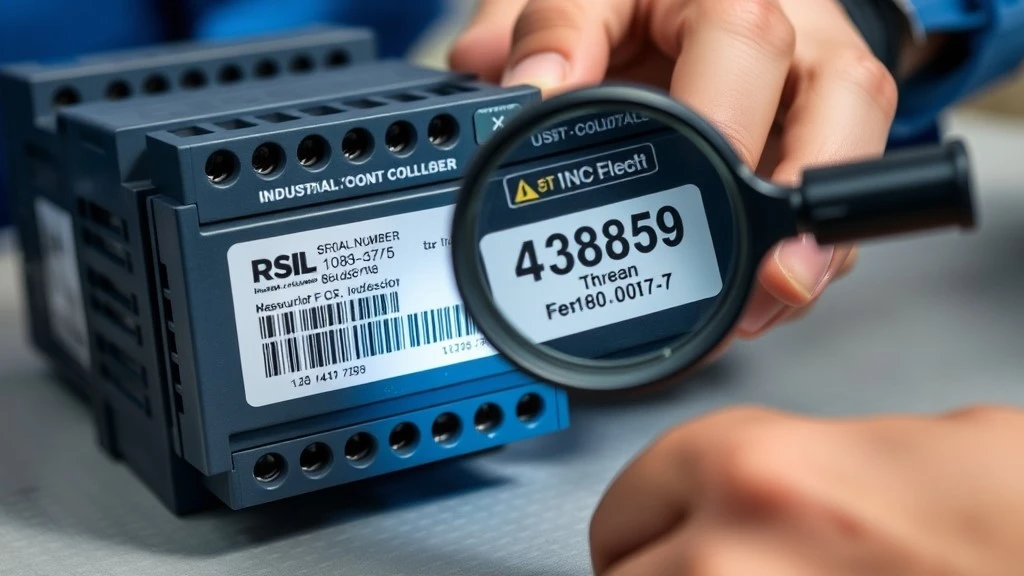
Counterfeit and relabeled controllers are a real risk in any market. Check the serial number and any anti-counterfeit marking against the manufacturer where possible, inspect the packaging and labels for print quality and consistency, and treat a price far below the market as a warning rather than a bargain. A fake unit can cost far more than it saves through downtime, safety risk, and a void warranty. The mistake to avoid is comparing only unit price and ignoring where the part actually comes from.
New vs refurbished or surplus
Refurbished or surplus units can lower upfront cost, but they carry questions around warranty, remaining life, and traceable origin. New hardware is the safer choice for critical lines and equipment expected to run for years. There is a sensible middle ground: a discontinued model may only be available as surplus, in which case the priority becomes verifying the source and condition rather than chasing the lowest figure. Decide by criticality, not by price alone.
Authorized vs independent distributor, and lead-time risk
Authorized channels are dependable but can come with long lead times and minimum order quantities. Independent distributors are more flexible and often hold stock, which matters when a line is down, provided you can confirm the parts are genuine. With manufacturer lead times still long across much of the industry, on-hand inventory and fast shipping can be worth more than a small saving on price when production is stopped.
If a line is waiting on a part, check stock and lead time for your part number before you commit to a long quote elsewhere. You can also review our approach to sourcing and quality on the About Us page.
Warranty, support, and after-sales
Before you order, ask the supplier the questions that protect you after the sale:
- Is the unit genuine and new, with a traceable origin?
- What does the warranty cover, and for how long?
- Is it in stock, and what is the real shipping lead time?
- Can you cross-reference or help select the right model?
- Can you support obsolete or hard-to-find models?
A supplier who answers these clearly is one you can build a repeatable supply relationship with.
Total cost of ownership beyond unit price
The sticker price is only one line in the real cost. A fuller view of total cost of ownership includes the unit price, spare parts and inventory, the cost of downtime if a part is slow to arrive, lifecycle replacement when a model is discontinued, integration and commissioning, training and support, and energy over the controller's life. Seen this way, the cheapest unit price is often not the lowest total cost, because a hard-to-source or unsupported part pays you back in lost production.
PLC Applications by Industry
The right type and brand shift with the job. Three sectors show how.
Food and beverage
Food and beverage lines demand hygienic design, frequent washdown, and steady high-speed filling and packaging. Compact or modular controllers from brands with strong food sector support fit well here, paired with recipe handling for fast product changeovers. See our food and beverage automation solutions for matched control, HMI, and drive packages.
Energy and utilities
Power generation, substations, and water utilities prioritize reliability and often redundancy, with controllers running continuously in demanding conditions. Modular or distributed platforms suit the scale and the spread of these sites. Explore our energy and utilities solutions for controllers focused on uptime.
Packaging and material handling
Packaging, conveying, and sorting reward high-speed response and easy changeover between formats. Fast machine controllers with tight motion integration handle these lines, where cycle speed and quick reconfiguration matter more than raw I/O count.
Across every sector the pattern holds: results come from choosing the right type, the right brand, and a source you can rely on.
Key Takeaways and How to Get the Right PLC Fast
Set the controller type by your line size and conditions, choose the brand by your existing ecosystem and parts availability, and buy from a source that proves the hardware is genuine, holds stock, and stands behind a clear warranty. Get those three right and the efficiency, reliability, and ROI take care of themselves.
When you are ready, get a free quote and check stock and price. We supply original, multi-brand PLC, HMI, and VFD parts from inventory with fast delivery. Send your part list or BOM, and you will get matched pricing and lead times back.
FAQ

What is a PLC and how does it work?
What are the main advantages of a PLC over relay control?
How do I choose the right PLC for my application?
Which PLC brand is best: Siemens, Allen-Bradley, Mitsubishi, or Schneider?
How can I tell if a PLC is genuine?
What is the typical lead time, and do you keep PLCs in stock?


