



PLC vs. microcontroller comes down to one practical question: how demanding is your environment, and how long does the system need to run? A microcontroller is a single low cost chip that runs one fixed job, ideal for consumer products and prototypes. A programmable logic controller (PLC) is a modular, ruggedized industrial computer built to run a production line reliably for years. For industrial automation, the PLC almost always wins. Use the table for a fast answer, then read on for how to choose and source the right one.
|
Your situation |
Better fit |
|
Factory floor, harsh conditions, 24/7 runtime |
PLC |
|
Single embedded function, controlled environment, cost is everything |
Microcontroller |
|
Needs to scale, integrate with SCADA, or meet safety rules |
PLC |
|
Short term prototype or one off project |
Microcontroller |
What Is a Microcontroller? (and what it is really good at)
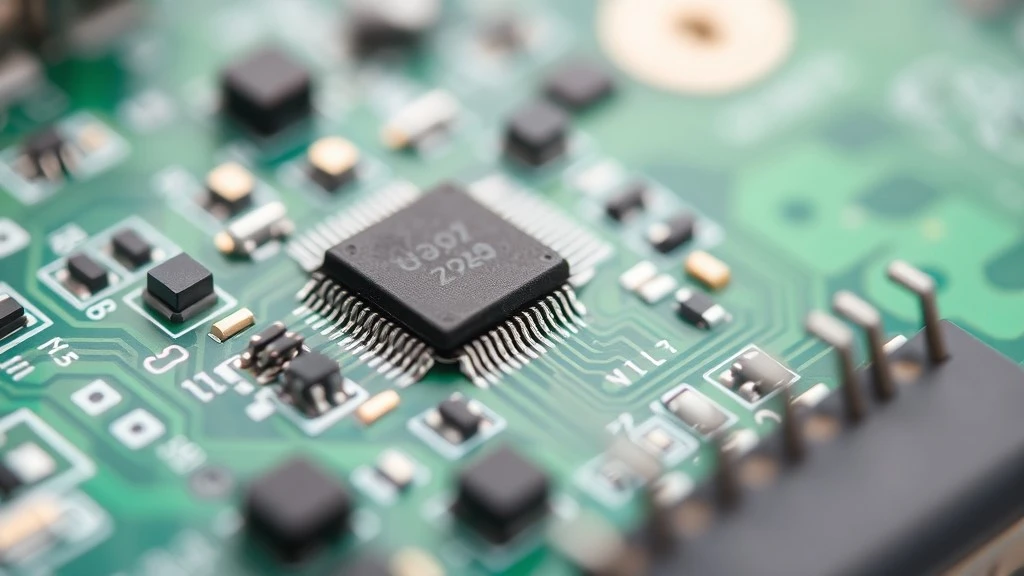
How a microcontroller works
A microcontroller packs a processor, memory, and input/output pins onto a single chip. You write firmware, flash it once, and it repeats that job on every power up. The logic is fixed at design time, so changing the behavior usually means rewriting the firmware and sometimes redesigning the board. This is why the controller inside a washing machine or a TV remote is almost always a microcontroller: one well defined task, done cheaply and compactly.
Where microcontrollers shine
Microcontrollers are the right call when the job is small, fixed, and cost sensitive. They dominate consumer electronics, embedded single function devices, sensor nodes, and early stage prototyping. Boards like Arduino and Raspberry Pi have made them the default for engineers testing an idea or makers building a one off project. The trade off: that simplicity assumes stable conditions and a single, unchanging task. When the environment turns hostile or requirements keep growing, it becomes a liability.
What Is a PLC? (built for the factory floor)
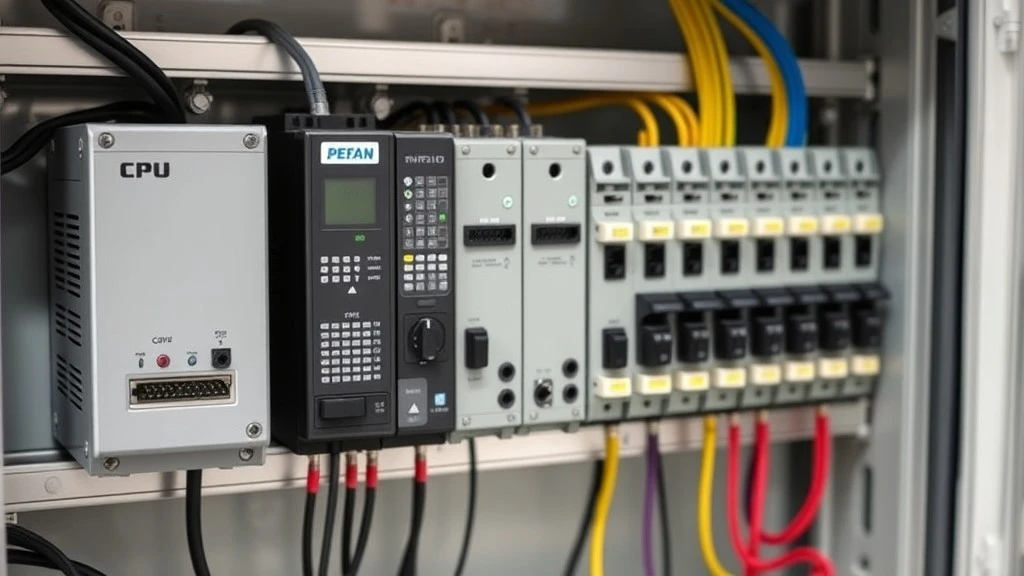
How a PLC works
A PLC splits the job across modules: a CPU, a power supply, and input/output cards that you mix and match for the application. Instead of fixed firmware, it runs a control program on a repeating loop called the scan cycle, reading all inputs, solving the logic, and updating all outputs within a guaranteed time window. That predictability has a name, deterministic control, and it matters because a packaging line, a press, or a safety interlock cannot tolerate random timing. An emergency stop has to act within a known, bounded time on every cycle. This is the core reason PLCs run the machines that keep people and product safe.
PLC programming standards (IEC 61131)
PLCs use languages defined by the IEC 61131 standard, most commonly Ladder Diagram, Function Block Diagram, and Structured Text. Ladder Diagram looks like an electrical relay schematic, so an electrician can read and edit it without being a software developer. Because the standard is shared across brands, an engineer who knows Ladder on a Siemens unit can pick up an Allen-Bradley or Mitsubishi PLC quickly. A microcontroller, by contrast, needs C or assembly and the embedded specialists who write it. Standardized programming decides who can maintain the system and how fast a problem gets fixed at 2 a.m.
PLC vs. Microcontroller: The Differences That Actually Matter
The table sets the baseline. Read it with your own application in mind, then use the sections under it to see what each difference costs you in practice.
|
Factor |
Microcontroller |
PLC |
|
Initial cost |
Low, roughly $10 to $500 |
Higher, roughly $500 to $5,000+ |
|
Total cost of ownership |
Low upfront, higher over time |
Higher upfront, lower over time |
|
Environment |
Consumer grade, sensitive to heat, vibration, electrical noise |
Industrial grade, built for harsh conditions |
|
I/O and expansion |
Fixed pin count, expanding often means a new board |
Modular, add I/O cards as needed |
|
Reliability and diagnostics |
Limited fault tolerance |
Built in diagnostics, designed for uptime |
|
Programming and skills |
C or assembly, embedded specialists |
IEC 61131 standard, widely available skills |
|
Lifecycle and spares |
Often 2 to 5 years, parts vanish quickly |
Typically 10 to 20 years, long parts support |
|
Communication and integration |
Limited protocols |
Industrial protocols such as Modbus, Profinet, EtherNet/IP, OPC UA |
Cost: initial price versus total cost of ownership
On the price tag, a microcontroller wins easily. In a real industrial budget, the sticker price is the cheapest part of the decision. The number that matters is total cost of ownership (TCO), and it has at least six parts.
Hardware is only the first. A microcontroller solution still needs a custom board, enclosure, power conditioning, and I/O protection that a PLC includes by design. Engineering time is the second and often the largest, since writing and validating custom firmware takes far longer than programming a standard PLC. Downtime is where the gap explodes: on a line that runs around the clock, one unplanned stop can cost more than the entire price difference between the two controllers. Maintenance favors the PLC, because diagnostics and spare modules are standard, and so does staffing, because PLC skills are common while a custom design depends on whoever wrote it. Finally, migration: when a consumer chip is discontinued, you may have to redesign, while PLC vendors publish clear upgrade paths.
Put together, the cheap option can become the expensive one. A microcontroller panel that fails once a year on a critical line often erases a decade of hardware savings in a single afternoon.
Environment and reliability
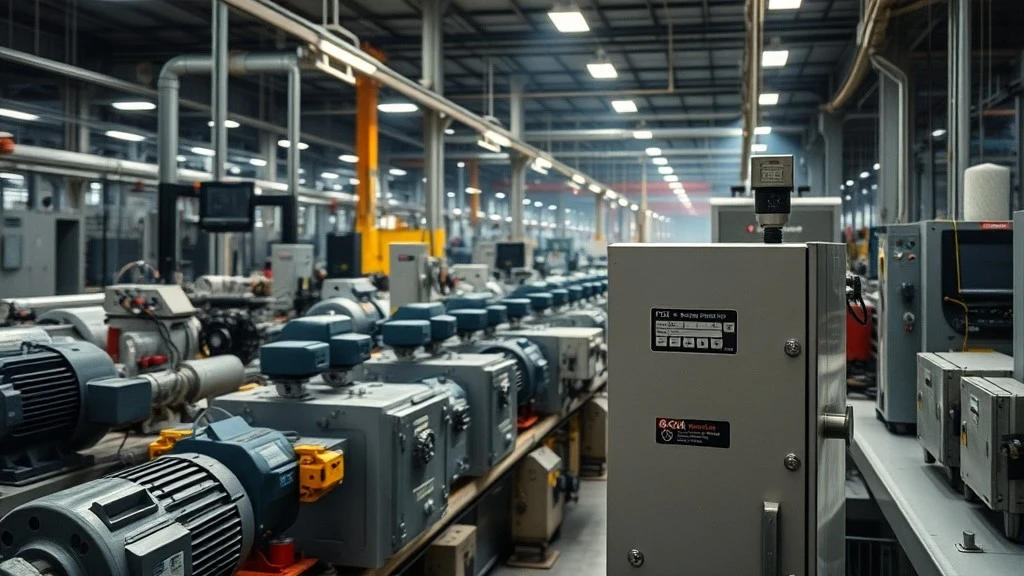
A factory floor is hostile: heat, vibration, dust, moisture, and electrical noise from nearby motors and drives. PLCs use industrial grade components and housings built for these conditions, with isolated I/O and diagnostics that flag a fault before it becomes a stoppage. Microcontrollers use consumer grade parts not designed for that punishment. The point is not that one is rugged and the other is not; it is what failure costs. A controller that drops out under a voltage spike or overheats next to a VFD does not just need replacing; it stops production, and every hour of downtime has a price. A common, expensive mistake is validating a build in a clean lab, then watching it fail within months in the real plant.
Scalability and I/O
Requirements rarely stay still. You add a sensor, a new station, or a second line, and the controller has to grow with it. With a PLC, you snap in another I/O card or extend the rack, and the existing program keeps running. With a microcontroller, the chip's fixed pin count means expanding often requires redesigning the board and revalidating the device, turning a small change into a new project. A practical rule when specifying a PLC: size the CPU and rack for the I/O you expect in two to three years, so growth is a configuration change, not a rebuild.
Programming and maintainability
The question that decides long term cost is simple: who maintains this after it ships? Because PLCs use the standardized IEC 61131 languages, almost any controls technician can open the program and change it. A custom microcontroller design depends on the person who wrote the firmware, which is a real risk. The pattern repeats often: a prototype goes into a small production run, the engineer who built it leaves, and nobody can safely change the code when the process changes. Standard languages and available skills keep a system serviceable for the years a PLC runs.
How to Choose: A Simple Decision Framework
Five questions to ask before you decide
You can settle most projects with five questions. For each one, a yes pushes you toward a PLC.
- Is the environment harsh? Heat, vibration, dust, moisture, or electrical noise all lean PLC. A clean, climate controlled space may suit a microcontroller.
- Will the I/O grow or change? If you expect to add points, stations, or product variants, the PLC's modular expansion pays off. If the I/O is small and fixed forever, a microcontroller can handle it.
- Does it need to integrate? If the system must talk to a SCADA platform, an HMI, or other machines over industrial protocols, choose a PLC.
- Is safety or compliance involved? If people, machinery, or regulated processes are at stake, use a PLC, ideally a safety rated one. Do not improvise safety on a microcontroller.
- How long must it run, and who maintains it? For years of service maintained by general technicians, the PLC is the safer choice.
The decision in one line
Put the answers together, and the rule is straightforward. If your application has any of these traits, harsh conditions, growing I/O, system integration, safety requirements, or a multi year lifespan, choose a PLC. A microcontroller makes sense only when all of these are true: a controlled environment, a single fixed function, extreme cost sensitivity, and a short or disposable lifecycle.
Not sure which controller, or which PLC brand, fits your application? Talk to our automation engineers and we will help you spec it.
Match Your Application to the Right Controller
Choosing by industry
The right setup depends on what you are running. Across the sectors we supply most, the pattern is consistent: a PLC for control, an HMI for the operator, and variable frequency drives (VFDs) for the motors. Here is how that maps to four common industries.

|
Industry |
Typical challenge |
Typical solution |
|
Food and beverage |
Washdown, hygiene, IP65, and stainless requirements |
PLC + HMI + VFD, washdown rated |
|
Energy and power |
Remote sites, redundancy, reliability |
Redundant PLC plus remote monitoring |
|
HVAC |
Variable speed control and energy savings |
PLC plus VFD for fans and pumps |
|
Water treatment |
Remote telemetry and process control |
PLC plus SCADA and HMI |
To build any of these, browse our PLCs, HMIs, and VFDs by brand, or ask us to quote a complete package.
The gray zone: industrial microcontrollers
The line is genuinely blurring. Products like the Arduino Opta, industrial Raspberry Pi systems, and PLC on a chip modules bring rugged packaging, DIN rail mounting, and IEC 61131 programming to microcontroller class hardware. For light duty tasks, edge data collection, or a small machine in a controlled space, these can be a smart, low cost choice, and it would be dishonest to pretend otherwise.
The judgment is about risk, not brand loyalty. These devices are fine for low risk, low complexity jobs in stable conditions. Once a person's safety, a costly line stoppage, heavy I/O counts, long service life, or a real warranty is on the line, a full industrial PLC is still the right tool. Match the controller to the consequences of failure, not just the price.
From prototype to production
Many good systems start on a microcontroller. The trouble appears when a successful prototype is pushed into production without a rethink. Move to a PLC when volume rises, when reliability or compliance becomes non negotiable, or when a maintenance team has to own the system.
A clean migration usually has four steps: map the existing inputs and outputs to standard PLC I/O modules; rewrite the control logic in an IEC 61131 language rather than porting firmware line by line; plan how the PLC connects to the plant, choosing protocols such as Modbus or EtherNet/IP; and document everything, because the point of moving to a PLC is a system others can maintain.
Modern Trends: Edge Computing, IIoT, and Hybrid Architectures
In practice, the modern question is less PLC or microcontroller and more, "Which layer does each one own?" A connected plant stacks into three layers. At the edge, microcontrollers and smart sensors collect data and handle simple local tasks. In the middle, the PLC runs deterministic, real time control. Above that, a gateway pushes data to SCADA or the cloud for monitoring and the Industrial Internet of Things (IIoT).
Edge computing does not replace the PLC; it offloads lightweight data work so the PLC can focus on control. The takeaway for a buyer is practical: you are usually not picking one technology over the other; you are deciding what runs your control layer, and for industrial control that remains a PLC.
Sourcing the Right PLC: Brands, Lead Time, Obsolescence, and Spare Parts
Choosing the technology is half the job. For an overseas buyer, sourcing it well is what keeps the project on schedule and protected. Four things deserve attention.
Choosing a brand
The major PLC brands are all capable. The right one depends on your region, your existing equipment, and the support you can get. A quick, neutral guide:
|
Brand |
Often chosen for |
|
Siemens |
Broad range, strong in Europe and large process plants |
|
Allen-Bradley (Rockwell) |
Common in North America and discrete manufacturing |
|
Mitsubishi |
Popular in Asia, strong in compact and mid range machines |
|
Schneider |
Flexible across building, infrastructure, and OEM machines |
|
Omron |
Strong in packaging, robotics, and machine automation |
Whatever you choose, standardizing on one brand across a plant simplifies spares and training. Compare options across our Siemens, Allen-Bradley, Mitsubishi, Schneider, and Omron PLCs.
Lead time and stock
A PLC you cannot get is not a bargain. Long manufacturer lead times, sometimes months on popular CPUs and modules, can stall commissioning and push back an entire project. Before committing to a model, confirm it is actually in stock and ask for a firm lead time, not an estimate. For critical components, lock in stock early so a single backordered part does not hold up the line. A supplier that holds real inventory, rather than ordering everything to backlog, is often what protects your schedule.

Obsolescence and migration
Every controller eventually reaches end of life, and a PLC may outlive its own model. The risk is manageable if you plan for it. Watch for the signals: a vendor moving a product to mature or classic status, lengthening lead times, and last time buy notices. When a model is winding down, evaluate the recommended successor early, because vendors usually publish clear migration paths instead of forcing a redesign. A simple routine helps identify units nearing end of life, assess the migration path for each, and secure spares to keep running in the meantime. Handled this way, obsolescence becomes a scheduled upgrade, not an emergency.
Spare parts and cross border warranty
For an overseas buyer, the last and most important question is support: if something fails, can you get a genuine replacement quickly, and is it covered? Before ordering, it is fair to ask a supplier directly. Are the products genuine and traceable? What spares are kept in stock? How does the warranty work across borders, and who handles a claim? A supplier that answers these clearly, holds spares, and stands behind a cross border warranty removes the real risk of buying from abroad. You can read more about how we handle quality and sourcing on our About Us page.
Conclusion: Which Should You Use?
For industrial automation, the PLC is the dependable default. It wins on the things that decide real projects: reliability in harsh conditions, modular scalability, standardized programming, lower total cost of ownership, and long term support. The microcontroller is not the loser here; it is built for a different job and remains the better choice for embedded, single function, prototype, and ultra low cost applications. Decide based on the five questions above, not on the price tag alone.
If your answer points to a PLC, we can help you get the right one. We supply genuine, multi brand PLCs from stock with short lead times, plus spare parts, migration support, and a cross border warranty. Get a fast quote and tell us about your application.
FAQ

Is a PLC just a microcontroller?
Can I use an Arduino or Raspberry Pi instead of a PLC in a factory?
How much does a PLC cost compared to a microcontroller?
What happens when my PLC model is discontinued?
Which PLC brand should I choose?
Where can I buy genuine PLCs with short lead times?


