


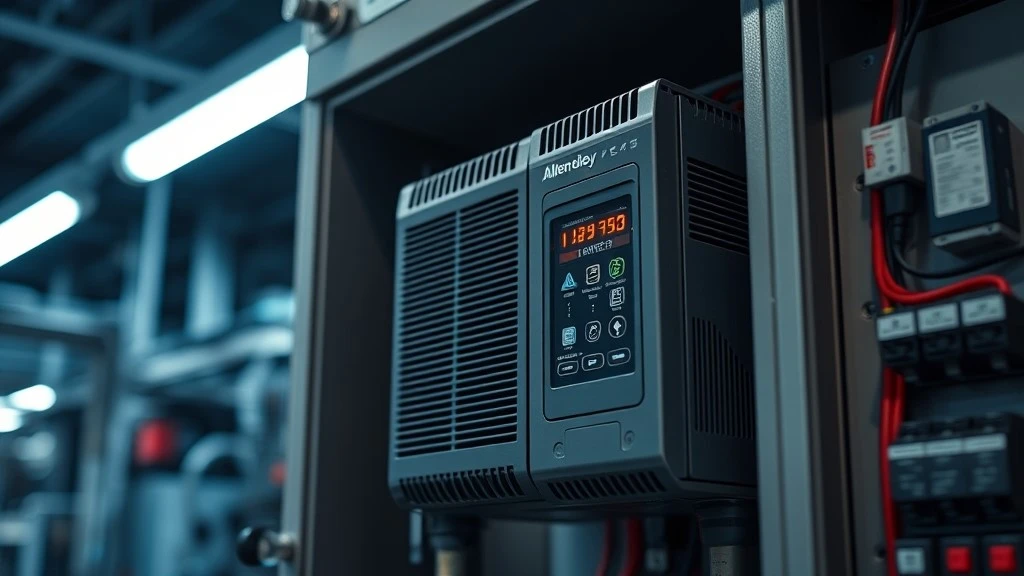
Search "PowerFlex 700" and you'll land on three different drives that share a name but not much else. One source explains the safety ratings in detail but skips the specs, another compares two of the three, and a third stacks seven model numbers side by side with almost no depth in each. If you're trying to replace a failed drive or spec a new one, that's several tabs open and still no clear answer.
This guide puts everything you need in one place: what actually separates the PowerFlex 700, 700H, and 700S, what their safety ratings mean on the plant floor, and where to source a unit you can trust once you've made your decision. If you only need a compact, general-purpose drive under about 15 HP, our PowerFlex 4 guide covers that lighter-duty end of the Allen-Bradley range instead.
PowerFlex 700 Series at a Glance
Before the technical detail, here's the short version. Match your priority against the table below, then jump to the section that applies to you.
|
Model |
Power Range |
Control Type |
Safety Rating (STO) |
Best For |
Availability |
|
PowerFlex 700 |
Up to roughly 132 kW (200 to 690V) |
V/Hz, Sensorless Vector, FORCE Vector |
Standard, no integrated safety option |
General-purpose speed control on pumps, fans, conveyors |
High-power frames (roughly 250 to 700 Hp) discontinued; lower-power frames still supplied |
|
PowerFlex 700H |
132 to 1200 kW at 480V, up to 2000 kW at 690V |
V/Hz, Sensorless Vector |
Standard, no integrated safety option |
Heavy-duty, high-horsepower loads with simple control needs |
Currently in production |
|
PowerFlex 700S |
0.37 to 132 kW at 380 to 480V, wider range across other voltage classes |
V/Hz, Vector with FORCE Technology, Flux Vector, Permanent Magnet |
Safe Torque Off, rated PLd / SIL2 Cat 3 |
High-precision, coordinated, or safety-critical motion control |
Currently in production |
Still not sure which row fits your application? Talk to our selection team and we'll confirm the right drive and frame size before you order.
PowerFlex 700 Overview
Key Specifications
The PowerFlex 700 covers voltage classes from 200 to 690V, with power ratings that top out around 132 kW on the standard product line. That range covers the large majority of general industrial motors, so unless your load is unusually large or your process needs closed-loop precision, the 700 typically has enough headroom for it.
Control Modes
The 700 supports Volts-per-Hertz control for simple, open-loop speed regulation, along with Sensorless Vector control and Allen-Bradley's FORCE Technology for applications that need better torque response without adding an encoder. If your process just needs to speed a motor up and slow it down reliably, this control layer is usually enough. You don't need the 700S's closed-loop feedback unless your application specifically calls for position or torque accuracy.
Typical Applications
In practice, the 700 shows up most often on pumps and fans that need variable speed rather than tight process control, general conveyor lines where consistent, moderate-precision speed is enough, and mixers or agitators where torque demand stays fairly steady. These are applications where the drive's job is to run a motor reliably, not to coordinate motion with other equipment.
Availability Note
One thing worth knowing before you spec a 700: Rockwell discontinued the high-power frames (roughly 250 to 700 Hp) from this line some years back, while the lower-power frames have remained available. If you're replacing an existing 700 and aren't sure which frame size you have or whether it's still supplied, check the nameplate first. We cover exactly how to do that, and what to do if your unit is no longer available later in this guide.
PowerFlex 700H Overview
Key Specifications
Where the 700 tops out around 132 kW, the 700H picks up from there. Rated from roughly 132 to 1200 kW at 480V AC, and up to 2000 kW at 690 V AC, it's built for the high-horsepower end of the PowerFlex range rather than general-purpose use.
Control Modes & Modular Design
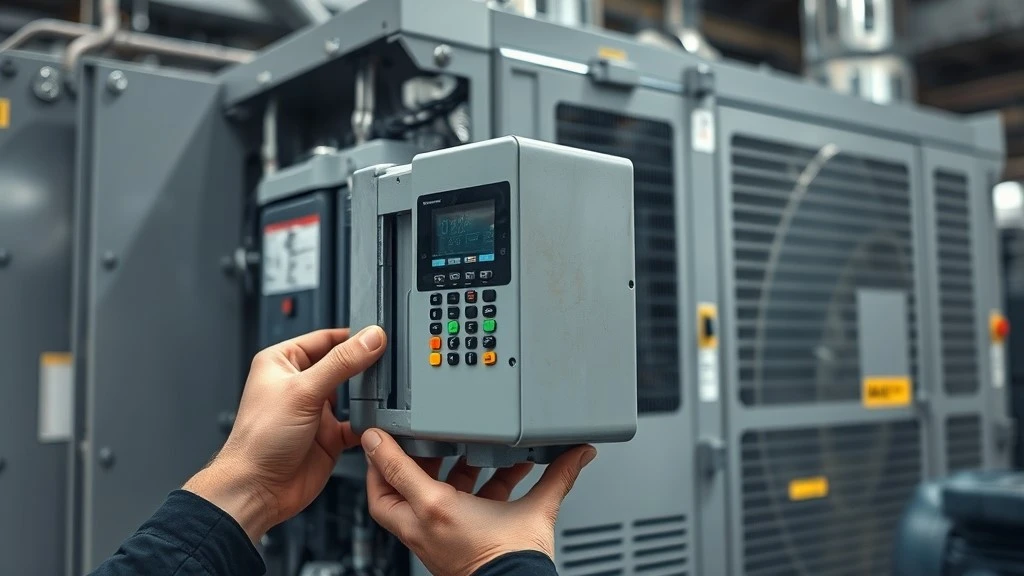
Control-wise, the 700H runs on the same core logic as the 700: Volts-per-Hertz or Sensorless Vector. If you already understand the 700's control options, there's nothing new to learn here. What is different is the construction. The control module is detachable and standardized across every 700H power rating, so a technician can swap it without pulling the entire power structure. On a large motor where downtime is expensive, that difference often matters more than any control algorithm.
Typical Applications
Application-wise, the 700H covers much the same territory as the 700, just at a larger scale: pumps, fans, and general process control on heavier loads. If your process already runs comfortably on a 700 and you're simply moving to a bigger motor, the 700H is usually the natural next step, not the 700S.
PowerFlex 700S Overview
Key Specifications
The 700S is rated across a wider set of voltage classes than the 700 or 700H, from 0.37 kW up to roughly 132 kW at 380 to 480V, with separate ranges published for 200 to 240V, 500 to 600V, and 690V input. The spread reflects its role: it isn't built to out-power the 700H, it's built to out-control it.
Advanced Control
This is where the 700S earns its higher price tag. Flux Vector Control and Allen-Bradley's FORCE Technology give it closed-loop torque and speed regulation that the standard 700 and 700H don't offer, which matters for precision positioning work like indexing tables or line-shaft replacement, where a torque error shows up directly as a defective part. Add the optional DriveLogix module and the drive itself can run PLC-level logic, removing the need for a separate controller in simpler machine designs. Its SynchLink fiber-optic interface also lets multiple drives stay coordinated in real time, something general-purpose drives simply can't do.
Here's the honest tradeoff: if your process tolerance is loose enough that a standard 700 or 700H already keeps you in spec, none of this buys you anything. The 700S is worth the extra cost only when your process genuinely needs the tighter control loop, not by default.
Typical Applications
The 700S fits machine tools like grinders and lathes that need dynamic speed profiles, unwind and rewind stations where tension control has to track load changes in real time, and multi-axis systems where SynchLink's drive-to-drive coordination replaces what would otherwise need a separate motion controller.
Head-to-Head Technical Comparison
Motor Control & Feedback
On paper, all three drives support Volts-per-Hertz control and some form of vector control. The practical difference is feedback. The 700 and 700H run open-loop or sensorless, estimating motor conditions rather than measuring them directly. The 700S adds genuine closed-loop feedback support, including encoders, resolvers, and several other device types, which only matters once your process needs to hold a set point tightly under a changing load, such as a winder maintaining constant tension as roll diameter changes. If your load is fairly steady, this difference likely won't show up in your results.
Communication & Integration
Communication is one area where the three drives are more alike than different. All three support EtherNet/IP, ControlNet, and DeviceNet through optional modules, so protocol support alone isn't a good reason to choose one over another. Where the 700S pulls ahead is in what it does with that connectivity: SynchLink coordination and the optional DriveLogix controller integration go beyond simple networking into shared, real-time control between drives.
Physical Design & Panel Space
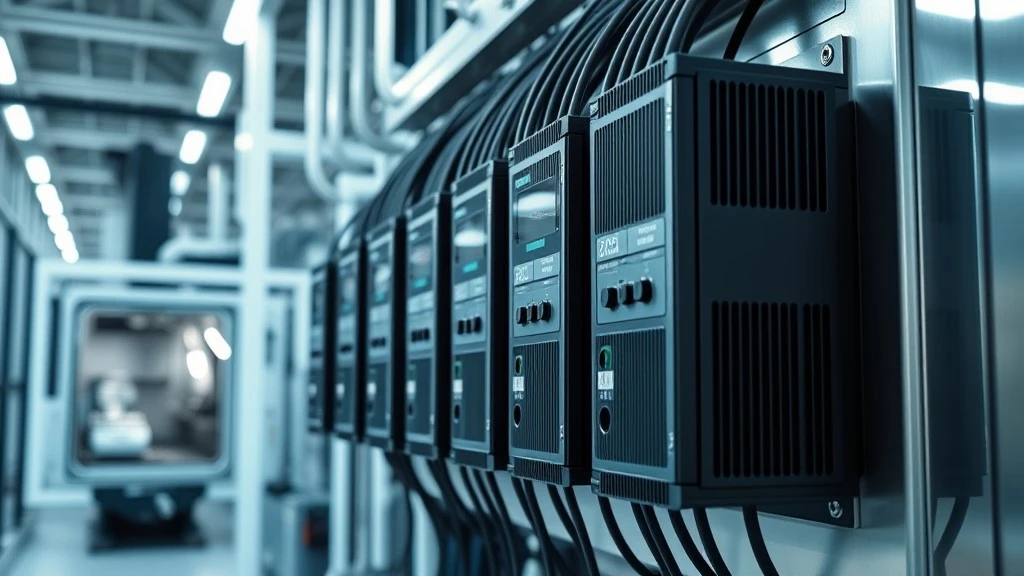
The 700S was designed with panel space in mind. Its zero-stacking enclosure lets units sit side by side without the airflow clearance the 700 and 700H typically need, and its pull-apart terminal blocks make wiring and swap-outs faster during maintenance. On a large multi-drive panel, this can meaningfully reduce cabinet size and rewiring time, which is worth factoring into total installed cost, not just the price of the drive itself.
|
Attribute |
PowerFlex 700 |
PowerFlex 700H |
PowerFlex 700S |
|
Control Algorithm |
V/Hz, Sensorless Vector, FORCE Vector |
V/Hz, Sensorless Vector |
V/Hz, Flux Vector, FORCE Technology, closed-loop |
|
Feedback Support |
None (open loop) |
None (open loop) |
Encoders, resolvers, multiple feedback types |
|
Communication Options |
EtherNet/IP, ControlNet, DeviceNet, Profibus, Serial |
Same as 700, plus Remote I/O, Interbus |
Same as 700, plus SynchLink |
|
Embedded Control |
Not available |
Not available |
Optional DriveLogix (PLC integration) |
|
Panel Design |
Standard clearance |
Standard clearance |
Zero-stacking, pull-apart terminals |
Safety Features Explained
What Safe Torque Off (STO) Actually Does
A lot of people assume Safe Torque Off means the same thing as cutting power to the drive. It doesn't. STO removes the signal driving the motor's output transistors, so the motor can't produce torque without disconnecting the drive from line power or forcing a full shutdown and restart. That distinction matters on the floor: a technician can put a machine into a verified zero-torque state for a guard-door interlock or a quick adjustment, then bring it back online in seconds instead of going through a full re-power and re-commission cycle.
Understanding SIL / PL / Cat Safety Ratings
When you see a rating like PLd / SIL2 Cat 3 on a 700S datasheet, it's describing three related but distinct things, not one score. SIL, Safety Integrity Level, measures how reliably the safety function performs on demand, on a scale from SIL1 to SIL4. PL, Performance Level, measures roughly the same idea under the ISO 13849 machinery standard, from PLa (lowest) to PLe (highest). Category describes the circuit architecture itself, essentially how the safety function is built and whether a single fault can defeat it.
Higher numbers aren't automatically better for your application. They're a requirement set by the risk of what you're protecting against. A general-purpose pump behind a fixed guard usually doesn't need the same rating as a machine tool where an operator's hands work near moving parts. If you're unsure what your application requires, a machine risk assessment, or your safety engineer, is the right place to start, not the drive's datasheet.
Installation & Wiring Safety Checklist
A few points worth confirming before you commission any of these drives:
- Decide early whether STO will be hardwired or handled through a network-based safety protocol. Changing this decision later usually means rewiring the panel.
- Confirm the drive's safety inputs are compatible with your existing safety relay or safety PLC before you order, not after.
- Verify grounding and bonding meet the enclosure rating for the space you're installing into, especially on open IP20 frames mounted inside a sealed cabinet.
- Test the STO function itself after commissioning, not just the drive's basic operation. A drive that runs correctly can still have a miswired safety circuit.
Certifications Explained
ATEX certification matters if any part of your installation sits in a potentially explosive atmosphere, common in some chemical and grain-handling environments. CE marking is required for equipment sold or used within the EU. UL and C-Tick (now RCM) confirm compliance with North American and Australian and New Zealand electrical safety standards, respectively. None of these replace a proper risk assessment for your specific machine. They confirm the drive itself was built and tested to a recognized baseline, which is one part of a compliant installation, not the whole of it.
How to Choose the Right PowerFlex 700-Series Drive
Choose PowerFlex 700 If...
- Your motor load falls within the standard 700's power range, up to roughly 132 kW
- You need reliable speed control but not closed-loop precision
- Budget is a meaningful factor, and your process tolerance is forgiving
Choose PowerFlex 700H If...
- Your motor exceeds the 700's power range
- You need the same control simplicity as the 700, just at higher horsepower
- Fast control-module swaps matter more to you than advanced feedback options
Choose PowerFlex 700S If...
- Your process needs closed-loop torque or speed accuracy, not just open-loop speed control
- You're coordinating multiple drives or axes that must move in sync
- Panel space is tight enough that zero-stacking design changes your cabinet layout
Replacing a Discontinued Drive? Cross-Reference Guidance
If you're replacing an existing unit and aren't sure it's still available, start with the nameplate. Record the full catalog number, series letter, and firmware revision before you search for a replacement. From there, three steps: confirm whether that exact catalog number is still supplied, identify the nearest current equivalent if it isn't, and check that the replacement's mounting footprint and I/O wiring match your existing panel before you order. If you'd rather skip the research, send us the nameplate details, and we'll confirm what's available and whether it's a drop-in fit.
Sourcing Genuine PowerFlex Drives: What to Check Before You Buy
Original/Genuine vs. Used Surplus: Know the Difference
PowerFlex 700-series drives generally reach buyers through one of a few channels: brand-new original inventory and used or surplus units pulled from decommissioned equipment. Each carries a different risk profile. Surplus units are often the cheapest option and can be a reasonable choice for a low-criticality spare, but they typically come with no manufacturer warranty, an unknown operating history, and sellers who state plainly in their own terms that they aren't an authorized dealer for the brand. That's not usually a hidden flaw; it's often disclosed directly, but it's worth reading before you buy.
Before ordering from any supplier, it's worth asking a few direct questions. Is this unit new, or has it been in service before? Is there a supplier warranty, and what does it actually cover? Can the seller confirm the batch or traceability of the unit? Those three questions alone will filter out most of the risk.
Warranty, Lead Time & After-Sales Support to Look For
Beyond authenticity, a supplier's operational support matters just as much. Ask what the warranty period actually is, not just whether one exists. Ask what the return or refund policy looks like if the unit arrives faulty. Ask how quickly they can ship, especially for an unplanned failure where every day of downtime costs money. And ask whether technical support is available if you need help confirming the right model before you order.
Why Buy From an Original-Parts Supplier
Measured against those same questions, here's where Chentuo stands. Every PowerFlex drive we supply is brand-new original stock, not refurbished or pulled from service. Orders typically ship within 48 hours, backed by a one-year warranty and a 30-day return window if something isn't right. Our team can also help confirm the correct model before you order, which matters most when you're working from an old nameplate or a discontinued catalog number.
If you've already identified which drive you need, request a quote for a genuine PowerFlex 700-series drive. If you're still deciding, browse our Allen-Bradley VFD range or reach out, and our team can walk you through the selection directly.
FAQ

What is the main difference between PowerFlex 700 and PowerFlex 700S?
Is the PowerFlex 700 still in production?
Does PowerFlex 700H support Safe Torque Off?
What communication protocols does the PowerFlex 700 series support?
How do I identify which PowerFlex model I currently have installed?
What's the difference between a genuine new PowerFlex drive and a used or surplus unit?
Final Word
If there's one line to take from all of this: choose the 700 for standard speed control on a budget, the 700H when your motor simply needs more horsepower than the 700 covers, and the 700S when your process genuinely needs closed-loop precision or coordinated multi-drive motion, not just because it's the most advanced option on the shelf.
Once you've made that call, the remaining question is where to buy it from. Request a quote for a genuine PowerFlex 700-series drive and our team will confirm stock, lead time, and fit before you order.


