


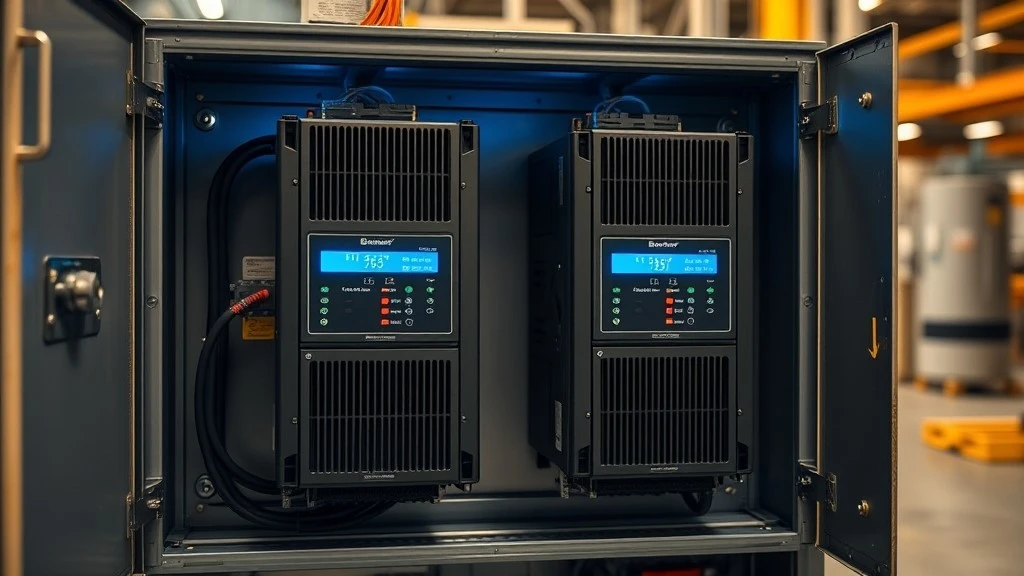
Not sure whether your application needs the extra intelligence of a PowerFlex 755, or whether a 753 will get the job done for less? Here's the 30 second version: both drives belong to Rockwell Automation's PowerFlex 750 Series, so they share the same modular platform and reliability standard. If your process needs coordinated motion control, deep EtherNet/IP integration, or safety features like TorqProve for hoist and crane applications, the 755 is built for that. If you're running standard pumps, fans, conveyors, or compressors with no networked motion requirement, the 753 usually covers everything you need at a lower cost.
That's the short answer. The rest of this guide walks through the full specification comparison, a decision framework you can apply to your own project, current pricing patterns, and what to do if your existing drive has already been discontinued.
What Sets the PowerFlex 750 Series Apart
Architecture Class vs. Compact Class
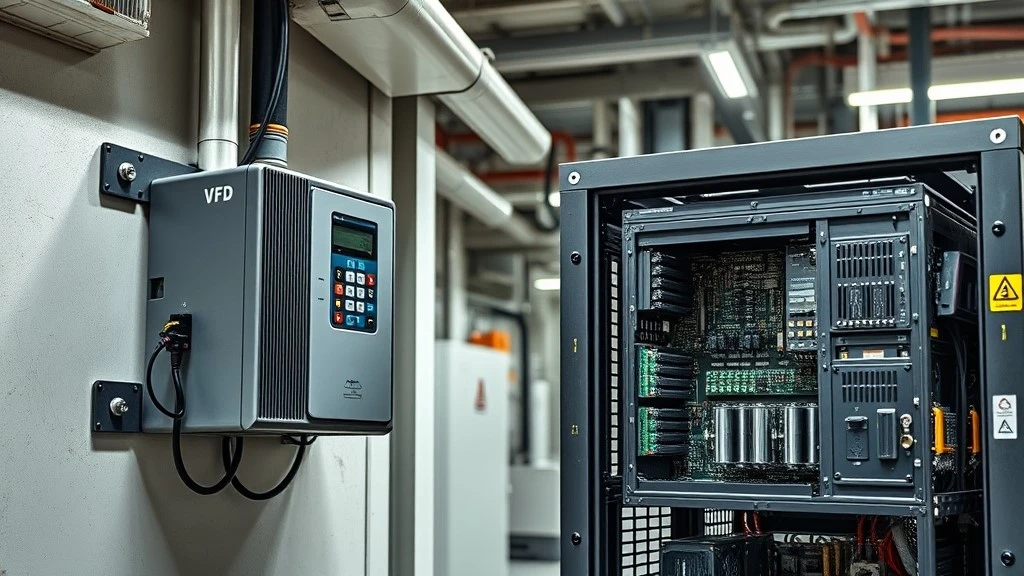
Rockwell Automation splits its AC drive lineup into two design philosophies. Compact Class drives, such as the PowerFlex 523 and 525, are built for straightforward, standalone control where cost and footprint matter most. Architecture Class drives, which include the 753 and 755, are built around a modular chassis with swappable option cards, expandable I/O, and support for complex or safety critical processes.
That distinction matters because it tells you whether you should even be comparing 753 versus 755 in the first place. If your project is a simple constant speed pump with no networking requirement, a Compact Class drive may be the more cost effective choice. If your application involves coordinated axes, integration into a plant wide control network, or safety rated stopping functions, you're in Architecture Class territory, and the real decision is which of the two 750 Series drives fits best.
Shared Features Across 753 and 755
Before getting into what separates these two drives, it's worth being clear about what they have in common, because the overlap is larger than most comparison charts suggest. Both drives run on the same core platform and share:
- The same physical frame sizes and power module options across most horsepower ranges
- DeviceLogix, Rockwell's onboard logic engine for simple local automation without a separate PLC
- The same Add-on Profile (AOP) structure inside Studio 5000, so programming workflow is nearly identical
- TotalFORCE control technology for consistent speed and torque regulation
This shared foundation is also why many customers ask whether a 755 can simply replace a 753 in an existing cabinet. In most cases the mechanical footprint and mounting are compatible, though you'll still need to confirm option module compatibility and reprogram the drive for your application (more on that in the FAQ below).
Understanding what's common takes the guesswork out of half the decision. What's left is the part that actually determines which drive belongs in your project.
PowerFlex 753 vs 755 Specification Comparison
|
Feature |
PowerFlex 753 |
PowerFlex 755 |
|
Power range |
Up to 400 HP / 400 kW |
Up to 1500 HP / 1000 kW |
|
I/O expansion |
Limited, fixed option slots |
Expanded, modular option slots |
|
Motion control |
Not supported |
Supports Position/Motion control with feedback |
|
Network integration |
Standard EtherNet/IP via embedded port |
Deep EtherNet/IP integration supports Motion over EtherNet/IP |
|
Control modes |
V/Hz, Sensorless Vector, Closed Loop Vector |
All 753 modes plus Permanent Magnet and advanced vector control |
|
Safety options |
Safe Torque Off (STO) |
STO plus TorqProve and expanded safety option cards |
|
DeviceLogix |
Supported |
Supported, with more available I/O for logic |
|
Typical lead time |
Generally shorter, more standard configurations in stock |
Can run longer on complex configurations, shorter for common stock models |
|
Discontinued models |
Some early frame sizes phased out |
755T/755TS variants introduced as the current generation |
A table like this is useful for a quick scan, but the numbers alone won't tell you which drive to order. Here's what actually matters in practice.
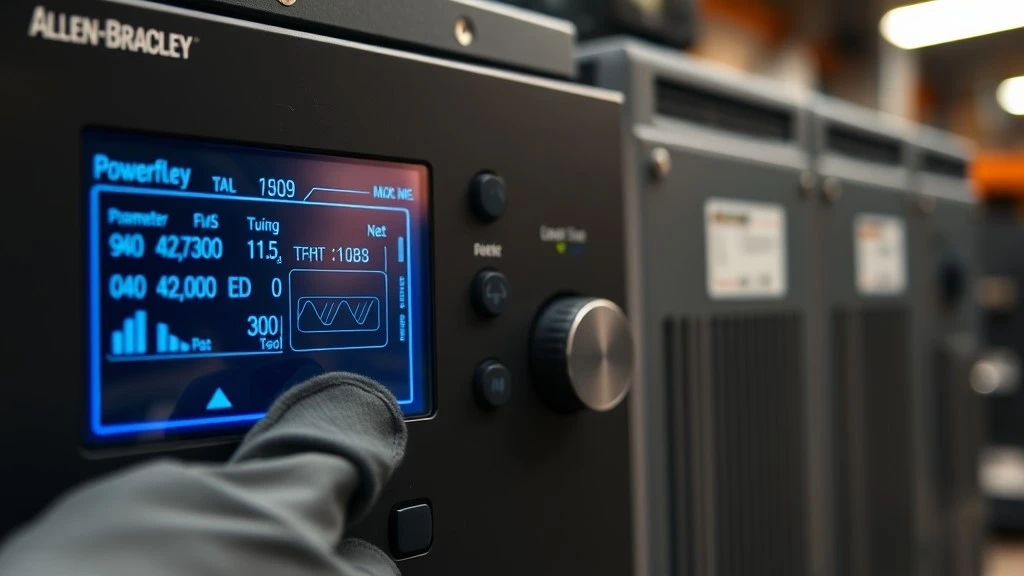
Key Differences Explained
Power range. The 755 extends well beyond what the 753 supports, which matters mainly if you're driving large compressors, mills, or extruders. For most general industrial motors under 400 HP, both drives are available and the power range itself isn't the deciding factor.
Motion control. This is the single biggest functional gap between the two. The 755 supports true motion control with encoder feedback, position loops, and electronic camming (PCamming). If your line needs multiple axes moving in sync, such as a winder tracking a converting process, only the 755 platform can do that natively. If you're just running a motor at a commanded speed, this capability is unused overhead.
Network architecture. Both drives talk EtherNet/IP out of the box, but the 755's networking is built for deeper integration, including Motion over EtherNet/IP for coordinated multi-axis control across a plant network. A standalone drive on an isolated panel rarely needs this depth.
TorqProve and safety. TorqProve is a safety function specific to the 755 platform that verifies actual brake torque before releasing a load, rather than just confirming the brake command was sent. This is a meaningful safety upgrade for hoists, cranes, and other suspended load applications, and it's one of the clearest reasons to specify a 755 even in an otherwise standard power range.
DeviceLogix depth. Both drives support DeviceLogix, but the 755's expanded I/O options give you more inputs and outputs to work with for onboard logic, useful if you're trying to avoid adding a separate small PLC for local interlocks.
Understanding these differences is the first step. Now let's turn them into a decision you can actually apply.
Which One Should You Choose? A Decision Framework
Choose the 753 If...
- Your application is standard variable speed control. Pumps, fans, blowers, and conveyors that just need accurate speed regulation don't benefit from motion control capability you'll never use.
- Budget is a real constraint. The 753's networking and motion hardware costs money whether you use it or not. If your project doesn't call for it, that premium adds up across multiple drives.
- The drive operates on a simple network or standalone. If you're not integrating into a plant wide EtherNet/IP motion network, the 753's standard networking is sufficient.
- You don't need TorqProve style brake verification. For non-hoisting applications, standard Safe Torque Off is typically enough to meet safety requirements.
Choose the 755 If...
- You need coordinated or synchronized motion. Multi-axis lines, winders, and any process requiring PCamming or position feedback require the 755's motion control capability.
- You're building or expanding a networked motion architecture. If EtherNet/IP integration spans multiple drives working in coordination, the 755's deeper network support is the right foundation.
- The application involves a suspended load. Crane, hoist, and elevator style applications benefit directly from TorqProve, since it verifies actual mechanical brake engagement, a safety consideration worth the added cost.
- You need onboard logic with more I/O headroom. If DeviceLogix is doing meaningful work in your system, the 755's expanded option slots give you more room to grow without adding external hardware.
Once you've identified which drive fits your application, the next question is usually price and availability, since that's what turns a decision into a purchase order.

Cost, Availability, and New vs. Refurbished/Surplus Options
Typical Price Range for 753 vs. 755
As a general rule, a 755 carries a noticeable premium over an equivalent horsepower 753, and that premium isn't arbitrary. It comes primarily from the motion control hardware, the expanded I/O backplane, and, where applicable, TorqProve and additional safety option cards. In smaller horsepower ranges the price gap is proportionally larger, since you're paying for architecture the drive may not fully use. In larger horsepower ranges, the base drive cost itself narrows the relative difference.
Exact pricing depends heavily on power rating, enclosure type, installed option cards, and whether you need a new unit versus a refurbished or surplus one. If you have a specific part number in mind, check current stock and request a quote and we'll confirm availability and pricing for your exact configuration.
New, Refurbished, or Surplus, What's Right for Your Project
Not every application needs a brand new drive, and knowing when to buy new versus refurbished or surplus can save meaningful budget without adding risk.
- Choose new for safety critical, continuous process, or warranty sensitive applications where downtime cost is high and you want the longest possible service life ahead of you.
- Choose refurbished or surplus for spare parts inventory, budget constrained projects, or urgent replacement situations where a matching part number is needed quickly and a fully new unit either isn't available or isn't justified by the application.
- Discontinued models are frequently only available through refurbished or surplus channels, since Rockwell has moved current production to newer frame designs.
At CHENTUO, our refurbished and surplus Allen-Bradley drives are tested before shipping and come with warranty coverage, so choosing a non-new unit doesn't mean going without support.
Handling Obsolete or Discontinued Models
If the PowerFlex model on your machine has been discontinued, you're not necessarily stuck. Rockwell typically designates a current-generation replacement for older frame sizes, and in many cases the physical footprint and control wiring are close enough that swapping in the replacement model is straightforward with some reprogramming.
The fastest way to confirm what replaces your specific part number is to check our Allen-Bradley Model Library, which cross-references legacy and current PowerFlex models. If you can't find an exact match, contact our team with your part number and we'll confirm compatibility before you order.
Common Issues and Maintenance Considerations
Frequent Fault Codes on 753 and 755
Both drives share a similar fault code structure, since they run on the same underlying platform. The most common faults reported in the field include:
- Overcurrent faults, usually tied to motor overload, a shorted cable, or an undersized drive for the connected load
- Undervoltage faults, typically from line voltage sag or a loose input connection
- Overtemperature faults, often caused by blocked ventilation or a failing cooling fan
- Communication faults, usually a network configuration mismatch or a loose EtherNet/IP connection
These are starting points for diagnosis, not a full troubleshooting procedure. For a complete fault code breakdown and step-by-step diagnostic process, see our full VFD troubleshooting resources on the blog.
Maintenance Tips to Extend Drive Lifespan
- Clean or replace cooling fans and filters on a fixed schedule, generally every 12 to 18 months in dusty environments, rather than waiting for an overtemperature fault to force the issue.
- Check DC bus capacitors every 3 to 5 years in drives that run continuously, since capacitor aging is one of the leading causes of unexpected drive failure past the 7 to 10 year mark.
- Keep the control cabinet within the drive's rated ambient temperature and humidity range, since running consistently near the upper limit shortens component life significantly compared to a properly conditioned enclosure.
- Update firmware when Rockwell releases security or stability patches, particularly on networked 755 installations, since firmware mismatches are a common source of communication faults after a partial system upgrade.
- On 755 installations using motion feedback, inspect encoder cabling and connectors during scheduled downtime, since feedback wiring faults are a maintenance item the 753 simply doesn't have.
PowerFlex 753 and 755 in Real-World Applications
Conveyor systems. Standard speed controlled conveyors with no synchronization requirement are a textbook 753 application. The drive handles ramp control and load variation without needing motion hardware that would sit unused.
Pumps and fans (HVAC, water treatment, general utility). These loads are almost always constant torque or variable torque with simple speed reference, making the 753 the standard choice unless the site already runs a 755 based network architecture.
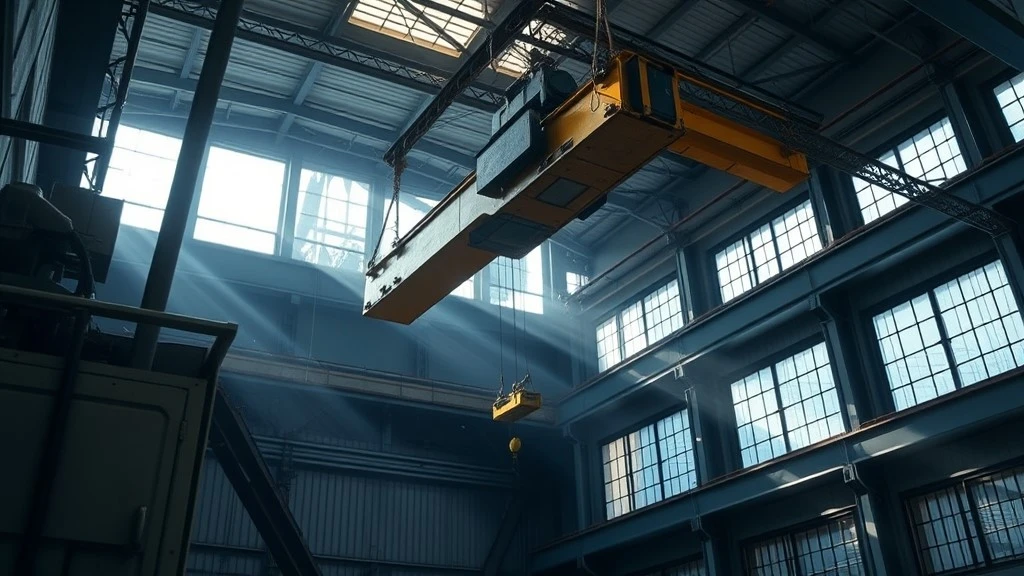
Cranes and hoists. Any application lifting a suspended load is a strong case for the 755, primarily because of TorqProve's brake verification capability, which is a genuine safety upgrade over standard Safe Torque Off.
Machine tool and multi-axis equipment. Coordinated axes, winding, and converting processes that require position or velocity synchronization need the 755's motion control capability, since the 753 has no path to that functionality.
Whichever scenario matches yours, here's how to move forward.
FAQ

Can a PowerFlex 755 replace a 753 directly?
Is the 755 significantly more expensive than the 753?
What's the maximum horsepower for the 753 versus the 755?
Can I buy a refurbished or surplus 755 with a warranty?
How do I know if my 750 Series drive has been discontinued?
What's the difference between the 755 and the newer 755T/755TS?
Making the Call
The core split between these two drives comes down to one question: does your application need coordinated motion, deep network integration, or brake-verified safety, or is it a standard speed controlled load? If it's the former, the 755 is worth the premium. If it's the latter, the 753 does the job without paying for capability you won't use.
If you've already landed on a model, check current stock and pricing on our Allen-Bradley VFD page or submit an inquiry with your part number. If you're still weighing the decision, reach out to our team with details on your application, we'll help you confirm the right drive before you commit budget to it.


