

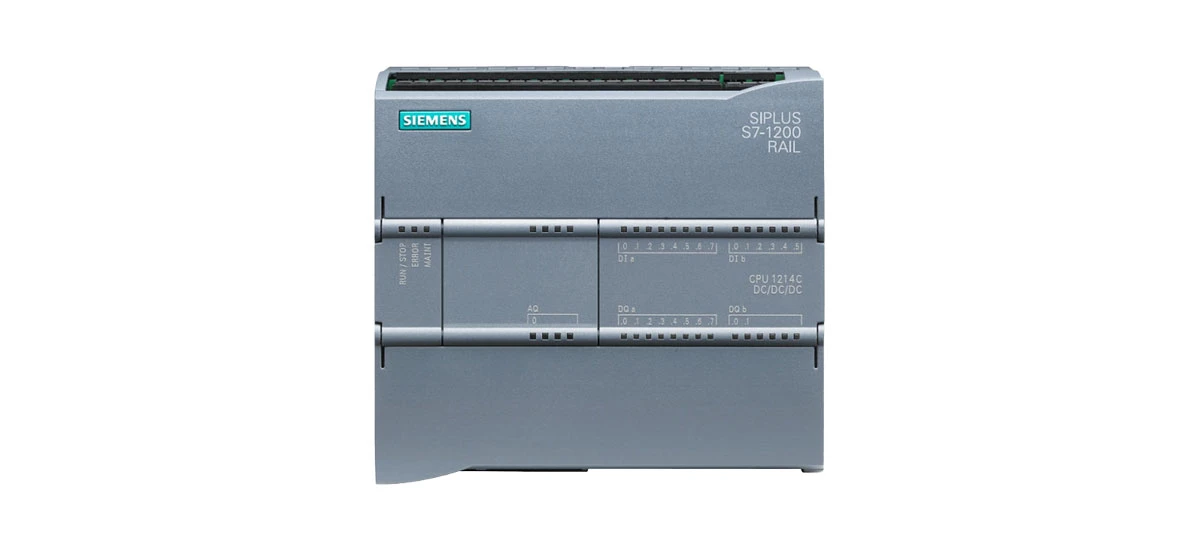
Introduction to Siemens S7-1200 and S7-1500 PLCs
In industrial automation, Programmable Logic Controllers (PLCs) are the backbone of efficient operations. Siemens, a trusted name in industrial technology, offers two popular PLC series: the Siemens S7-1200 and Siemens S7-1500. Both are designed to handle automation tasks, but they differ in power, scalability, and use cases. Whether you're planning a small manufacturing line or a large-scale industrial project, understanding their differences is key to choosing the right PLC. This blog breaks down their specs, performance, and applications to help you make an informed decision-including insights on the best Siemens S7-1200 applications for small projects.
Key Specifications: Siemens S7-1200 vs. S7-1500
Processor Speed and Performance
The Siemens S7-1200 features a 32-bit processor with speeds ranging from 0.1 μs per Boolean instruction (for basic models like the CPU 1211C) to 0.08 μs per Boolean instruction (for advanced models like the CPU 1217C). This makes it fast enough for most small to mid-sized tasks, such as controlling conveyors or packaging machines. On the other hand, the Siemens S7-1500 boasts a more powerful processor, with speeds as low as 0.001 μs per Boolean instruction (for high-end CPUs like the CPU 1518F-4 PN/DP). This extra speed is critical for complex applications with large data sets or real-time requirements.
Memory Capacity
Memory is vital for storing programs and data. The Siemens S7-1200 offers working memory (for program execution) between 100 KB and 1 MB, with load memory (for program storage) ranging from 2 MB to 16 MB (via SD card). This is sufficient for simple to moderate programs. The Siemens S7-1500, however, provides significantly more memory: working memory up to 20 MB and load memory up to 256 MB (or more with external storage). This allows it to handle complex programs with hundreds of function blocks or large databases.
I/O Module Support
The Siemens S7-1200 supports a maximum of 8 signal boards and 3 signal modules, totaling up to 288 digital I/O points or 128 analog I/O points. It's ideal for projects that don't require extensive I/O expansion. For example, if you need to control a small assembly line with a few sensors and actuators, the Siemens S7-1200's I/O capacity is more than enough. The Siemens S7-1500, in contrast, can support up to 32 signal modules per rack and multiple racks via PROFINET, enabling thousands of I/O points. This scalability makes it suitable for large factories with distributed control systems.
Scalability: Siemens S7-1200 vs. S7-1500 Scalability
Scalability is a key factor when choosing a PLC-your project may grow over time, and your PLC should adapt. The Siemens S7-1200 is a compact, fixed-size PLC with limited expansion options. While you can add signal boards and modules, there's a hard cap on how much you can expand. This makes it a great choice for projects with stable, unchanging requirements, like standalone machines.
The Siemens S7-1500, however, is highly scalable. It uses a modular design that lets you add more CPUs, memory modules, and I/O cards as your project grows. You can also connect multiple S7-1500 PLCs in a network for distributed control. For example, if you start with a small production line and later expand to multiple lines, the Siemens S7-1500 can grow with you without needing a complete system replacement. This Siemens S7-1200 vs. S7-1500 scalability difference is crucial for long-term projects.
Programming and Software Compatibility
Both the Siemens S7-1200 and S7-1500 use Siemens TIA Portal (Totally Integrated Automation Portal) for programming. TIA Portal is a user-friendly software that supports multiple programming languages, including Ladder Logic (LAD), Function Block Diagram (FBD), and Structured Control Language (SCL). This consistency means programmers familiar with one series can easily switch to the other.
For beginners, Siemens S7-1200 programming tips for beginners include starting with Ladder Logic (the most intuitive language) and using TIA Portal's built-in tutorials. The S7-1200's simpler architecture makes it easier to learn, as it has fewer advanced features to navigate. The S7-1500, while still compatible with TIA Portal, offers more advanced programming tools, such as motion control functions and safety integration (for SIL 3 applications). These features are useful for complex projects but may have a steeper learning curve.
Cost-Effectiveness: Siemens S7-1500 vs. S7-1200 Cost Comparison
Cost is often a deciding factor for small to mid-sized businesses. The Siemens S7-1200 is more budget-friendly, with basic models starting around $300-$500. Even with additional modules, the total cost remains relatively low, making it accessible for small projects or startups. For example, a small bakery looking to automate its oven temperature control could use a Siemens S7-1200 without breaking the bank.
The Siemens S7-1500, on the other hand, is more expensive. Basic models start around $1,000-$1,500, and adding modules or advanced features can push the cost much higher. However, for large-scale projects, the S7-1500 offers better value in the long run. Its durability, scalability, and high performance reduce downtime and maintenance costs, making it a cost-effective choice for industrial plants or complex automation systems. The Siemens S7-1500 vs. S7-1200 cost comparison shows that the S7-1200 is better for short-term, low-budget projects, while the S7-1500 is a smarter investment for long-term, high-demand applications.
Ideal Applications for Siemens S7-1200
The Siemens S7-1200 excels in small to mid-sized automation projects. Here are the best Siemens S7-1200 applications for small projects:
- Standalone machines: Packaging equipment, small conveyors, or assembly stations.
- Building automation: HVAC systems, lighting control, or access control for small buildings.
- Laboratory equipment: Controlling test machines or data logging for research.
- Food and beverage industry: Small-scale production lines for snacks, beverages, or baked goods.
- Renewable energy: Solar panel inverters or small wind turbine control systems.
If you're wondering how to choose Siemens S7-1200 for industrial control, ask yourself: Does my project have limited I/O needs? Is the program simple? Do I have a tight budget? If the answer to these questions is yes, the Siemens S7-1200 is the right choice.
Ideal Applications for Siemens S7-1500
The Siemens S7-1500 is designed for large, complex industrial projects. Its high performance and scalability make it suitable for:
- Large manufacturing plants: Automotive assembly lines, chemical processing facilities, or pharmaceutical production.
- Process automation: Oil and gas refineries, water treatment plants, or power generation systems.
- Motion control: Robotics, CNC machines, or high-speed packaging lines requiring precise movement.
- Distributed control systems: Factories with multiple production lines or remote I/O stations.
- Safety-critical applications: Systems requiring SIL 3 certification, such as emergency shutdown systems.
Final Recommendations
Choosing between the Siemens S7-1200 and S7-1500 depends on your project's size, complexity, and budget. Here's a quick guide:
- Choose Siemens S7-1200 if: You have a small project with simple programming needs, limited I/O requirements, and a tight budget. It's easy to use, cost-effective, and reliable for standalone or small-scale systems.
- Choose Siemens S7-1500 if: You're working on a large, complex project that requires high performance, scalability, and advanced features like motion control or safety integration. It's a long-term investment that can grow with your business.
Both PLCs are high-quality products from Siemens, ensuring durability and compatibility with other Siemens automation tools. By understanding their differences, you can select the right PLC to optimize your project's efficiency and performance.


