

Introduction to Siemens S7 PLC Families
In industrial automation, Programmable Logic Controllers (PLCs) are like the "brains" of machines and factories. Siemens, a top PLC maker, offers three popular lines: Siemens S7-1500, S7-1200, and the older S7-300/400 series. Each serves different needs, but the Siemens S7-1500 stands out as a modern, high-performance option. This guide breaks down their differences to help you understand which fits your project.
Siemens S7-1500 vs. S7-1200 vs. S7-300/400: Key Performance Comparison
Processing Speed & Power
The Siemens S7-1500 has a fast processor that handles complex tasks quickly. It uses advanced backplane bus technology, making data move faster than the S7-300/400. For example, it can process hundreds of control instructions in milliseconds. The S7-1200 is slower-it works well for simple tasks but struggles with big projects. The S7-300/400 was once powerful, but its speed can't match the Siemens S7-1500 today.
Memory & I/O Capacity
Memory and I/O (input/output) points determine how much a PLC can manage. The Siemens S7-1500 has large memory for programs and data, supporting thousands of I/O points. This makes it perfect for big factories. The S7-1200 has smaller memory and limits on I/O expansion, so it's better for small to medium systems. The S7-300/400 has decent capacity, but it's no longer updated, so it can't keep up with the Siemens S7-1500's flexibility.
Siemens S7-1500 Technical Features vs. Other Series
Expansion & Connectivity
All three series use modular design, but the Siemens S7-1500 offers the most flexibility. It supports more expansion modules-like I/O, communication, and safety modules-than the S7-1200. For connectivity, every Siemens S7-1500 CPU has 1-3 PROFINET interfaces, making it easy to connect to other machines and networks. The S7-300/400 only has PROFINET on some models, and the S7-1200 has fewer communication options. This is one of the top Siemens S7-1500 advantages over S7-300.
Built-in Tools & Diagnostics
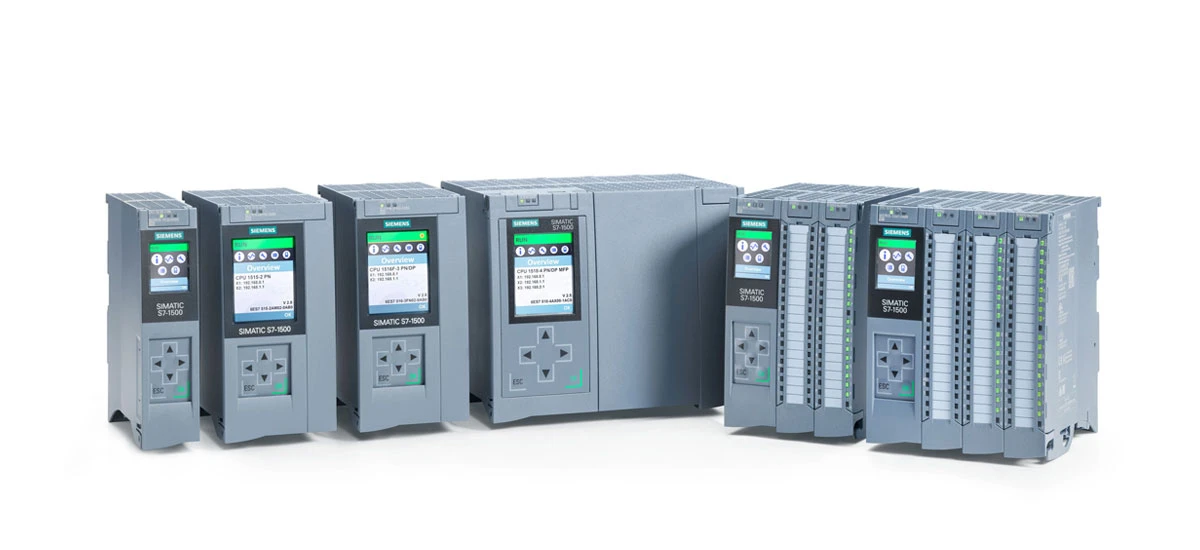
The Siemens S7-1500 has a built-in LED display on the CPU that shows status and fault info-something the S7-300/400 lacks. It also has channel-level diagnostics: if a sensor or valve fails, it pinpoints the exact problem without extra programming. This cuts down downtime. The S7-1200 has basic diagnostics, but nothing as detailed as the Siemens S7-1500.
Siemens S7-1500 Safety Features & Energy Efficiency vs. Other Series
Integrated Safety Functions of Siemens S7-1500
Safety is critical in industrial settings-especially in factories with moving parts or hazardous materials. The Siemens S7-1500 has built-in safety features that meet global standards like SIL 2 (Safety Integrity Level 2) and SIL 3. For example, it can automatically stop a machine if a safety door is opened, without needing extra safety modules. The S7-1200 only supports basic safety functions (up to SIL 2) and requires additional hardware for advanced protection. The S7-300/400 needs separate safety modules (like the F-series) to achieve similar safety levels, which adds cost and complexity. This makes the Siemens S7-1500 a top choice for industries like automotive or heavy machinery, where safety risks are high.
Energy Efficiency of Siemens S7-1500
In today's eco-friendly industrial world, energy efficiency saves money and reduces carbon footprints. The Siemens S7-1500 is designed with energy-saving features: its CPU uses low-power components, and it has a "sleep mode" for idle times-cutting energy use by up to 30% compared to the S7-300/400. For example, a factory running 24/7 with 10 Siemens S7-1500 CPUs can save over 1,000 kWh per year. The S7-1200 is also energy-efficient, but it can't handle large-scale projects where the Siemens S7-1500's efficiency and performance work together. The S7-300/400 has no such energy-saving modes, so it uses more power long-term.
Upgrade Paths & Compatibility for Siemens S7 Series
Upgrading from Older S7 Models to Siemens S7-1500
Many businesses still use S7-300/400 or S7-1200 and wonder how to switch to the Siemens S7-1500. The good news is Siemens made this process easy. For S7-300/400 users: TIA Portal has a "Migration Tool" that converts Classic Step 7 programs to work with the Siemens S7-1500. You don't need to rewrite code from scratch-though you may tweak it to use the Siemens S7-1500's advanced features. For S7-1200 users: Most S7-1200 programs run directly on the Siemens S7-1500 with no changes. This saves time and reduces risk during upgrades. Also, the Siemens S7-1500's mounting rails are compatible with some S7-300/400 modules, so you don't have to rebuild the entire control cabinet.
Compatibility with Other Siemens Devices
The Siemens S7-1500 works seamlessly with other Siemens automation products, which is a big plus for existing users. It connects to Siemens HMI (Human-Machine Interface) panels like the KTP series without extra hardware-just plug via PROFINET. It also works with Siemens drives (like SINAMICS V20) and sensors (like SIMATIC ET 200SP), making it easy to expand your system. The S7-300/400 has limited compatibility with new Siemens devices, and the S7-1200 can't connect to as many high-end tools. This compatibility makes the Siemens S7-1500 a smart choice for businesses that already use Siemens products and want to grow.
Siemens S7-1500 Industrial Automation Uses & Application Scenarios
Where Siemens S7-1500 Shines
The Siemens S7-1500 is made for complex, high-demand projects. Common Siemens S7-1500 industrial automation uses include:
- Process control: In chemical or food factories, it monitors temperature, pressure, and flow to keep production stable.
- Water treatment: It controls pumps, filters, and sensors in wastewater plants-like a facility that treats 22,000 tons of water daily with Siemens S7-1500.
- Smart manufacturing: It connects to IoT systems to share data and optimize production.
- Machine control: It handles precise movement for robots and assembly lines.
S7-1200 & S7-300/400 Applications
The S7-1200 is for simpler tasks: packaging lines, small conveyors, or HVAC systems in buildings. The S7-300/400 was used for medium to large projects, but since it's discontinued, many businesses are switching to the Siemens S7-1500.
Programming & Maintenance: Siemens S7-1500 vs. S7-1200 vs. S7-300/400
Programming Software
All three use Siemens software, but the Siemens S7-1500 and S7-1200 work with TIA Portal-a modern, easy-to-use platform. The S7-300/400 uses Classic Step 7, which is more complicated. For example, TIA Portal lets you save programs even with small errors, but Step 7 does not. Another plus: S7-1200 programs can move to the Siemens S7-1500, but not the other way around.
Maintenance & Cost
The Siemens S7-1500 supports remote monitoring-you can check its status from a computer or phone. This makes maintenance faster and cheaper. The S7-300/400 needs on-site checks, which takes more time. The S7-1200 is low-cost upfront, but the Siemens S7-1500 saves money long-term by reducing downtime.
How to Choose Siemens S7-1500 or Other Series?
Questions to Guide Your Choice
- Project size: Pick Siemens S7-1500 for large, complex systems. Choose S7-1200 for small projects. Avoid S7-300/400 since it's discontinued.
- Speed needs: If you need fast data processing (like real-time machine control), the Siemens S7-1500 is best.
- Future growth: The Siemens S7-1500 can expand as your business grows-something the S7-1200 can't do as well.
- Budget: S7-1200 is cheaper upfront, but Siemens S7-1500 offers better value for long-term use.
- Safety/energy needs: For high safety requirements or energy savings, the Siemens S7-1500 is the clear choice.
Key Takeaways for Selection
For most modern industrial projects, the Siemens S7-1500 is the top choice. It combines speed, flexibility, easy maintenance, strong safety, and energy efficiency. The only time to pick S7-1200 is for small, simple tasks with low safety demands. S7-300/400 is outdated, so upgrading to Siemens S7-1500 is wise for both performance and sustainability.
Why Siemens S7-1500 Is the Future of Industrial Automation
The Siemens S7-1500 fixes the limitations of older series while outperforming the S7-1200 in key areas-including safety, energy efficiency, and connectivity. Its fast processing, strong safety features, and low energy use make it ideal for Industry 4.0 and global sustainability goals. As more businesses move to smart, eco-friendly factories, the Siemens S7-1500 will remain the go-to PLC for reliable, efficient, and safe automation. Whether you're building a new system or upgrading an old one, the Siemens S7-1500 delivers the performance, safety, and sustainability you need.


