

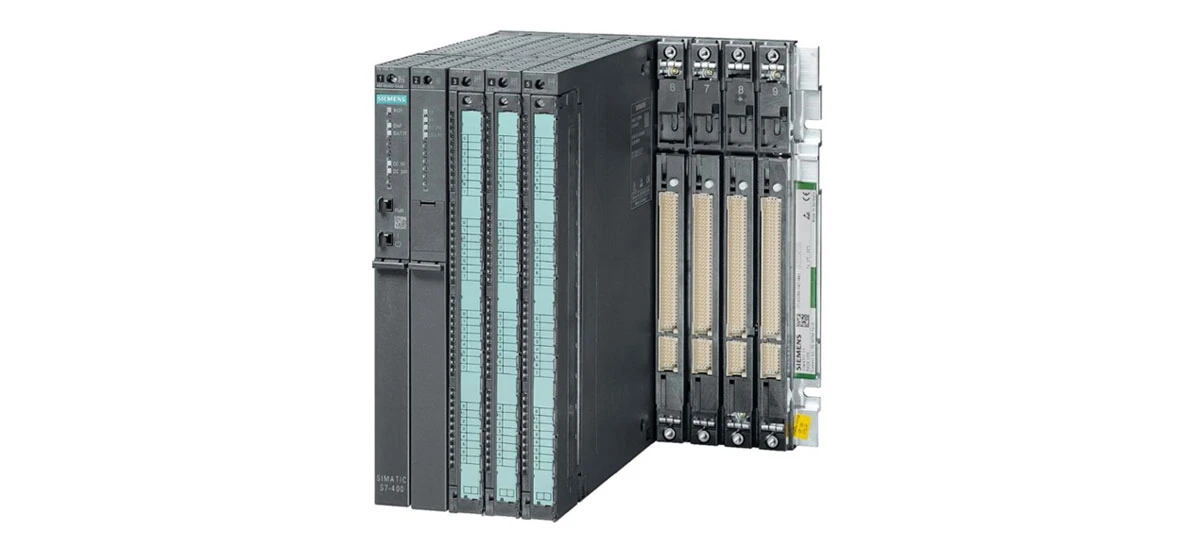
Siemens S7-400 is a powerful programmable logic controller (PLC) system widely used in industrial automation. At the core of its functionality are Siemens S7-400 I/O modules, which act as the bridge between the PLC and real-world devices like sensors, actuators, and machines. Whether you're setting up a new production line or upgrading an existing system, understanding these I/O modules is key to building a reliable and efficient automation solution. In this guide, we'll break down the types, specifications, and selection tips for Siemens S7-400 I/O modules, plus highlight essential details to help you make informed choices.
Types of Siemens S7-400 I/O Modules
Siemens S7-400 I/O modules come in several types, each designed for specific tasks. From digital signals to analog data and specialized functions, there's a module to fit every industrial need.
Digital Input Modules
Digital input modules for Siemens S7-400 handle discrete signals (on/off) from devices like limit switches, pushbuttons, and proximity sensors. A popular example is the Siemens S7-400 digital input module specifications, which typically support 24V DC or 120V AC signals. These modules range in size from 8-channel to 64-channel, letting you connect multiple devices without cluttering your control panel. They're ideal for applications where you need to detect simple statuses, such as whether a door is closed or a machine is running.
Digital Output Modules
Digital output modules send discrete signals to control devices like motors, solenoids, and indicator lights. Like input modules, they offer various voltage options (24V DC, 120V AC) and channel counts. Some models include built-in protection against short circuits, which helps prevent damage to the Siemens S7-400 system. These modules are crucial for executing commands from the PLC, such as starting a pump or activating an alarm.
Analog Input Modules
Analog input modules convert continuous physical quantities (like temperature, pressure, or flow) into digital data the Siemens S7-400 can process. They support signals such as 4-20mA current or 0-10V voltage, common in sensors from manufacturers worldwide. The resolution of these modules (usually 12-bit or 16-bit) determines how accurately they measure signals-higher resolution means more precise data. For example, a 16-bit analog input module can detect smaller changes in pressure, making it suitable for precise industrial processes.
Analog Output Modules
Analog output modules reverse the process: they convert digital signals from the Siemens S7-400 into continuous analog signals to control devices like variable frequency drives (VFDs) or control valves. The Siemens S7-400 analog output module selection often depends on the required signal type and resolution. These modules are used in applications where smooth, variable control is needed, such as adjusting the speed of a conveyor belt or regulating the flow of a liquid.
Specialized I/O Modules
Siemens S7-400 also offers specialized I/O modules for unique industrial tasks. This includes communication modules (for connecting to other systems like Profibus or Ethernet), counter modules (for counting pulses from encoders), and temperature input modules (for directly connecting thermocouples or RTDs). The Siemens S7-400 compact I/O modules for industrial use are a great choice for space-constrained setups, offering multiple functions in a small footprint.
Key Specifications of Siemens S7-400 I/O Modules
To choose the right Siemens S7-400 I/O modules, you need to understand their key specifications. These details ensure the module works with your devices and meets your application's demands.
Voltage and Current Ratings
Voltage and current ratings indicate the electrical signals the module can handle. Digital modules often support 24V DC (the most common in industrial settings) or 120V AC. Analog modules typically work with 4-20mA (current) or 0-10V (voltage) signals. It's critical to match these ratings with your sensors and actuators-using a module with the wrong voltage can damage both the module and your devices.
Signal Resolution
Resolution matters for analog modules. A 12-bit module can divide the signal range into 4,096 steps, while a 16-bit module offers 65,536 steps. Higher resolution is better for applications requiring precision, like measuring small temperature changes in a chemical process. For digital modules, resolution isn't a factor, but channel count (how many devices you can connect) is key.
Response Time
Response time is how fast the module processes a signal and sends it to the Siemens S7-400 PLC (or vice versa). For time-sensitive applications-like stopping a machine in an emergency-you need a module with a fast response time (often measured in microseconds). Digital modules generally have faster response times than analog modules, but this varies by model.
Environmental Tolerance
Industrial environments can be harsh, so Siemens S7-400 I/O modules are built to withstand extreme temperatures, humidity, and vibration. Most modules operate in a temperature range of 0°C to 60°C (32°F to 140°F) and can handle humidity levels up to 95% (non-condensing). Some models are also dustproof or protected against water splashes, making them suitable for outdoor or dirty environments.
Compatibility
All Siemens S7-400 I/O modules are compatible with the S7-400 PLC family, but it's important to check compatibility with your specific PLC model (e.g., S7-412, S7-417) and other modules in your system. The Siemens S7-400 I/O module's compatibility with PLC systems ensures seamless communication and avoids configuration issues. You can find compatibility lists on Siemens' official website or in the module's datasheet.
Siemens S7-400 I/O Modules Selection Guide
Choosing the right Siemens S7-400 I/O modules doesn't have to be complicated. Follow these steps to match the module to your application:
Assess Application Requirements
Start by listing what you need the module to do. Do you need to read on/off signals (digital input) or measure temperature (analog input)? How many devices will you connect (channel count)? What voltage or signal type do your devices use? For example, if you're controlling 10 24V DC motors, a 16-channel digital output module (with a 24V DC rating) is a good fit. If you're measuring pressure with a 4-20mA sensor, an analog input module supporting that signal is necessary.
Check Compatibility with Siemens S7-400 PLC
As mentioned earlier, ensure the module works with your S7-400 PLC model. Most modules are compatible with all S7-400 CPUs, but some specialized modules may require specific firmware versions. Always verify this with Siemens' documentation or technical support to avoid compatibility issues.
Evaluate Environmental Conditions
Consider where the module will be installed. If it's in a hot factory or outdoor area, choose a module with a wide temperature range. If the area is dusty or wet, look for modules with IP (Ingress Protection) ratings (e.g., IP20 for indoor use, IP65 for outdoor use). This ensures the module lasts longer and performs reliably.
Consider Scalability
Your automation system may grow over time, so choose modules that let you expand easily. Siemens S7-400 I/O modules support modular expansion-you can add more modules to the PLC rack as needed. Opt for modules with enough spare channels to accommodate future devices, so you don't have to replace the entire module later.
Compare Cost and Performance
While budget is important, don't sacrifice performance for a lower price. A cheaper module with fewer features may not meet your needs, leading to costly upgrades later. Balance cost with factors like resolution, response time, and durability. For example, a high-resolution analog module may cost more, but it's worth it for precise processes that affect product quality.
Practical Uses of Siemens S7-400 I/O Modules
Siemens S7-400 I/O modules are used in a wide range of industries, thanks to their versatility and reliability. Here are some common applications:
- Manufacturing: In assembly lines, digital input modules detect when parts are in place, while digital output modules control robots and conveyor belts. Analog modules monitor machine temperature and adjust speed for optimal performance.
- Energy: In power plants, analog input modules measure voltage and current, while specialized communication modules connect the PLC to grid management systems.
- Water Treatment: Digital output modules control pumps and valves, while analog input modules monitor water pH and flow rates.
- Automotive: In car factories, Siemens S7-400 I/O modules coordinate assembly robots, track parts with sensors, and ensure quality control with precise measurements.
Why Choose Siemens S7-400 I/O Modules?
Siemens S7-400 I/O modules stand out for their durability, compatibility, and performance. They're designed to work seamlessly with the S7-400 PLC, reducing configuration time and errors. Siemens also offers excellent technical support and a wide range of modules, so you can find exactly what you need for your application. Whether you're a small business or a large industrial plant, these modules provide the reliability and flexibility to keep your automation system running smoothly.
If you're still unsure which Siemens S7-400 I/O modules to choose, refer to Siemens' official datasheets or consult with an automation expert. With the right modules, your S7-400 PLC will deliver efficient, reliable control for years to come.


