

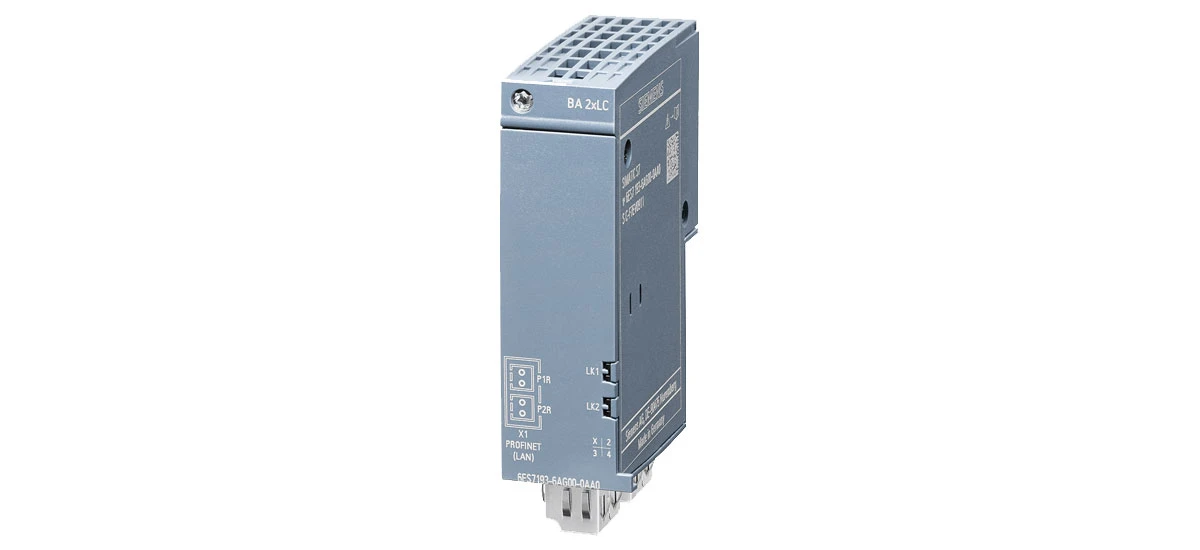
In the world of industrial automation, selecting the right controller can make a big difference in how well a system runs. Two popular choices are SIMATIC ET 200SP and CompactLogix. Both are used in factories and industrial settings, but they have different strengths in areas like speed, expandability, and durability. This guide will compare their performance in detail to help you understand which one might be better for your specific needs, whether you're running a small workshop or a large manufacturing plant.
Processing Speed: How Fast They Work
Processing speed is crucial for industrial controllers because they need to handle many tasks quickly, like monitoring sensors, adjusting machine settings, and sending commands to motors. Even a small delay can disrupt production or cause errors in the final product.
SIMATIC ET 200SP is known for its fast processing. It uses advanced 32-bit processors that can handle up to 10,000 instructions per millisecond. For example, in a busy automotive production line where 50+ sensors are sending information about part positions every second, SIMATIC ET 200SP can process all that data and adjust the robotic arms instantly. This helps keep the production line running at full speed-often 60+ parts per minute-without delays.
CompactLogix also has good processing speed, with processors that handle around 7,000 instructions per millisecond. This works well for simple to moderately complex systems, like a small packaging line with 10-15 sensors. But when the workload gets heavy-such as a food processing plant with 100+ temperature and pressure sensors-SIMATIC ET 200SP often has the edge, reducing lag time by up to 30% in such scenarios.
SIMATIC ET 200SP performance in manufacturing shows that it can keep up with high-speed production processes, making it a great choice for factories that need quick and accurate control to meet tight production deadlines.
Expandability: How Much They Can Grow
As industrial systems grow, controllers need to be able to add more components, like extra input/output (I/O) modules, communication cards, or special modules for tasks like motion control or safety monitoring. A controller that's hard to expand can force businesses to replace the entire system, which is costly and time-consuming.
SIMATIC ET 200SP is highly expandable. It has a modular design with a backplane that can support up to 64 I/O modules in a single station. Whether you need more digital inputs to monitor conveyor belts, analog outputs to control valve positions, or safety modules to shut down machines in emergencies, you can easily plug them in. What's more, you can add modules without stopping the system-this "hot swapping" feature is a big advantage for factories that run 24/7.
CompactLogix is also expandable but with more limits. Most models support up to 32 I/O modules, and adding new modules often requires stopping the system temporarily. It works well for smaller systems, like a local brewery with a few processing tanks, but if you need to add a lot of extra components-say, a factory expanding from 2 production lines to 5-SIMATIC ET 200SP is more flexible.
When looking at SIMATIC ET 200SP vs CompactLogix in industrial automation, the expandability of SIMATIC ET 200SP makes it a better fit for growing businesses that want to scale up without major overhauls.
Reliability: How Well They Hold Up
In industrial settings, controllers need to be reliable. They can't fail often because that would stop production, leading to lost time and money. A single hour of downtime in a large factory can cost tens of thousands of dollars.
SIMATIC ET 200SP is built to be very reliable. It can work in harsh conditions: it operates in temperatures from -25°C to 70°C, resists dust with an IP65 rating, and handles electrical noise from nearby machines. Its components are made with high-quality materials-like gold-plated connectors-to reduce wear and tear. It also has smart features: if a sensor fails, it can automatically switch to a backup sensor, and it sends real-time alerts to a control panel so technicians can fix issues before they cause a breakdown.
CompactLogix is also reliable, but it's better suited for milder environments. It works well in temperatures from 0°C to 60°C and has an IP20 rating, which means it needs extra protection in dusty or wet areas. While it can detect errors, it doesn't have as many backup features as SIMATIC ET 200SP, so it may need more frequent maintenance in tough conditions.
Communication Capabilities: How They Connect
Controllers need to communicate with other devices, like computers, sensors, machines, and even cloud systems, to share information. Good communication ensures that managers can monitor production in real time and make data-driven decisions.
SIMATIC ET 200SP supports many different communication protocols, which are like languages that devices use to talk to each other. It works with Ethernet/IP, Profinet, Modbus, and Profibus, among others. This means it can easily connect to equipment from brands like Siemens, Allen-Bradley, and Mitsubishi. It also integrates with industrial IoT (IIoT) platforms, so you can send data to cloud services like Siemens MindSphere for long-term analysis. For example, a factory using SIMATIC ET 200SP can share production data with a central office in another country in real time.
CompactLogix mainly uses Ethernet/IP and ControlNet protocols. While this covers most common devices, it may struggle to connect with equipment that uses older protocols like Profibus. It can connect to cloud systems too, but the setup is often more complex than with SIMATIC ET 200SP.
Power Consumption: How Much Energy They Use
Saving energy is important for both cost and environmental reasons. Industrial facilities with hundreds of controllers can see big savings by choosing energy-efficient models.
SIMATIC ET 200SP is designed to be energy-efficient. Each base unit uses only 5-10 watts of power, and even with multiple modules, the total power consumption is much lower than many competitors. For a factory with 50 controllers, this can mean saving up to 1,000 kWh per year-enough to power a small home for a month. This not only lowers electricity bills but also reduces the facility's carbon footprint.
CompactLogix uses more power, with base units consuming 15-20 watts. While this is still reasonable, the difference adds up in large systems. For example, 50 CompactLogix controllers would use about 5,000 kWh more per year than 50 SIMATIC ET 200SP units.
Cost: How Much They Cost to Buy and Use
Cost is always a factor when choosing industrial equipment. It's important to look beyond the initial price tag and consider long-term costs like energy, maintenance, and upgrades.
The initial cost of SIMATIC ET 200SP and CompactLogix is similar-both range from $500 to $2,000 depending on the model. But the total cost over time can be different. Because SIMATIC ET 200SP is more expandable, you can add modules for $50-$200 each instead of buying a whole new controller (which would cost $500+). Its energy efficiency also saves about $100-$300 per year per controller in electricity. Plus, its reliable design means fewer repairs-technicians spend about 30% less time fixing SIMATIC ET 200SP units compared to CompactLogix.
CompactLogix may be a better choice if you have a small system and don't plan to expand much. Its lower expandability might not be a problem, and the initial cost could be slightly lower for basic models. But over 5 years, a growing system using SIMATIC ET 200SP will often be cheaper.
SIMATIC ET 200SP Application Scenarios
SIMATIC ET 200SP is suitable for many different industrial applications, thanks to its speed, reliability, and flexibility.
- Automotive Manufacturing: In car factories, it controls robotic arms that weld and paint parts. Its fast processing ensures robots move with millisecond precision, reducing defects.
- Food and Beverage Processing: It handles tasks like mixing ingredients and controlling oven temperatures. Its resistance to moisture and dust makes it ideal for facilities that need frequent cleaning.
- Chemical Plants: It monitors pressure and temperature in reaction tanks. Its ability to work with multiple protocols lets it connect to safety systems that prevent leaks.
- Logistics Centers: It manages conveyor belts and sorting machines in warehouses, keeping packages moving quickly even during peak hours.
How to Choose Between SIMATIC ET 200SP and CompactLogix
When trying to decide between the two, ask yourself these questions:
- How big is your system? If you have 20+ machines or plan to add more, SIMATIC ET 200SP's expandability is a big plus.
- What's your environment like? If your facility is hot, dusty, or has electrical interference, SIMATIC ET 200SP is more durable.
- Do you use equipment from different brands? SIMATIC ET 200SP's wide protocol support makes it easier to connect everything.
- How important is energy savings? For large systems, SIMATIC ET 200SP's lower power use adds up.
If you have a small, stable system in a mild environment, CompactLogix could work. But for most growing or challenging industrial settings, SIMATIC ET 200SP is the better choice.
CompactLogix vs SIMATIC ET 200SP Reliability in Daily Use
In daily operation, both controllers perform well, but SIMATIC ET 200SP tends to have fewer issues in tough environments. For example, in a steel mill where temperatures reach 60°C and dust is constant, SIMATIC ET 200SP units typically run for 2-3 years without major problems. CompactLogix units in the same environment may need repairs every 1-2 years, often due to dust buildup or heat damage.
SIMATIC ET 200SP also has better error recovery. If there's a power flicker, it can restart and resume operations in under 10 seconds. CompactLogix may take 20-30 seconds to restart, which can disrupt production in time-sensitive processes like bottle filling.
Final Verdict: SIMATIC ET 200SP vs CompactLogix
Both SIMATIC ET 200SP and CompactLogix are solid choices in the industrial automation world, but their strengths shine in different scenarios. CompactLogix works well for small, stable systems in controlled environments, offering decent performance at a reasonable cost. However, SIMATIC ET 200SP emerges as the more versatile and future-proof option for most industrial needs.
SIMATIC ET 200SP outperforms CompactLogix in key areas: its faster processing handles complex tasks with ease, crucial for high-speed production lines. Its expandability-supporting more modules with hot-swapping-grows with your business, avoiding costly system replacements. In harsh conditions, its durability and wide operating range reduce downtime, while its broad communication protocol support connects seamlessly with diverse equipment, simplifying integration. Add in lower energy use and long-term cost savings, and SIMATIC ET 200SP becomes the clear choice for growing facilities, challenging environments, or anyone needing a reliable, flexible controller. For industrial operations aiming to boost efficiency, reduce costs, and scale smoothly, SIMATIC ET 200SP stands out as the superior performer.


