

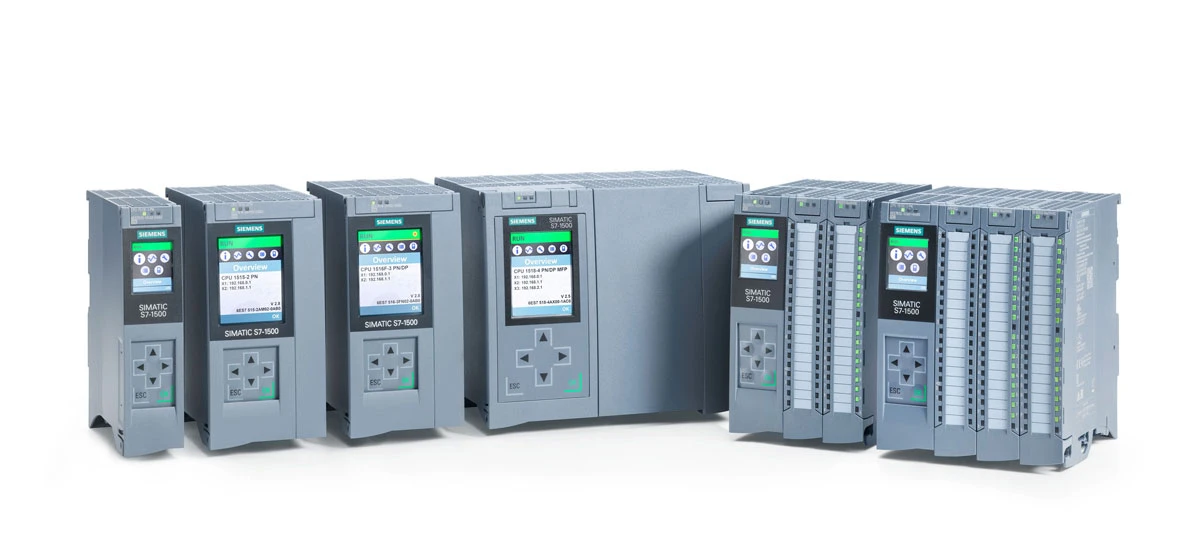
In the world of industrial automation, Siemens PLC (Programmable Logic Controller) stands out as a reliable and powerful tool. From small factories to large-scale manufacturing plants, Siemens PLC plays a key role in controlling and monitoring industrial processes. This guide will break down the main types of Siemens PLC, their practical applications, and the key benefits they bring to industrial automation. Whether you're a student learning about industrial technology or a professional looking to understand Siemens PLC better, this article provides clear and fact-based information.
What Is a Siemens PLC? A Basic Overview
First, let's clarify what a Siemens PLC is. A PLC is a specialized computer designed to control industrial machinery and processes. Unlike regular computers, PLCs are built to work in harsh industrial environments-they can handle high temperatures, dust, and electrical interference. Siemens, a leading global technology company, has developed a range of PLCs that are widely used in various industries. The core function of a Siemens PLC is to take input signals from sensors (like temperature sensors and pressure sensors), process these signals based on pre-programmed logic, and then send output signals to actuators (like motors, valves) to control the industrial process. This automation process makes production more efficient and less dependent on manual operation.
Main Types of Siemens PLC for Industrial Automation
Siemens offers different types of PLCs to meet the needs of different industrial projects, from small-scale operations to large and complex systems. Below are the most common types, each with its own features and ideal use cases. This section will help you understand Siemens PLC types for industrial automation and choose the right one for specific applications.
1. Siemens S7-1200 PLC
The Siemens S7-1200 is a compact and cost-effective PLC, perfect for small to medium-sized automation tasks. It is easy to program and install, making it a popular choice for small factories or new automation projects. The S7-1200 can handle up to 8 analog inputs and 4 analog outputs, which is enough for simple processes like small assembly lines or packaging machines. One of its key advantages is its compatibility with Siemens' TIA Portal (Totally Integrated Automation Portal), software that simplifies programming and monitoring of the PLC.
2. Siemens S7-1500 PLC
For larger and more complex industrial systems, the Siemens S7-1500 is the go-to option. It has a more powerful processor and can handle a much larger number of inputs and outputs compared to the S7-1200. The S7-1500 is designed for high-performance applications, such as large manufacturing plants or continuous production processes. It also supports advanced features like motion control and safety functions, which are essential for industries that require high precision and safety standards. Additionally, the S7-1500 is highly scalable, meaning it can be expanded as the industrial system grows.
3. Siemens S7-200 Smart PLC
The Siemens S7-200 Smart is another compact PLC, mainly used for small automation projects with simple logic requirements. It is affordable and easy to use, making it suitable for small businesses or educational purposes. The S7-200 Smart can connect to a variety of sensors and actuators, and its programming software is user-friendly, even for beginners who are learning Siemens PLC programming basics. It is commonly used in small-scale packaging, material handling, and water treatment systems.
Key Applications of Siemens PLC in Different Industries
Siemens PLC is widely used across various industries due to its reliability and flexibility. Below are some of the most common applications, showing how Siemens PLC integrates into industrial processes and improves operational efficiency.
1. Automotive Industry: Assembly Line Control
The automotive industry relies heavily on automation, and Siemens PLC applications in the automotive industry are everywhere. In car manufacturing plants, Siemens PLC controls the assembly line processes-from welding car bodies to installing engines and painting. For example, the S7-1500 PLC is used to coordinate the movement of robotic arms, ensuring that each part is installed accurately and efficiently. This not only speeds up production but also reduces errors, as robots controlled by Siemens PLC can perform repetitive tasks with high precision.
2. Food and Beverage Industry: Packaging and Quality Control
In the food and beverage industry, hygiene and consistency are crucial. Siemens PLC is used to control packaging machines, ensuring that products are packaged quickly and correctly. It also integrates with quality control systems-sensors connected to the PLC check the weight, size, and quality of products. If a product does not meet the standards, the PLC sends a signal to reject it automatically. This ensures that only high-quality products reach the market. The compact S7-1200 PLC is often used in small to medium-sized food processing plants.
3. Energy Industry: Power Plant Monitoring and Control
Power plants (both thermal and renewable energy plants) use Siemens PLC to monitor and control critical processes. For example, in a solar power plant, Siemens PLC tracks the position of solar panels to maximize sunlight absorption. In a thermal power plant, it controls the combustion process and monitors temperature and pressure levels. The S7-1500 PLC is ideal for these applications because of its high reliability and ability to handle complex logic. This ensures that power plants operate safely and efficiently, reducing the risk of accidents and downtime.
4. Water Treatment Industry: Process Automation
Water treatment plants use Siemens PLC to automate the process of purifying water. The PLC controls pumps, valves, and filters, ensuring that each step of the treatment process (like sedimentation, filtration, and disinfection) is carried out correctly. Sensors connected to the PLC monitor water quality parameters such as pH level and turbidity. If any parameter is out of range, the PLC adjusts the process automatically. This ensures that the treated water meets safety standards and is suitable for drinking or industrial use.
Benefits of Using Siemens PLC in Industrial Automation
Using Siemens PLC in industrial automation brings a wide range of benefits, from improving efficiency to reducing costs. Below are the key advantages that make Siemens PLC a top choice for industries around the world, especially when it comes to how Siemens PLC improves manufacturing efficiency and the benefits of using Siemens PLC in factory automation.
1. Increased Production Efficiency
One of the biggest benefits of Siemens PLC is increased production efficiency. PLCs can work 24/7 without fatigue, unlike human workers. They can also perform tasks much faster and with higher accuracy. For example, a packaging line controlled by Siemens PLC can package hundreds of products per minute, which is impossible for manual operation. This reduces production time and increases output, helping businesses meet customer demands more effectively.
2. Improved Reliability and Reduced Downtime
Siemens PLC is built to be highly reliable, even in harsh industrial environments. They have a long lifespan and require minimal maintenance. Additionally, Siemens PLC can monitor the industrial process in real time. If a problem occurs (like a malfunctioning motor), the PLC detects it immediately and sends an alert. Some advanced PLCs can even take corrective action automatically, reducing downtime. This ensures that the production process runs smoothly and continuously.
3. Flexibility and Scalability
Another key benefit of Siemens PLC is flexibility. The logic of a PLC can be easily modified using programming software (like TIA Portal). This means that if the production process needs to be changed (for example, producing a new product), there's no need to replace the entire control system-you just need to update the program. Siemens PLC is also scalable. You can start with a small PLC (like the S7-1200) for a small project and expand it or upgrade to a larger PLC (like the S7-1500) as your business grows.
4. Enhanced Safety
Safety is a top priority in any industrial environment, and Siemens PLC helps improve workplace safety. Many Siemens PLCs come with built-in safety functions that prevent accidents. For example, if a worker enters a dangerous area (like a robotic assembly zone), sensors connected to the PLC detect it and stop the machine immediately. Additionally, PLCs can control safety systems like emergency stops and fire alarms, ensuring that workers are protected at all times.
5. Cost Savings
Using Siemens PLC can lead to significant cost savings in the long run. First, it reduces labor costs, as fewer workers are needed to operate and monitor the production process. Second, it reduces downtime, which means more production and higher revenue. Third, Siemens PLC requires minimal maintenance, reducing maintenance costs. Finally, the flexibility and scalability of Siemens PLC mean that you don't have to invest in a new control system every time your production needs change.
Conclusion: Why Siemens PLC Is Essential for Modern Industrial Automation
Siemens PLC is a key component of modern industrial automation. With its various types (suitable for different project sizes), wide range of applications (across industries like automotive, food and beverage, and energy), and numerous benefits (increased efficiency, reliability, flexibility, safety, and cost savings), it has become an essential tool for businesses looking to stay competitive in today's fast-paced industrial world. Whether you're running a small factory or a large manufacturing plant, Siemens PLC can help you automate your processes, improve productivity, and achieve your business goals. If you're new to Siemens PLC, starting with the basics (like learning Siemens PLC programming basics for beginners) is a great way to understand how it can benefit your operations.


