

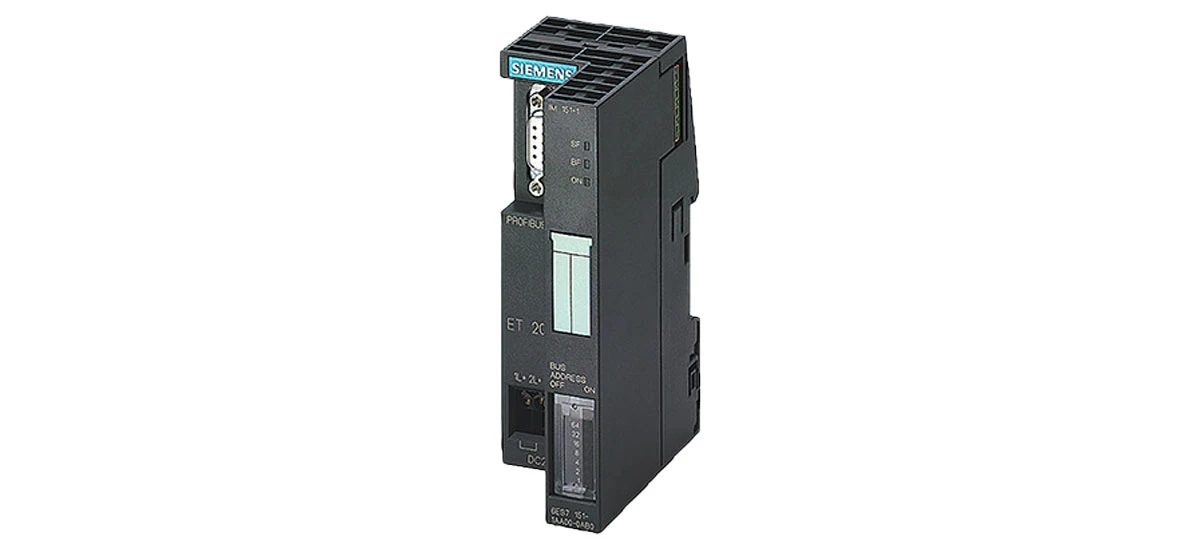
If you work with industrial automation, you've probably used or heard of the Siemens 6ES7151-1BA02-0AB0. This digital input module is a key part of many factory systems, connecting sensors, buttons, and switches to Siemens PLCs (Programmable Logic Controllers). When the Siemens 6ES7151-1BA02-0AB0 works well, machines run smoothly-but when it has issues, production can slow down or stop. In this blog, we'll explain what the Siemens 6ES7151-1BA02-0AB0 is, its common problems, and how to fix them easily.
What Is the Siemens 6ES7151-1BA02-0AB0 Digital Input Module?
The Siemens 6ES7151-1BA02-0AB0 is a digital input module designed for industrial use. It's part of Siemens' SIMATIC S7 family, which is widely used in factories, warehouses, and manufacturing plants. The main job of the Siemens 6ES7151-1BA02-0AB0 is to collect "digital signals" from devices like limit switches (which detect if a part is in place) or pushbuttons. These signals are simple: they're either "on" (like a light switch flipped up) or "off" (flipped down). The Siemens 6ES7151-1BA02-0AB0 sends these signals to a PLC, which uses the information to control machines-like starting a conveyor belt or stopping a pump.
Because the Siemens 6ES7151-1BA02-0AB0 is used in tough industrial environments (with dust, vibration, and temperature changes), it can develop issues over time. Knowing how to troubleshoot the Siemens 6ES7151-1BA02-0AB0 saves time and keeps your systems running.
Common Issues with the Siemens 6ES7151-1BA02-0AB0 and How to Troubleshoot Them
The Siemens 6ES7151-1BA02-0AB0 is reliable, but it can face a few common problems. Below are the most frequent issues, plus step-by-step fixes that anyone with basic tools (like a multimeter) can do.
No Input Signal Detected by Siemens 6ES7151-1BA02-0AB0
One of the most common problems with the Siemens 6ES7151-1BA02-0AB0 is when it doesn't detect any input signals. This means the module isn't picking up "on" or "off" signals from sensors or buttons-and the PLC won't get the info it needs. Here's how to fix no input signal on Siemens 6ES7151-1BA02-0AB0:
First, check the wires connected to the Siemens 6ES7151-1BA02-0AB0. Loose or broken wires are the top cause of signal loss, so start by turning off power to the module for safety. Then, look at the terminal screws on the Siemens 6ES7151-1BA02-0AB0 to see if they're tight-if a screw is loose, the wire can't send a signal. Also, check the wires themselves for fraying, cuts, or damage; if a wire is broken, replace it with a new one of the same type.
Next, test the sensor or device connected to the Siemens 6ES7151-1BA02-0AB0. The problem might not be the module-it could be the sensor. Most sensors connected to the Siemens 6ES7151-1BA02-0AB0 use 24V DC power, so use a multimeter to check if the sensor is getting enough power: set the multimeter to "DC voltage," touch the red probe to the sensor's positive wire, and the black probe to the negative wire. You should see a reading of at least 22V; if it's lower than that, the sensor won't send a reliable signal to the Siemens 6ES7151-1BA02-0AB0. Fix the sensor's power first (check its power supply or wires) before testing the module again.
Then, verify the Siemens 6ES7151-1BA02-0AB0's power supply. The module needs a steady 24V DC power to function properly, so use your multimeter to check its power terminals. If the voltage is below 22V or above 26V, the Siemens 6ES7151-1BA02-0AB0 won't function right-adjust the power supply to get the correct voltage, or replace a faulty power supply if needed.
Finally, check the connection between the Siemens 6ES7151-1BA02-0AB0 and the PLC. The module sends signals to the PLC via a communication cable, so make sure this cable is plugged in tightly on both ends (the module and the PLC). If the cable is loose, the Siemens 6ES7151-1BA02-0AB0 can't send signals-even if it's detecting them. Try unplugging the cable and plugging it back in to ensure a good connection.
Intermittent Input Signals on Siemens 6ES7151-1BA02-0AB0
Another issue with the Siemens 6ES7151-1BA02-0AB0 is intermittent signals-meaning the module detects the signal sometimes, but not always. This is frustrating because it causes machines to start and stop randomly. For Siemens 6ES7151-1BA02-0AB0 intermittent signal troubleshooting, follow these steps:
Start by tightening all wire connections. Loose wires often cause intermittent signals, and even if a wire looks connected, it might be slightly loose from vibration in factories. Turn off power, then gently twist each terminal screw on the Siemens 6ES7151-1BA02-0AB0 to make sure they're tight. Also, check the sensor's wire connections-loose wires there can cause the same problem with the Siemens 6ES7151-1BA02-0AB0's signal detection.
Next, check for environmental interference. Industrial areas have lots of electrical noise from motors, welders, or other machines, and this noise can disrupt signals to the Siemens 6ES7151-1BA02-0AB0. To fix this, use shielded wires for the module's connections (shielded wires block noise), keep the module's signal wires at least 6 inches away from power cables whenever possible, and make sure the Siemens 6ES7151-1BA02-0AB0 is grounded properly (follow Siemens' manual for grounding steps).
Then, test the sensor for wear. Old or dirty sensors often send intermittent signals to the Siemens 6ES7151-1BA02-0AB0, so clean the sensor's lens (if it's an optical sensor) with a dry cloth. If the sensor is more than 5 years old, replace it-worn sensors can't send reliable signals to the Siemens 6ES7151-1BA02-0AB0, even if the module itself is working.
Finally, replace the signal wire. Sometimes, a wire looks fine but has internal damage from bending or age, which causes intermittent signals to the Siemens 6ES7151-1BA02-0AB0. Replace the wire between the sensor and the module with a new one, then test the Siemens 6ES7151-1BA02-0AB0 again-if the signal is steady, the old wire was the problem.
Error Codes on Siemens 6ES7151-1BA02-0AB0 Module
The Siemens 6ES7151-1BA02-0AB0 has LED lights (like the "SF" or "ERROR" light) that turn red when there's a problem. Some PLCs also display error codes for the module. For Siemens 6ES7151-1BA02-0AB0 error code resolution, here's what to do:
First, find the error code meaning. Check your Siemens PLC manual or the Siemens 6ES7151-1BA02-0AB0 datasheet (available on Siemens' website) to understand what the code means-two common ones are SF (System Fault) and BF (Bus Fault). SF means the module has a hardware or software issue, while BF means there's a problem with the communication between the module and the PLC.
To fix SF (System Fault) errors, start by turning off power to the Siemens 6ES7151-1BA02-0AB0, waiting 30 seconds, then turning it back on-sometimes a simple reset fixes temporary glitches. If that doesn't work, check if the module is overloaded: the Siemens 6ES7151-1BA02-0AB0 has a maximum number of inputs it can handle (check the datasheet, which usually lists 16 or 32), so if you've connected more sensors than that limit, remove some or add an extra module. Finally, inspect the Siemens 6ES7151-1BA02-0AB0 for physical damage-look for burnt marks, broken pins, or swollen components. If the module is damaged, replace it-damaged hardware can't be fixed easily.
To fix BF (Bus Fault) errors, start by checking the communication cable between the Siemens 6ES7151-1BA02-0AB0 and the PLC. If the cable has cuts or frays, replace it-damaged cables break the communication link. Next, make sure the PLC's firmware is up to date: outdated firmware can cause communication issues with the Siemens 6ES7151-1BA02-0AB0, so check Siemens' website for firmware updates for your PLC model and install them following the instructions. Finally, reset both the PLC and the Siemens 6ES7151-1BA02-0AB0: turn off both devices, wait 1 minute, then turn on the PLC first, followed by the module-this resets the communication link and often fixes BF errors.
Overheating of Siemens 6ES7151-1BA02-0AB0
The Siemens 6ES7151-1BA02-0AB0 can overheat if it's in a hot environment or not properly cooled. Overheating causes the module to slow down, display errors, or even stop working. To prevent overheating in Siemens 6ES7151-1BA02-0AB0, follow these steps:
First, check the module's temperature. The Siemens 6ES7151-1BA02-0AB0 works best in environments where the air temperature stays between 0°C and 60°C (or 32°F and 140°F)-if the temperature around it goes above this range, the module may start to overheat. Use a thermometer to measure the air temperature near the module, and if it's too high, improve ventilation: add a fan near the Siemens 6ES7151-1BA02-0AB0 to circulate air, remove any objects blocking the module's vents (like boxes or cables), or move the module to a cooler area of the control panel (away from heaters or motors).
Next, check the power supply voltage. If the power supply sends more than 26V DC to the Siemens 6ES7151-1BA02-0AB0, the module will overheat-use a multimeter to test the voltage at the module's power terminals, and adjust the power supply to 24V DC if it's too high.
Then, reduce the module's load. If you've connected too many sensors to the Siemens 6ES7151-1BA02-0AB0, the module has to work harder and will heat up. Check the module's datasheet for the maximum number of inputs (usually 16 or 32), and if you're over that limit, add a second Siemens 6ES7151-1BA02-0AB0 module or a similar model to split the load.
Finally, clean the module. Dust buildup on the Siemens 6ES7151-1BA02-0AB0 blocks airflow and causes overheating, so turn off power and use a dry, soft brush (like a paintbrush) to gently wipe dust off the module's vents and surface. Don't use water or cleaning sprays-they can damage the Siemens 6ES7151-1BA02-0AB0.
Tips for Maintaining the Siemens 6ES7151-1BA02-0AB0
To avoid issues with the Siemens 6ES7151-1BA02-0AB0, regular maintenance is key. These simple steps will keep the module working well for years:
To keep the Siemens 6ES7151-1BA02-0AB0 running smoothly, make it a habit to check all wire connections once a month-turn off power first, then gently tighten any terminal screws on the module or its connected sensors that feel loose. Loose wires are a top cause of problems, so this monthly check helps catch issues early.
Every 3 months, take time to clean the Siemens 6ES7151-1BA02-0AB0: use a dry, soft brush to wipe dust off its surface and vents, since dust buildup blocks airflow and leads to overheating. If the control panel is very dusty, you can also use a can of compressed air (held about 6 inches away from the module to avoid damage) to blow out hard-to-reach dust.
Another important step is to monitor temperature and voltage regularly. Use a multimeter to check the Siemens 6ES7151-1BA02-0AB0's power voltage (it should stay around 24V DC) and a thermometer to check the surrounding air temperature (keep it between 0°C and 60°C). Log these values-if you see sudden changes, like voltage spiking above 26V or temperature rising over 60°C, fix the issue right away to prevent damage to the module.
Every 6 months, test each sensor connected to the Siemens 6ES7151-1BA02-0AB0 too-faulty sensors can cause false signals or even damage the module, so turn each sensor on and confirm that the Siemens 6ES7151-1BA02-0AB0 detects its signal, replacing any sensors that don't work.
Finally, always follow Siemens' guidelines for the 6ES7151-1BA02-0AB0. Use parts and cables recommended by Siemens, since non-Siemens parts can cause compatibility issues and damage the module. Refer to the Siemens 6ES7151-1BA02-0AB0 manual for installation and maintenance steps-this ensures you're following expert advice that's tailored to the module. These maintenance tips are part of good practice for Siemens 6ES7151-1BA02-0AB0 maintenance tips, keeping your module reliable and reducing downtime.
Conclusion
The Siemens 6ES7151-1BA02-0AB0 is a vital part of industrial automation systems, and knowing how to troubleshoot it saves time and money. Whether you're dealing with no signals, intermittent signals, error codes, or overheating, the steps in this blog will help you fix the problem quickly-from checking wire connections to adjusting voltage or cleaning the module. Remember to follow regular maintenance, like monthly wire checks and quarterly cleaning, to keep the Siemens 6ES7151-1BA02-0AB0 working well, and always refer to Siemens' manual for expert guidance. If you try these steps and the module still has issues, contact Siemens support-they can provide further help for your Siemens 6ES7151-1BA02-0AB0.


