


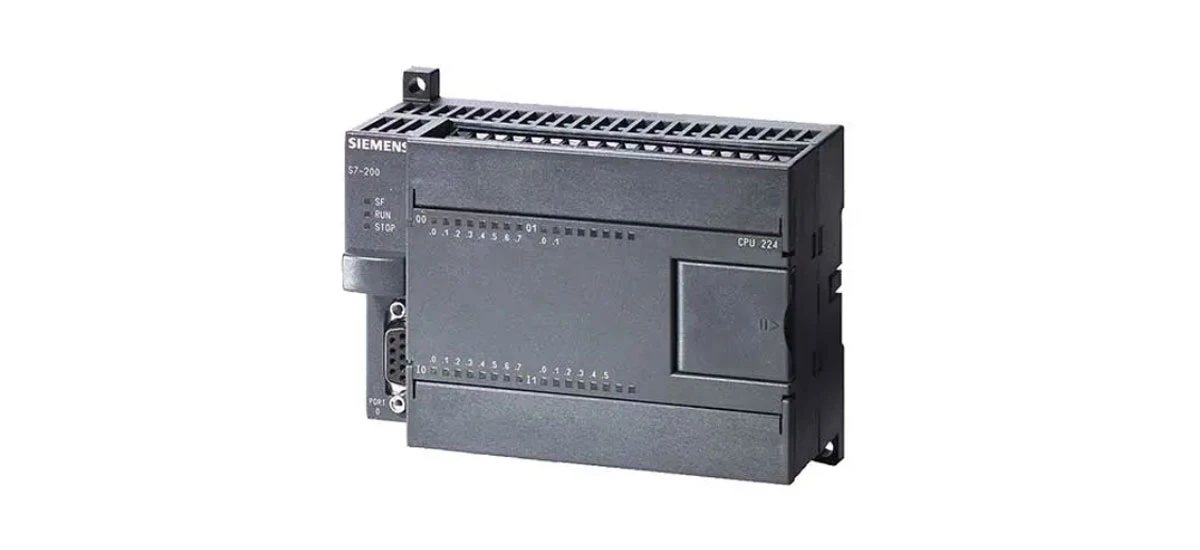
Every day, the products we use, the buildings we live in, and the systems that keep our communities running rely on industrial automation. From the small machines that package snacks to the thermostats that control office temperatures, automation makes processes faster, safer, and more efficient. At the heart of this automation are Programmable Logic Controllers (PLCs)-small but powerful devices that act as the "brains" behind machines. If you've ever wondered how these devices work, or which PLC is best for small to medium-sized projects, you're in the right place. This blog focuses on the Siemens S7 200 PLC, a trusted choice for beginners, small business owners, and hobbyists alike. We'll break down what it is, its key features, and where it's used-so you can gain a clear, practical understanding of how the Siemens S7 200 can support your automation goals.
Introduction to Siemens S7 200 PLC
In the world of industrial automation, PLCs (Programmable Logic Controllers) are like the "brains" of machines and systems. Among the most trusted PLCs for small to medium-sized projects is the Siemens S7 200. Developed by Siemens, a global leader in industrial technology, the Siemens S7 200 is designed to make automation simple, reliable, and cost-effective. Whether you're new to automation or a seasoned technician, understanding the Siemens S7 200 can help you improve efficiency in your projects. Let's start with the basics: what exactly is this PLC, and why is it so popular?
What Exactly Is a Siemens S7 200 PLC?
A Siemens S7 200 PLC is a compact, programmable logic controller that processes electrical signals to control machines, production lines, and other industrial equipment. Unlike large, complex PLCs used in massive factories, the Siemens S7 200 is tailored for small-scale automation tasks. It combines a microprocessor, input/output (I/O) ports, and programming memory into a single unit-making it easy to install and use. The Siemens S7 200 works by executing pre-written programs to monitor inputs (like sensors) and control outputs (like motors or valves), ensuring tasks run smoothly and accurately.
Key Features of Siemens S7 200 PLC
The Siemens S7 200 stands out for its practical features that meet the needs of small businesses and hobbyists alike. These features make it a top choice for projects where simplicity, reliability, and affordability matter most.
Compact Design
One of the biggest advantages of the Siemens S7 200 is its small size. The PLC is compact enough to fit in tight spaces, such as control cabinets or small machines. This makes it ideal for projects where space is limited, like small workshops or portable equipment. Despite its small size, the Siemens S7 200 doesn't compromise on performance-packing enough power to handle basic to moderate automation tasks.
Easy Programming with Siemens Software
Programming the Siemens S7 200 is straightforward, even for beginners. It uses Step 7-Micro/WIN, a user-friendly software from Siemens that lets you write programs using ladder logic, function blocks, or structured text. This flexibility means you can choose the programming style that works best for you. If you're learning the ropes, Siemens S7 200 PLC programming basics are easy to find online, with tutorials and guides to help you get started quickly. The software also includes debugging tools to fix errors, making the programming process less frustrating.
Reliable Performance in Industrial Environments
Industrial settings can be tough-with dust, temperature changes, and electrical interference. The Siemens S7 200 is built to withstand these conditions. It operates reliably in temperatures ranging from -25°C to 70°C (-13°F to 158°F) and resists electrical noise, ensuring consistent performance even in harsh environments. This reliability means less downtime for your machines and more productivity for your business.
Flexible Connectivity Options
The Siemens S7 200 offers flexible connectivity to work with other devices, such as sensors, actuators, computers, and even other PLCs. It supports communication protocols like Modbus, which is widely used in industrial automation. This means you can easily connect the Siemens S7 200 to a variety of equipment to create a fully integrated system. Whether you need to monitor data on a computer or control multiple machines at once, how to use Siemens S7 200 for automation is made simple with its connectivity features.
Cost-Effective for Small Businesses
For small businesses and startups, budget is often a top concern. The Siemens S7 200 is an affordable PLC that delivers great value for money. It eliminates the need for expensive, large-scale automation systems while still providing the essential features you need to streamline your processes. The affordable Siemens S7 200 PLC for small businesses is a key reason why it's a popular choice-allowing small operations to compete with larger companies by improving efficiency and reducing labor costs.
Applications of Siemens S7 200 PLC
The Siemens S7 200 is versatile and used in a wide range of industries. Its compact size, easy programming, and reliability make it suitable for many applications, from manufacturing to building automation.
Small-Scale Manufacturing
In small factories and workshops, the Siemens S7 200 is used to control assembly lines, packaging machines, and conveyor belts. For example, a small food packaging plant might use a Siemens S7 200 to regulate the speed of packaging machines, count products, and ensure each package is sealed correctly. Siemens S7 200 applications in small factories include automating repetitive tasks, reducing human error, and increasing production speed-all without the cost of a large PLC system.
Building Automation
The Siemens S7 200 is also used in building automation to control lighting, heating, ventilation, and air conditioning (HVAC) systems. For instance, in an office building, the PLC can adjust the temperature based on the number of people present or turn off lights in empty rooms to save energy. Its compact size and easy programming make it perfect for retrofitting older buildings with automated systems.
Water Treatment Systems
Water treatment plants, both large and small, use the Siemens S7 200 to monitor and control pumps, valves, and filtration systems. The PLC can detect water levels, pressure, and chemical concentrations, ensuring the water meets safety standards. Its reliability is crucial here-any downtime could affect the supply of clean water. The Siemens S7 200's ability to work in harsh environments also makes it a good fit for outdoor water treatment facilities.
Machine Control for Hobbyists and Educators
Beyond industrial use, the Siemens S7 200 is popular among hobbyists and students learning about automation. It's a great tool for building small robots, automated model trains, or DIY projects. Educators use the Siemens S7 200 to teach students the basics of PLC programming and industrial control, as its simplicity helps beginners grasp key concepts quickly.
Automotive and Electronics Assembly
In the automotive and electronics industries, the Siemens S7 200 is used for small-scale assembly tasks. For example, it can control the placement of components on circuit boards or the movement of parts in a small automotive assembly line. Siemens S7 200 key features for industrial control, like precise timing and reliable I/O handling, make it ideal for these applications where accuracy is critical.
Why Choose Siemens S7 200 for Your Project?
With so many PLCs on the market, why should you choose the Siemens S7 200? Here are the top reasons:
- Trusted Brand: Siemens is a well-known, reputable company with decades of experience in industrial technology. Choosing the Siemens S7 200 means you're getting a product backed by reliable customer support and a global network of service centers.
- Easy to Learn and Use: Whether you're new to PLCs or have experience, the Siemens S7 200's simple programming and compact design make it accessible. You won't need advanced technical skills to set it up and start automating.
- Scalable: The Siemens S7 200 can grow with your project. You can add extra I/O modules to expand its capabilities as your needs change-so you don't have to replace the entire system when you need more functionality.
- Energy Efficient: The Siemens S7 200 uses less power than larger PLCs, helping you save on energy costs. This is especially important for small businesses looking to reduce expenses.
- Proven Track Record: Thousands of businesses and hobbyists around the world trust the Siemens S7 200 for their automation needs. Its reliability and performance have made it a staple in small-scale automation.
Conclusion
The Siemens S7 200 PLC is a versatile, reliable, and cost-effective solution for small to medium-sized automation projects. Its compact design, easy programming, and flexible connectivity make it suitable for a wide range of applications-from manufacturing and building automation to hobby projects and education. Whether you're a small business owner looking to improve efficiency, a student learning about PLCs, or a hobbyist building an automated system, the Siemens S7 200 offers the features and value you need. By choosing the Siemens S7 200, you're investing in a product that's backed by a trusted brand and designed to make automation simple and accessible for everyone.


