
If you’re working in industrial automation, odds are you’ve crossed paths with Modbus—one of the oldest, most reliable communication protocols out there. And if you’re a user who’s just switching to Schneider PLCs, the first question you’re probably asking is: can Schneider PLC support Modbus communication? As a supplier who’s helped dozens of small manufacturing plants and industrial integrators pick the right Schneider gear over the last few years, let me walk you through exactly how this works, which models handle Modbus best, and why you don’t have to overcomplicate things to get it running.
First off, let’s cut through the confusion. Modbus isn’t some fancy, new-age protocol—it’s a simple, master-slave, serial communication standard that’s been around since the late 1970s. That longevity is why it’s still everywhere, from conveyor belt control units to packaging lines, and Schneider built their entire PLC lineup with Modbus compatibility baked in (no need to buy extra, overpriced modules just for basic comms—we’ve all been there).
Now, not every Schneider PLC is the same, though. You’ve got the tiny, entry-level models for small machines, the mid-range ones for bigger production lines, and the heavy-duty ones for industrial giants. Each of these handles Modbus a little differently, depending on what you need it to do. Let’s start with the most popular entry-level models because that’s what most first-time buyers go for. If you’re working on a small machine—like a bottling line filler or a small packaging unit—the TM221 series is usually the go-to. The TM221M32TK Schneider Electric model is a perfect example here. It’s got built-in Modbus ports (both RTU and ASCII, if you’re into the specs) right on the PLC, so you don’t need to add anything extra to talk to other devices—like sensors, HMI panels, or even other small controllers. I’ve set these up for a local cookie factory, and they had their conveyor and flow sensors talking to the TM221 in under an hour, no complicated coding required.
If you need a little more horsepower than the TM221, the next step up is the TM241 series. The Schneider TM241CEC24R is a solid mid-range pick. This one’s great for lines that have a few more moving parts—think a small assembly line that needs to talk to a temperature controller and a barcode scanner, for example. The TM241 has Modbus master functionality built-in, so you can set it to send commands to up to 31 slave devices at once. I worked with an auto parts shop last year that used this model to sync their PLC with their old packaging machine, which only had a Modbus RTU port. No hacks, no extra adapters—just plug and play once you set the baud rate, which is super straightforward in Schneider’s software.
Wait, what if you’re working with an older setup, or a smaller controller that’s been around for a while? A lot of plants have legacy machines that still run Twido controllers, and guess what—those support Modbus too. The Schneider TWDLCAA24DRF Twido Controller is a legacy model that’s still in use all over the place, and it has Modbus RTU as a standard feature. A customer of mine had a old Twido running their warehouse shipping conveyor and needed to add a new weight scale that only spoke Modbus. We connected the scale to the Twido’s serial port, tweaked the register settings, and it worked seamlessly—no need to replace the old controller, which saved them thousands on a full upgrade. That’s the thing about Schneider’s Modbus support: even their older lines aren’t left in the dust.
Now, if you’re scaling up to a large-scale industrial setup—like a factory with multiple production lines, or a process control plant—you’ll want a larger Schneider PLC, and Modbus still plays nice here. The Schneider 140ACO13000 is a Quantum series analog output module, but it’s got Modbus capabilities too. Wait, right—Modbus isn’t just for the PLC itself; expansion modules and I/O units can speak Modbus too, which is how you build out larger systems without using a ton of separate communication lines. This module, for example, can act as a Modbus slave, so your main PLC can send it signals to control valves or motors across a big plant floor. I installed a few of these for a chemical plant last year, and they were able to integrate the new module into their existing Modbus network without disrupting any of their current equipment—super important for plants that can’t afford downtime.
A quick note: Modbus can be wired or wireless, and Schneider PLCs support both, but for most industrial applications, wired Modbus RTU is still the most common (it’s cheaper, more reliable, and works over longer distances than Modbus TCP for small to mid-sized setups). For Modbus TCP, you’ll need a model that has Ethernet ports, which all the TM221, TM241, and Quantum series do, so that’s an option too if you need to connect over a local network or even the internet (though I always recommend caution with internet-connected PLCs, security is a whole other topic).
Now, let’s talk about how easy it is to actually set up Modbus on a Schneider PLC, because I know a lot of you reading this aren’t PLC experts—you’re just trying to get your machine talking to other devices. Schneider’s programming software, Unity Pro or SoMachine Basic (depending on the model), has pre-built Modbus function blocks. You don’t have to write all the code from scratch. For example, on the TM221, there’s a “Modbus Master” block that you just drag and drop into your logic, then input the slave device’s address, register number, and data type. I’ve had customers who were total beginners to PLCs get their Modbus communication running in an afternoon with just the basic tutorials on Schneider’s site.
Wait, can I address a common mistake I see all the time? A lot of people think they need a special license or extra software to use Modbus on Schneider PLCs. Nope. Modbus is open-source, so Schneider doesn’t charge you extra to use it—unlike some proprietary protocols that add hundreds in licensing fees. That’s one of the biggest reasons we recommend Schneider to small and mid-sized businesses; you get that reliable Modbus support without breaking the bank.
Let’s also cover a common use case that comes up a lot with our customers: using Modbus to connect Schneider PLCs to other brands’ devices. A lot of plants mix and match gear—Schneider PLC, sensors from Allen-Bradley, HMI panels from Phoenix Contact, whatever works for their budget. Modbus is the universal language here, and Schneider PLCs play nice with all of them. I had a customer who had a bunch of ultrasonic sensors from a different brand that only supported Modbus RTU, and we connected them to a TM241 without any issues. No compatibility headaches, no needing to replace their existing sensors—just worked.
Now, what about Modbus over other physical layers, like RS485? That’s the standard for Modbus RTU, and all the Schneider models I mentioned earlier support RS485 connections right on the PLC or module. The TM221 has an RS485 port built-in, the TM241 too, and the Twido controller as well. So you don’t need an extra adapter or converter to connect your Modbus devices—just a simple RS485 cable, and you’re good to go. For Modbus TCP, it’s just standard Ethernet cable, so even simpler.
As your go-to supplier for Schneider PLCs and industrial automation gear, I’ve helped test most of these models in real-world setups, so let me give you a quick cheat sheet to make it easy:
- Small, entry-level machines (10-20 I/O points): Go with the TM221M32TK Schneider Electric—built-in Modbus, simple to use, cheap for small jobs.
- Mid-sized lines (20-50 I/O points, multiple devices): The Schneider TM241CEC24R gives you enough power for multiple Modbus slaves and easy expansion.
- Legacy machines or small controllers: The Schneider TWDLCAA24DRF Twido Controller is a reliable pick that works for older setups and still supports modern Modbus devices.
- Large industrial setups, expansion modules: The Schneider 140ACO13000 lets you add Modbus-enabled I/O without upgrading your entire PLC system.
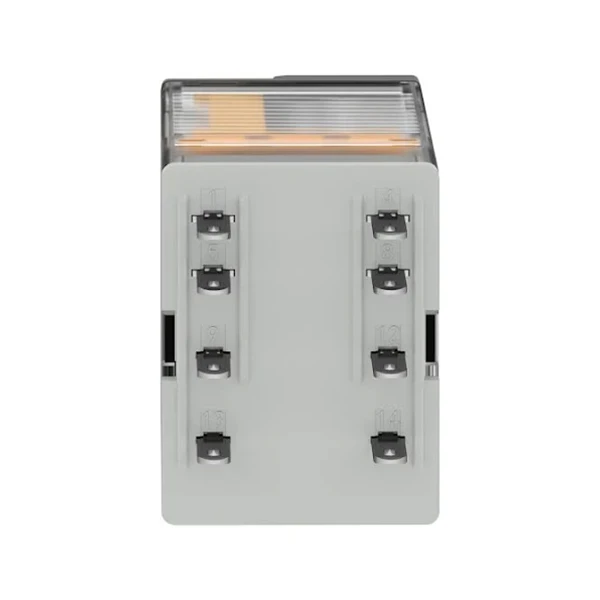
- And if you need small relays to wire everything together, the SCHNEIDER RXM2LB2BD Miniature Relay works perfectly with all these models to switch Modbus signals.
Wait, one last thing: troubleshooting Modbus on Schneider PLCs is way easier than you might think. 9 times out of 10, the issue is something simple—wrong baud rate, incorrect slave address, or loose cable. Schneider’s software has built-in diagnostic tools that let you monitor Modbus traffic in real time, so you can see if a command is being sent and if the slave is responding. I’ve had a customer who was stuck for an hour because they had the parity setting wrong, and the diagnostic tool pointed that out immediately, no guessing needed.
If you’re still on the fence about whether Schneider PLCs can support Modbus, let me just sum it up: yes, all of their PLC lines, from the smallest entry-level TM221 to their heavy-duty Quantum series, have Modbus support built in. No extra fees, no complicated hoops to jump through, and it works with almost every Modbus device you’ll find on the market. Whether you’re building a new machine, upgrading an old setup, or troubleshooting a communication issue, Schneider has you covered.
If you’re looking to pick up a Schneider PLC for your project, or you have questions about which model works best for your Modbus needs, feel free to reach out—we can help you pick the right gear, walk you through setup tips, or even connect you with local integrators if you need extra help. Don’t waste time or money on gear that doesn’t play nice with your existing Modbus devices; Schneider’s support is solid, and we’ve got the parts and expertise to get you up and running fast.
References
Modbus Organization. (n.d.). Modbus Protocol Specification. Retrieved from modbus.org
Schneider Electric. (n.d.). TM221M32TK Product Page. Retrieved from ab.com/plc/schneider-plc/tm221m32tk-schneider-electric.html
Schneider Electric. (n.d.). TM241CEC24R Product Page. Retrieved from ab.com/plc/schneider-plc/schneider-tm241cec24r.html
Schneider Electric. (n.d.). TWDLCAA24DRF Product Page. Retrieved from ab.com/plc/schneider-plc/schneider-twido-twdlcaa24drf-controller.html
Schneider Electric. (n.d.). 140ACO13000 Product Page. Retrieved from ab.com/plc/schneider-plc/schneider-140aco13000.html
Schneider Electric. (n.d.). RXM2LB2BD Product Page. Retrieved from ab.com/plc/schneider-plc/schneider-rxm2lb2bd-miniature-relay.html