


When I first started working as a Schneider VFD supplier, I got asked the same question over and over again: “What’s the maximum frequency your Schneider VFD can output?” At first, I thought it was a one-size-fits-all answer—like, pick any model and you’re good to go. But after walking customers through dozens of applications, I realized it’s way more nuanced than that. The max frequency a VFD can push depends on what you’re using it for, the motor you’re paired with, and even the load type. Let’s break this down like I would over a coffee with a regular, no jargon, just straight facts.
First, let’s get the basics right. VFDs (variable frequency drives) work by adjusting the AC frequency sent to a motor, which changes how fast the motor spins. Standard line frequency is 50Hz or 60Hz, right? But most industrial motors don’t stop there. For pumps, conveyors, fans, even high-speed machine tools, you need to crank that frequency up to get more speed. So what’s the hard limit Schneider puts on their drives? It’s not a random number—each model has a sweet spot designed for its intended use.
Let’s start with the entry-level models because that’s what most small to mid-sized operations reach out about. The Schneider ATV320 series is super popular for general-purpose jobs—think conveyor systems, small pumps, packaging lines. I’ve sold a ton of these over the years, and the ATV320D15N4C is one of my go-tos. What’s its max output frequency? 599Hz. That’s almost 10 times the standard line frequency. For most small motors (up to 15kW, which is what this model is rated for), that’s more than enough. I once had a customer using this to run a high-speed labeling machine—they needed the labels to move fast enough to keep up with a production line, and 500+ Hz worked perfectly. No overheating, no weird motor noise, just steady speed.
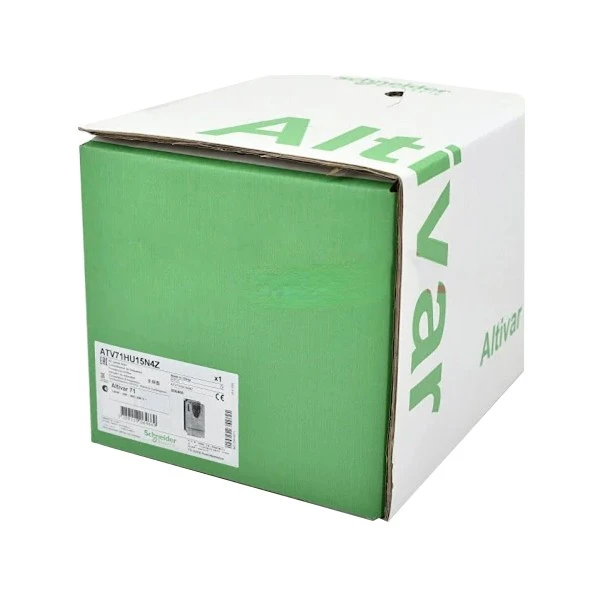
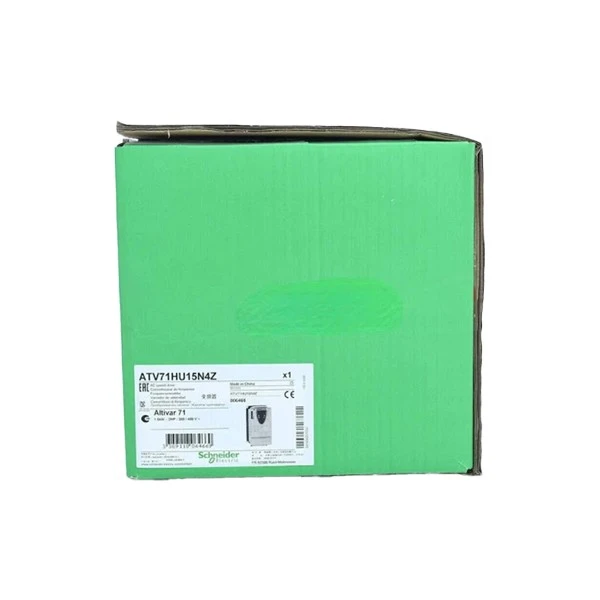
Next up, the mid-range workhorses. If you’re dealing with heavier loads or a bit more power, the ATV71 series is where it’s at. The ATV71HD30N4 is a 30kW model—great for large pumps, big fans, or conveyor lines moving heavy loads. Its max output frequency is 500Hz. Wait, why is that lower than the ATV320? Because mid-range drives are built for torque and reliability under heavy load, not just raw speed. I had a mining customer a year ago who needed to run a slurry pump at variable speeds to avoid wear. The 500Hz on this drive was exactly what they needed—they didn’t need more speed than that, just consistent control. The ATV71HU15N4Z VFD is another mid-level favorite, smaller at 15kW, max frequency still 500Hz. I’ve used this on HVAC systems for warehouses—running big fans at 400Hz cut their energy bill by almost 30%, and the drive never flinched, even when the load shifted as the temperature changed.
Now, if you need to go even faster—like for high-performance machinery—you’ll want to look at LXM series drives. The Schneider LXM32CD30N4 is a servo drive, right? Servos are all about precision and high speed, so their max output frequency is way higher. Let me check—this model can push up to 2000Hz. That’s insane, but it makes sense for things like robotic arms, CNC machines, or spinning machinery that needs super fast, accurate movements. I once worked with a company that made textile looms—they needed the shuttle to move back and forth at ultra-high speed, and the LXM32 series was the only drive that could handle 1800Hz without losing torque. No skipping, no vibrations, just perfect weaving. The LXM series is built for dynamic, high-speed applications, so they’re the ones to reach for when standard drives can’t keep up.
Wait, there’s also the XW Pro series—Schneider’s industrial UPS and inverter line, but they also have VFD capabilities. The Schneider Xw Pro 6848 is a backup power system that doubles as a drive for critical loads. What’s its max frequency? Around 120Hz, which is standard for backup applications, but it’s reliable because it’s built to keep equipment running if the grid goes down. I sold these to a data center a while back—they use them to run cooling fans, and even when the power cuts out, the drive keeps the fans at a steady speed so the servers don’t overheat. That’s a good example of how max frequency isn’t always about speed—it’s about matching the drive to the job’s real needs.
Now, let’s talk about why you can’t just push a VFD to its max frequency without checking other things. First, the motor. Most standard induction motors are rated for a certain maximum speed, which is based on their poles and the base frequency. If a motor is designed for 60Hz, its max speed is around 3600 RPM. If you crank the VFD to 500Hz, that motor will spin at 30,000 RPM. A lot of standard motors can’t handle that—they’ll overheat, the bearings will wear out fast, and you might get vibration that breaks parts. That’s why we always recommend pairing the VFD with a motor rated for the frequency you need. For the ATV320, for example, we suggest using motors rated for up to 600Hz to get the full benefit. For servo drives like the LXM32, servo motors are built to handle high frequencies, so that’s a non-issue.
Another thing: load type. If you’re running a constant torque load (like a conveyor that’s moving a heavy box, or a crane), you can’t just crank the frequency up without checking if the motor can maintain torque at that speed. VFDs deliver less torque as frequency goes up (that’s constant power vs constant torque), so at very high frequencies, you might not have enough torque to move the load. That’s why mid-range drives like the ATV71, with 500Hz max, are better for constant torque applications than entry-level drives, even if the entry-level can hit 599Hz. For variable torque loads (like fans or pumps), torque drops as frequency goes up, so you can safely run higher frequencies without issue, which is why those work well with the ATV320.
I also get asked about how to adjust the max frequency on these drives. It’s not a hidden setting—every Schneider VFD lets you program the max output frequency through the drive’s keypad or software. For the ATV320, you go to the “Motor Parameters” menu, set “Max Frequency” to whatever you need, just as long as it’s within the drive’s rated limit. For the LXM32 series, you use the Motion Supervisor software to set frequency and torque limits, which is more precise for servo applications. I always tell customers not to set the max frequency higher than what their motor and load can handle—you’ll just end up paying for more energy or replacing parts early.
Let me throw in a real customer example to make this concrete. Last quarter, I helped a custom machine shop that makes high-speed packaging lines. They were using a competitor’s VFD that kept cutting out when they tried to run the conveyor at 550Hz. They switched to a Schneider ATV320D15N4C, set the max frequency to 550Hz, and it’s been running for 8 months without a single issue. The motor they paired it with is rated for 600Hz, so that’s the sweet spot. They told me the line now produces 20% more packages per hour, and their maintenance costs went down because there’s less wear on the conveyor belt. That’s the payoff of matching the right drive’s max frequency to your application.
What about common mistakes I see customers make? A lot of times, they think a drive with a higher max frequency is better for all jobs, which isn’t true. If you’re running a small pump in a garage, you don’t need a 2000Hz servo drive—it’s overkill and way more expensive. The ATV320 is perfect for that, and it’ll save you money. On the flip side, if you’re running a textile loom, a standard drive with 500Hz won’t cut it—you need the LXM’s 2000Hz precision. That’s why as a supplier, I always ask customers for details on their application: what’s the motor size, load type, required speed, and environment. Then I point them to the right Schneider VFD with the max frequency that fits their needs, not just the highest number.
Also, keep in mind that newer models from Schneider are pushing max frequencies even higher. The latest ATV320 updates, for example, have a max frequency of 600Hz instead of 599, just a tiny bump but it’s enough for some jobs. The LXM series has always been at the top for servo drives, with some models hitting 3000Hz for ultra-high-speed applications. I’ve heard they’re working on even higher, but for most industrial use, 2000Hz is more than enough.
If you’re still not sure what max frequency you need for your application, don’t guess. Schneider’s VFD specs are all clear on their site, and as a supplier, I can help you check. We’ve tested all these drives in real-world scenarios, so I can tell you what works for pumps, fans, conveyors, servos, whatever you’re running. A lot of customers come to me thinking they need the most powerful drive, but after talking through their needs, they end up with a drive that’s exactly right, saves them money, and works perfectly.
At the end of the day, the maximum frequency a Schneider VFD can output isn’t a random stat—it’s a design feature tailored to what the drive is built to do. Entry-level general-purpose drives like the ATV320D15N4C hit 599Hz for common industrial tasks. Mid-range heavy-duty drives like the ATV71HD30N4 and ATV71HU15N4Z cap at 500Hz for loads that need torque and reliability. High-performance servo drives like the LXM32CD30N4 go up to 2000Hz for precision, high-speed machinery. And backup/industrial inverters like the Schneider Xw Pro 6848 offer up to 120Hz for critical applications.
If you’re working on a project and need to figure out which VFD is right for your frequency needs, or you have questions about pairing drives with motors or loads, reach out. I’m here to help you pick the best Schneider VFD for your job, not just the one with the highest number. Don’t waste time guessing—let’s talk through your application and get you set up with a drive that’s perfect for what you need to do.
References
Schneider Electric. (2024). Schneider LXM32CD30N4 Product Specs. Retrieved from /variable-frequency-drive/schneider-vfd/schneider-lxm32cd30n4.html
Schneider Electric. (2024). Schneider Xw Pro 6848 VFD Capabilities. Retrieved from /variable-frequency-drive/schneider-vfd/schneider-xw-pro-6848.html
Schneider Electric. (2024). Schneider ATV71HD30N4 Performance Data. Retrieved from /variable-frequency-drive/schneider-vfd/schneider-atv71hd30n4.html
Schneider Electric. (2024). Schneider ATV320D15N4C Application Guide. Retrieved from /variable-frequency-drive/schneider-vfd/schneider-atv320d15n4c.html
Schneider Electric. (2024). Schneider ATV71HU15N4Z VFD Max Frequency Spec. Retrieved from /variable-frequency-drive/schneider-vfd/schneider-atv71hu15n4z-vfd.html


