


Yo! I'm an ABB PLC supplier, and today I wanna chat about how to store and retrieve data from ABB PLCs. It's a pretty crucial topic if you're working with these industrial controllers, so let's dive right in.

Understanding ABB PLCs First
Before we get into the nitty - gritty of data storage and retrieval, it's important to have a basic understanding of ABB PLCs. These programmable logic controllers are the workhorses of many industrial processes. They're used to automate tasks, monitor equipment, and ensure everything runs smoothly.
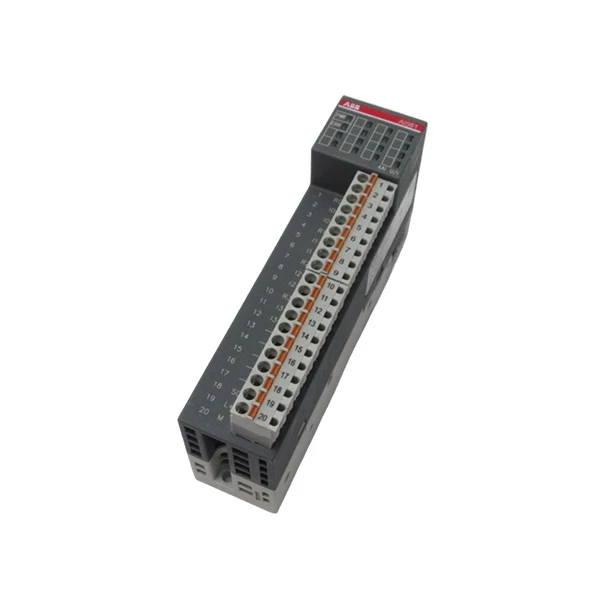
ABB offers a wide range of PLC models, each with its own set of features and capabilities. For example, the ABB PFEA112 - 65 3BSE050091R65 is a popular model that's known for its reliability and performance. It can handle complex control tasks and integrate well with other industrial systems. Another great option is the 1TNE968902R1101 ABB - AI561, which is an analog input module that allows the PLC to interface with various sensors. And let's not forget about the Abb 1sbh143001r8822 Contactor Relay, which is used for switching electrical circuits in industrial applications.
Data Storage in ABB PLCs
Memory Types
ABB PLCs have different types of memory for storing data. The most common ones are:
1. Program Memory
This is where the PLC program is stored. It contains the ladder logic, function blocks, and other programming elements that tell the PLC what to do. The size of the program memory varies depending on the PLC model. You need to make sure your program fits within the available program memory space. Otherwise, you might run into issues like program truncation or errors.
2. Data Memory
Data memory is used to store variables, tags, and other data that the PLC uses during its operation. For example, if you're monitoring the temperature of a machine, the current temperature value will be stored in the data memory. You can use different data types in the data memory, such as integers, floating - point numbers, and booleans.
3. Non - Volatile Memory
Non - volatile memory is important because it retains data even when the power is turned off. This is useful for storing critical data like configuration settings, calibration values, and historical data. ABB PLCs use various technologies for non - volatile memory, such as flash memory.
Storing Data in the PLC
To store data in an ABB PLC, you first need to define the variables and tags in your program. You can do this using the programming software provided by ABB, like Automation Studio. Once you've defined the variables, you can assign values to them based on the input from sensors or other devices.
For example, if you have a sensor that measures the pressure in a tank, you can write a program to read the sensor value and store it in a variable in the data memory. Here's a simple example of how you might do this in ladder logic:
// Read the sensor value
LD I0.0 // Assume the sensor is connected to input I0.0
MOV I0.0, VW100 // Move the sensor value to variable VW100 in data memory
Data Retrieval from ABB PLCs
Reading Data Using Programming Software
The easiest way to retrieve data from an ABB PLC is by using the programming software. You can connect your computer to the PLC via a communication interface, such as Ethernet or serial port. Once connected, you can use the software to read the values of variables and tags in the data memory.
For example, in Automation Studio, you can open the variable list and view the current values of all the variables. You can also use the software to set breakpoints in your program and inspect the values of variables at specific points in the program execution.
Remote Data Retrieval
In some cases, you might need to retrieve data from the PLC remotely. ABB PLCs support various communication protocols that allow for remote access, such as Modbus TCP, Profibus, and Ethernet/IP. You can use a remote monitoring system or a SCADA (Supervisory Control and Data Acquisition) system to connect to the PLC over the network and retrieve data.
For example, if you have a SCADA system installed in a control room, it can connect to the PLC at a remote industrial site and display real - time data on a dashboard. This allows operators to monitor the process and make informed decisions without being physically present at the site.
Tips for Efficient Data Storage and Retrieval
Optimize Your Program
Make sure your program is well - structured and efficient. Avoid using unnecessary variables and complex logic that can consume a lot of memory. Use data compression techniques if possible to reduce the amount of data stored in the PLC.
Backup Your Data Regularly
Since non - volatile memory can still fail, it's important to backup your data regularly. You can use external storage devices or a network - attached storage (NAS) system to store backups of your PLC programs and data.
Use Appropriate Communication Protocols
When retrieving data remotely, choose the communication protocol that best suits your needs. Consider factors like speed, reliability, and security. For example, if you need high - speed data transfer, Ethernet - based protocols like Modbus TCP might be a good choice.
Conclusion
Storing and retrieving data from ABB PLCs is an important part of industrial automation. By understanding the different types of memory, how to store data in the PLC, and how to retrieve it, you can ensure that your industrial processes run smoothly and efficiently.
If you're interested in purchasing ABB PLCs or need more information about data storage and retrieval, feel free to reach out. We're here to help you with all your ABB PLC needs and can assist you in finding the right solutions for your specific applications.
References
- ABB Automation Studio User Manual
- ABB PLC Technical Documentation


