


As a Siemens HMI supplier, I've witnessed firsthand the transformative power of integrating virtual reality (VR) elements into industrial human - machine interfaces (HMIs). In this blog post, I'll share how to effectively use virtual reality elements on Siemens HMIs, exploring the benefits, implementation steps, and practical applications.
Benefits of Using VR Elements on Siemens HMIs
The incorporation of VR elements into Siemens HMIs offers numerous advantages. Firstly, it enhances user experience. Traditional HMIs often rely on 2D displays, which can sometimes be limited in presenting complex industrial processes. VR, on the other hand, provides a three - dimensional and immersive view. For operators, this means a more intuitive understanding of the system they are controlling. For example, in a large - scale manufacturing plant, a VR - enabled HMI can show the entire production line in a virtual environment, allowing operators to visualize the flow of materials, the operation of machines, and potential bottlenecks more clearly.
Secondly, VR elements on Siemens HMIs can improve training efficiency. New employees can use VR - based training modules on these HMIs to familiarize themselves with the industrial processes. Instead of reading manuals or watching 2D videos, they can step into a virtual representation of the actual workplace and practice operating the machines in a risk - free environment. This hands - on training approach is proven to be more effective in retaining knowledge and skills.
Thirdly, it can enhance remote monitoring and maintenance. With VR - enabled Siemens HMIs, technicians can remotely access the virtual representation of the industrial equipment. They can perform virtual inspections, identify faults, and even simulate maintenance procedures. This reduces the need for on - site visits, saving time and costs, especially for facilities in remote locations.
Popular Siemens HMIs Suitable for VR Integration
There are several Siemens HMIs that are well - suited for integrating VR elements. One of them is the Siemens SIMATIC HMI TD 200. Although it is a relatively basic HMI, with proper development and integration, it can support simple VR - related functions. It is often used in small - scale industrial applications where cost - effectiveness is a key consideration.
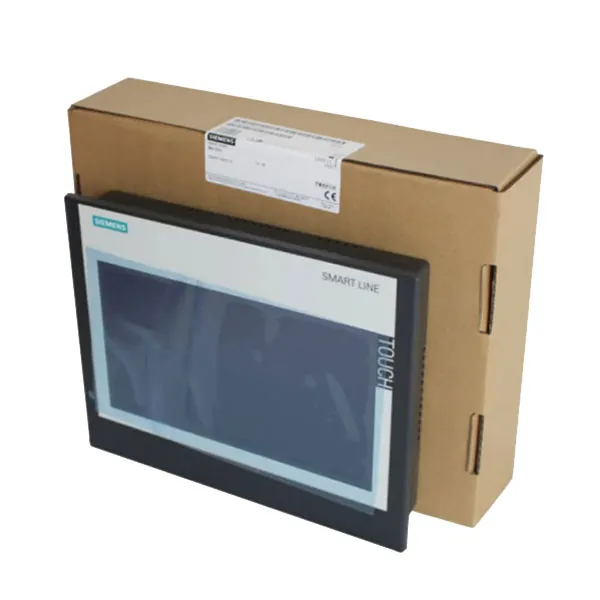
The SIMATIC HMI Smart 1000 IE V4 is another excellent choice. It has a larger and high - resolution display, which is ideal for presenting detailed VR content. Its powerful processing capabilities can handle the complex calculations required for VR rendering, making it suitable for medium - sized industrial projects.
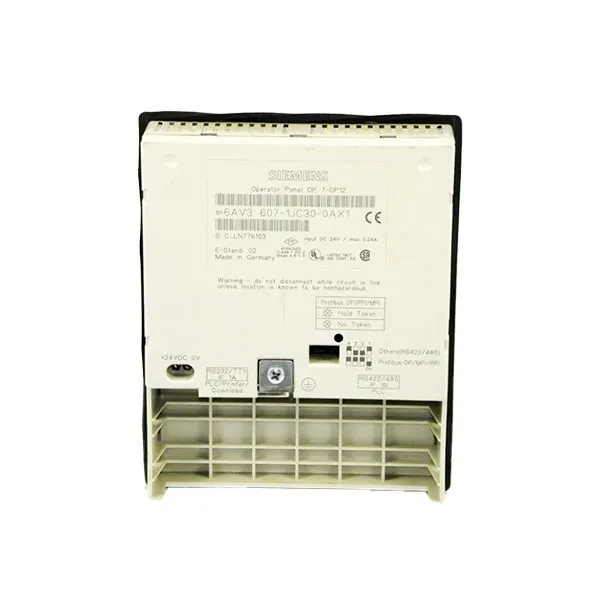
The Siemens 6AV3607 - 1JC30 - 0AX1 is a high - end HMI with advanced features. It offers seamless integration with VR technologies, providing a smooth and immersive experience. It is commonly used in large - scale industrial automation systems where high - precision control and detailed visualization are essential.
Implementation Steps of VR Elements on Siemens HMIs
1. Requirements Analysis
The first step is to conduct a thorough requirements analysis. Understand the specific needs of the industrial application, such as the type of processes to be visualized, the level of interactivity required, and the target user group. For example, if it is a chemical plant, the VR elements may need to show the flow of chemicals, the pressure and temperature in different parts of the system, and the safety protocols.
2. VR Content Development
Once the requirements are clear, the next step is to develop the VR content. This involves creating 3D models of the industrial equipment and processes. Specialized 3D modeling software can be used to design accurate and detailed virtual representations. For example, Autodesk 3ds Max or Blender can be used to create the 3D models, and then Unity or Unreal Engine can be used to add interactivity and animation to the VR content.
3. Integration with Siemens HMIs
After the VR content is developed, it needs to be integrated with the Siemens HMIs. This requires programming skills and knowledge of the HMI's software interface. The VR content can be embedded into the HMI software using programming languages such as C# or Java, depending on the HMI's programming environment. APIs provided by Siemens can also be used to ensure seamless communication between the VR content and the HMI.
4. Testing and Validation
Before deploying the VR - enabled HMI in the actual industrial environment, thorough testing and validation are necessary. Test the functionality of the VR elements, such as the accuracy of the 3D models, the smoothness of the interactivity, and the compatibility with the HMI's hardware and software. Conduct user testing to gather feedback from operators and make necessary adjustments.
Practical Applications
1. Manufacturing
In manufacturing, VR - enabled Siemens HMIs can be used to optimize the production process. Operators can use the VR interface to monitor the operation of multiple machines simultaneously, identify production bottlenecks, and adjust the production parameters in real - time. For example, in an automotive manufacturing plant, the VR HMI can show the assembly line in 3D, allowing operators to see the status of each vehicle on the line and make quick decisions to improve efficiency.
2. Energy
In the energy sector, VR - enabled Siemens HMIs are useful for power plant monitoring and control. Operators can use the VR interface to visualize the power generation process, including the operation of turbines, boilers, and transformers. They can also perform virtual inspections of the equipment, detect potential faults, and plan maintenance activities in advance.
3. Mining
In the mining industry, VR - enabled Siemens HMIs can enhance safety and productivity. Miners can use the VR interface to explore the mine layout before entering the actual mine, familiarize themselves with the safety procedures, and practice emergency response scenarios. In addition, the VR HMI can be used to monitor the operation of mining equipment, such as excavators and conveyors, in real - time.
Conclusion
Integrating virtual reality elements into Siemens HMIs is a powerful way to enhance the functionality and user experience of industrial control systems. It offers benefits such as improved user understanding, efficient training, and enhanced remote monitoring. By following the implementation steps and considering the practical applications, industrial enterprises can take full advantage of this technology.
If you are interested in incorporating VR elements into your Siemens HMI systems or have any questions about our products, we invite you to contact us for procurement and further discussions. We are dedicated to providing high - quality Siemens HMI solutions tailored to your specific needs.
References
- Siemens HMI product manuals.
- Research papers on virtual reality in industrial applications.
- Case studies of VR - enabled industrial control systems.


