


Hey there! I'm a supplier of Allen - Bradley PLCs, and today I wanna chat about the programming requirements for these PLCs in a hazardous environment. It's a topic that's super important, especially for industries where safety is a top priority.
Understanding Hazardous Environments
First off, let's talk about what we mean by a hazardous environment. These are places where there's a risk of fire, explosion, or other dangerous situations. Think of oil refineries, chemical plants, or mines. In these areas, the conditions can be pretty extreme, with flammable gases, dust, or other hazardous substances floating around.
When it comes to using Allen - Bradley PLCs in these environments, we gotta make sure that the programming meets certain standards. These standards are put in place to prevent any potential hazards and keep everyone safe.
Safety Standards and Regulations
There are a bunch of safety standards and regulations that apply to PLC programming in hazardous environments. One of the most well - known is the IEC 61508 standard, which deals with functional safety. This standard sets out requirements for the design, development, and operation of safety - related systems.
Allen - Bradley PLCs are designed to meet these standards, but it's up to us as programmers to make sure that the code we write follows the rules. For example, we need to use fail - safe programming techniques. This means that if something goes wrong, the PLC will automatically go into a safe state.
Another important regulation is the ATEX directive in Europe. This directive covers equipment and protective systems intended for use in potentially explosive atmospheres. When programming Allen - Bradley PLCs for ATEX - compliant applications, we need to ensure that the code is designed to prevent any ignition sources.

Programming Techniques for Hazardous Environments
Now, let's get into some of the specific programming techniques that we use for Allen - Bradley PLCs in hazardous environments.
Fault Tolerance
Fault tolerance is a key aspect of programming in these settings. We want the PLC to be able to keep running even if there's a fault in the system. One way to achieve this is through redundant programming. For example, we can use dual processors in the PLC. If one processor fails, the other can take over and keep the system running.
Isolation
Isolation is another important technique. We need to make sure that different parts of the system are isolated from each other to prevent the spread of faults. In the programming, this means using separate memory areas and communication channels for different functions.
Safety Interlocks
Safety interlocks are crucial in hazardous environments. These are functions in the PLC code that prevent certain actions from happening unless specific conditions are met. For example, in a chemical plant, a valve might not be allowed to open unless the pressure in a tank is within a safe range.
Specific Allen - Bradley PLC Models for Hazardous Environments
There are several Allen - Bradley PLC models that are well - suited for hazardous environments.
The Allen Bradley 1756 - L74 Controller is a powerful option. It offers high - performance processing and a wide range of communication options. It's also designed to meet strict safety standards, making it a great choice for applications in hazardous areas.
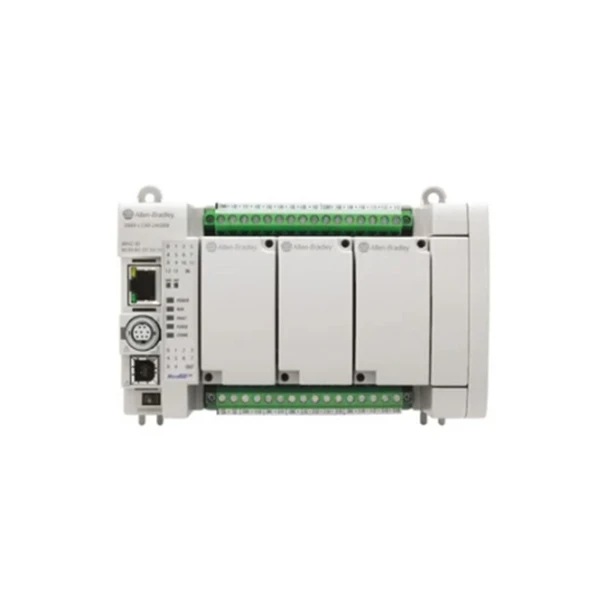
The Allen Bradley 2080 - LC50 - 24QVB is another model that's popular in these environments. It's a compact and cost - effective PLC that still provides reliable performance. It has built - in safety features and can be easily programmed to meet the requirements of hazardous applications.
The Allen Bradley 1794 - OE12 is an I/O module that can be used in conjunction with these controllers. It allows for easy integration of sensors and actuators in the system, and it's also designed to work in hazardous conditions.
Testing and Validation
Once we've written the code for the Allen - Bradley PLCs in a hazardous environment, we need to test and validate it. This is a crucial step to make sure that the system works as intended and meets all the safety standards.
We use a variety of testing techniques, including unit testing, integration testing, and system testing. Unit testing involves testing individual functions in the code to make sure they work correctly. Integration testing checks how different parts of the system work together. System testing is the final step, where we test the entire system in a simulated or real - world hazardous environment.
Documentation
Documentation is also an important part of the programming process. We need to document everything about the PLC programming, including the design, the code, and the testing results. This documentation is not only useful for future maintenance and upgrades but also for regulatory compliance.
Conclusion and Call to Action
In conclusion, programming Allen - Bradley PLCs in a hazardous environment requires a deep understanding of safety standards, specific programming techniques, and the right choice of PLC models. By following these requirements, we can ensure that the systems are safe, reliable, and compliant with regulations.
If you're in the market for Allen - Bradley PLCs for your hazardous environment applications, I'd love to have a chat with you. Whether you need help with programming, choosing the right models, or understanding the safety requirements, I'm here to assist. Just reach out, and we can start discussing your specific needs.
References
- IEC 61508 - Functional safety of electrical/electronic/programmable electronic safety - related systems
- ATEX Directive 2014/34/EU - Equipment and protective systems intended for use in potentially explosive atmospheres


