


Hey there! As a supplier of Siemens VFDs (Variable Frequency Drives), I often get asked about the cooling methods used in these high - tech devices. So, I thought I'd write this blog to break it down for you.
First off, why is cooling so important for VFDs? Well, VFDs generate heat during operation. This heat comes from the power losses in the semiconductor components like IGBTs (Insulated Gate Bipolar Transistors). If this heat isn't properly managed, it can lead to a rise in temperature, which in turn can reduce the efficiency of the drive, shorten its lifespan, and even cause it to malfunction. So, having an effective cooling method is crucial.
Siemens uses a few different cooling methods in its VFDs, and each has its own pros and cons, which are chosen based on the specific model and application requirements.
Air Cooling
Air cooling is one of the most common cooling methods used in Siemens VFDs. It's simple, cost - effective, and relatively easy to maintain. In an air - cooled VFD, fans are used to blow air over the heat - generating components. The heat is then transferred from the components to the air, and the warm air is expelled from the drive enclosure.
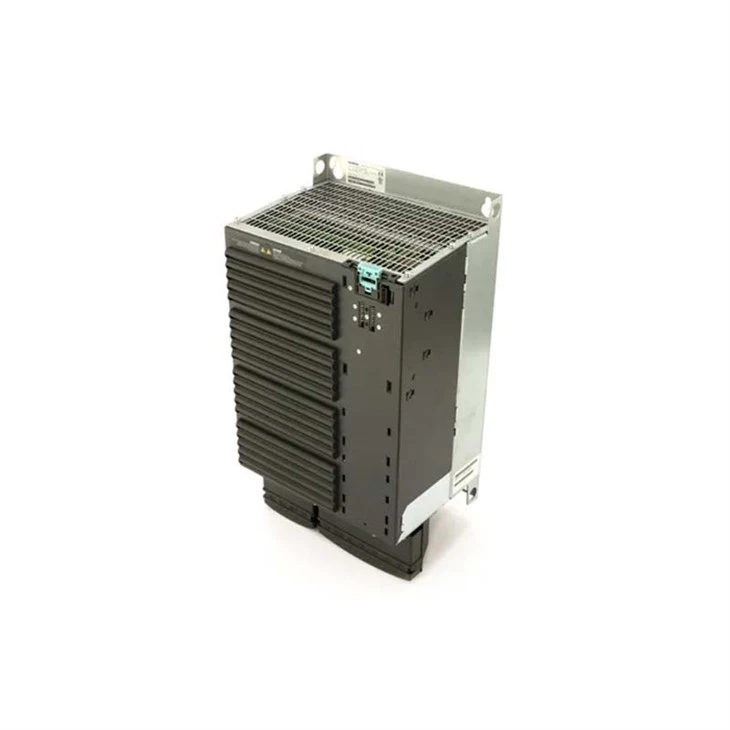
Let's take the Siemens 6SL3040 - 1MA01 - 0AA0 SINAMICS S120 as an example. This model often uses air cooling. The fans are strategically placed to ensure that the air flow reaches all the critical components. The air intake is usually at the bottom or the side of the enclosure, and the hot air is exhausted from the top.
One of the big advantages of air cooling is its simplicity. There are no complex plumbing or coolant systems to deal with. You just need to make sure the fans are working properly and that the air intake and exhaust vents are not blocked. However, air cooling has its limitations. It's not as efficient as some other methods, especially in high - power applications or in environments with high ambient temperatures. In such cases, the drive may need larger fans or more fans to maintain an acceptable temperature.
Liquid Cooling
For more demanding applications, Siemens also offers VFDs with liquid cooling. Liquid cooling is more efficient than air cooling because liquids have a higher heat capacity than air. This means they can absorb more heat per unit volume.
In a liquid - cooled VFD, a coolant (usually water or a water - glycol mixture) is circulated through a heat exchanger. The heat exchanger is in contact with the heat - generating components, and as the coolant flows through, it absorbs the heat. The heated coolant is then pumped out of the drive to an external cooling unit, where it is cooled down before being circulated back into the drive.
The Siemens 6SL3210 - 1SE31 - 5UA0 is an example of a model that may use liquid cooling. Liquid cooling allows for better temperature control, which is especially important in high - power applications where the heat generation is significant. It also enables the VFD to operate in a wider range of ambient temperatures.
However, liquid cooling is more complex and expensive than air cooling. There are additional components like pumps, pipes, and external cooling units that need to be installed and maintained. There's also a risk of leaks, which can cause damage to the drive and the surrounding equipment. So, liquid - cooled VFDs are usually used in applications where the benefits outweigh the additional costs and complexity, such as in large industrial plants or data centers.
Hybrid Cooling
Siemens also employs hybrid cooling methods in some of its VFDs. Hybrid cooling combines the advantages of both air and liquid cooling. In a hybrid - cooled VFD, the initial cooling is done using air, and then the remaining heat is removed using a liquid - cooling system.
This approach allows for a more efficient use of resources. The air - cooling part takes care of the majority of the heat dissipation in normal operating conditions, and the liquid - cooling system kicks in when the heat load becomes too high for the air - cooling system to handle alone.
The Siemens 6SL3120 - 1TE23 - 0AA4 might use a hybrid cooling method in certain configurations. Hybrid cooling provides a good balance between cost, efficiency, and reliability. It can handle a wide range of operating conditions and is suitable for applications where the heat load can vary significantly.
Choosing the Right Cooling Method
When it comes to choosing the right cooling method for your Siemens VFD, there are several factors to consider.

First, think about the power rating of the drive. Higher - power VFDs generate more heat, so they usually require a more efficient cooling method like liquid cooling or hybrid cooling. If you're using a low - power VFD in a normal ambient environment, air cooling might be sufficient.
The ambient temperature of the installation location is also important. If the environment is hot, you'll need a more effective cooling method. For example, in a desert - like environment, liquid cooling or hybrid cooling would be a better choice than air cooling.
Another factor is the available space. Liquid - cooled VFDs require more space for the external cooling units and the plumbing, while air - cooled VFDs are more compact. So, if space is limited, air cooling might be the way to go.
Finally, consider the maintenance requirements and costs. Air - cooled VFDs are generally easier and cheaper to maintain, while liquid - cooled VFDs require more complex maintenance procedures and may have higher long - term costs.
Conclusion
In conclusion, Siemens offers a variety of cooling methods for its VFDs to meet different application needs. Whether it's the simple and cost - effective air cooling, the more efficient liquid cooling, or the balanced hybrid cooling, each method has its own place in the market.
As a Siemens VFD supplier, I can help you choose the right VFD with the appropriate cooling method for your specific application. If you're in the market for a Siemens VFD and need advice on which cooling method is best for you, or if you're ready to make a purchase, don't hesitate to reach out. We can have a detailed discussion about your requirements and find the perfect solution for you.
References
- Siemens VFD product manuals
- Technical papers on VFD cooling technologies


