


As a trusted supplier of Allen - Bradley PLCs, I often encounter questions from clients regarding the cycle time of these powerful programmable logic controllers. Cycle time is a critical parameter in the operation of PLCs, as it directly impacts the system's responsiveness and overall performance. In this blog, I'll delve into what cycle time is, how it affects Allen - Bradley PLCs, and why it matters in industrial applications.

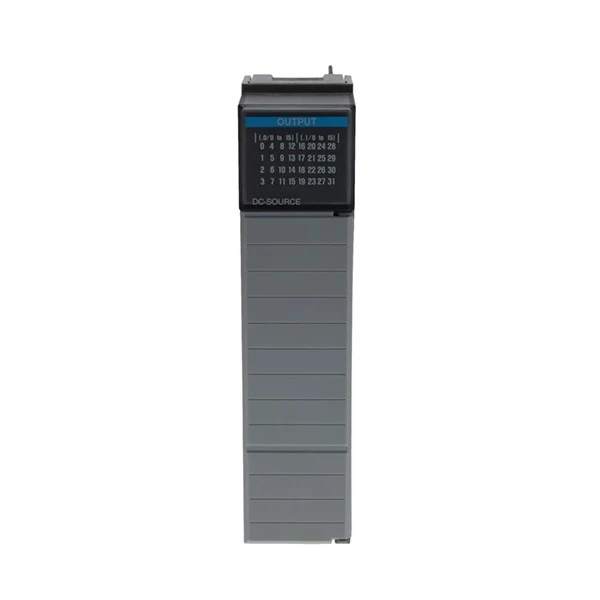
Understanding Cycle Time in PLCs
Cycle time in a PLC refers to the time it takes for the controller to complete one full scan of its program. This scan typically involves several steps: input scanning, program execution, output updating, and system diagnostics. During input scanning, the PLC reads the status of all connected input devices, such as sensors and switches. Then, it executes the user - programmed logic based on these input values. After that, the PLC updates the output devices, like relays and motors, according to the results of the program execution. Finally, it performs system diagnostics to check for any errors or malfunctions.
The cycle time is measured in milliseconds (ms) and can vary depending on several factors, including the complexity of the program, the number of inputs and outputs, and the processing speed of the PLC. A shorter cycle time generally means that the PLC can respond more quickly to changes in the input signals, resulting in a more efficient and responsive control system.
Factors Affecting the Cycle Time of Allen - Bradley PLCs
Program Complexity
The more complex the program running on the Allen - Bradley PLC, the longer the cycle time will be. Complex programs may involve a large number of instructions, conditional statements, and loops. For example, a program that requires extensive mathematical calculations or data processing will take more time to execute compared to a simple program that only controls a few on - off outputs. As a supplier, I often work with clients to optimize their programs to reduce cycle time without sacrificing functionality.
Number of Inputs and Outputs
The number of connected input and output devices also has a significant impact on the cycle time. Each input and output requires the PLC to perform additional operations during the input scanning and output updating phases. For instance, a PLC with a large number of analog inputs will need to convert the analog signals to digital values, which takes more time compared to reading simple digital inputs. When selecting an Allen - Bradley PLC for a specific application, it's crucial to consider the number of required I/Os to ensure that the PLC can handle the load within an acceptable cycle time.
PLC Model and Processing Speed
Different models of Allen - Bradley PLCs have different processing speeds, which directly affect the cycle time. Newer models are generally equipped with more powerful processors and advanced memory architectures, allowing them to execute programs more quickly. For example, the Allen Bradley 1763 - L16AWA Controller is designed for small - to - medium - sized applications and offers a relatively fast cycle time compared to older models. On the other hand, larger, more industrial - grade PLCs may have higher processing capabilities but also more complex configurations, which can affect the cycle time in different ways.
Importance of Cycle Time in Industrial Applications
Process Control
In industrial process control applications, such as manufacturing and automation, a short cycle time is essential for maintaining precise control over the process. For example, in a conveyor belt system, the PLC needs to quickly detect any changes in the position or speed of the belt and adjust the motor speed accordingly. A long cycle time could result in delays in the control action, leading to inaccurate positioning or even product defects.
Safety Systems
Safety is a top priority in industrial environments. Allen - Bradley PLCs are often used in safety - critical applications, such as emergency stop systems and safety interlocks. In these systems, a fast cycle time is crucial to ensure that the PLC can quickly respond to safety - related events and take appropriate action to prevent accidents. For instance, if a worker activates an emergency stop button, the PLC must be able to immediately stop all relevant machinery within a very short time.
Real - Time Monitoring
Many industrial applications require real - time monitoring of process variables. A short cycle time allows the PLC to continuously monitor the input signals and provide up - to - date information to the operators or other control systems. This is particularly important in applications where rapid decision - making is required, such as in chemical processing or power generation.
Measuring and Optimizing the Cycle Time of Allen - Bradley PLCs
As a supplier, I provide support to clients in measuring and optimizing the cycle time of their Allen - Bradley PLCs. Measuring the cycle time can be done using built - in diagnostic tools provided by Allen - Bradley. These tools allow users to monitor the cycle time in real - time and identify any bottlenecks in the program.
To optimize the cycle time, we can take several approaches. First, we can simplify the program by removing any unnecessary instructions or loops. Second, we can reduce the number of I/Os by using multiplexing techniques or consolidating sensors and actuators. Third, we can upgrade the PLC to a more powerful model if the current one is unable to meet the performance requirements.
Specific Examples of Allen - Bradley PLCs and Their Cycle Times
Let's take a look at some specific models of Allen - Bradley PLCs and their typical cycle times. The 1746 - OB32 Allen Bradley is a popular output module that can be used in conjunction with various PLCs. When paired with a suitable controller, the overall cycle time of the system will depend on the controller's processing speed and the complexity of the program.
The Allen Bradley 1761 - L32BWA Programmable Controller offers a relatively fast cycle time, making it suitable for applications that require quick response times. This controller is often used in small - to - medium - sized industrial control systems, such as packaging machines and conveyor systems.
Conclusion
In conclusion, the cycle time of Allen - Bradley PLCs is a crucial factor that affects the performance and efficiency of industrial control systems. As a supplier, I understand the importance of cycle time and work closely with clients to ensure that their PLC systems are optimized for the best possible performance. Whether it's through program optimization, hardware upgrades, or system design, I'm committed to providing the highest level of support to meet the unique needs of each client.
If you're interested in learning more about Allen - Bradley PLCs or need assistance with optimizing the cycle time of your control system, I encourage you to reach out for a procurement discussion. I'm here to help you make the most of these powerful and reliable PLCs in your industrial applications.
References
- Allen - Bradley PLC User Manuals
- Industrial Automation Control System Design Guides
- Technical Papers on Programmable Logic Controllers


