


Hey there! As a supplier of Omron PLC modules, I often get asked about the data transfer rate of these nifty devices. So, I thought I'd sit down and write this blog to break it all down for you.
First off, let's talk a bit about what data transfer rate actually means. In simple terms, it's how fast data can be moved from one place to another within the PLC module. It's a crucial factor because it affects how quickly your PLC can process information and make decisions. A higher data transfer rate generally means your system can respond faster to changes in input signals and execute control commands more efficiently.
Now, Omron offers a wide range of PLC modules, and each one has its own unique data transfer rate. The rate can vary depending on several factors, such as the type of module, the communication protocol it uses, and the overall system configuration.
Let's start with some of the popular Omron PLC modules. Take the Omron C200H-0D218 for example. This module is known for its reliability and performance. When it comes to data transfer, it uses a specific communication protocol that determines how fast it can send and receive data. The C200H-0D218 is designed to work well in industrial environments where quick and accurate data transfer is essential. It can transfer data at a rate that allows for real - time control of various processes.
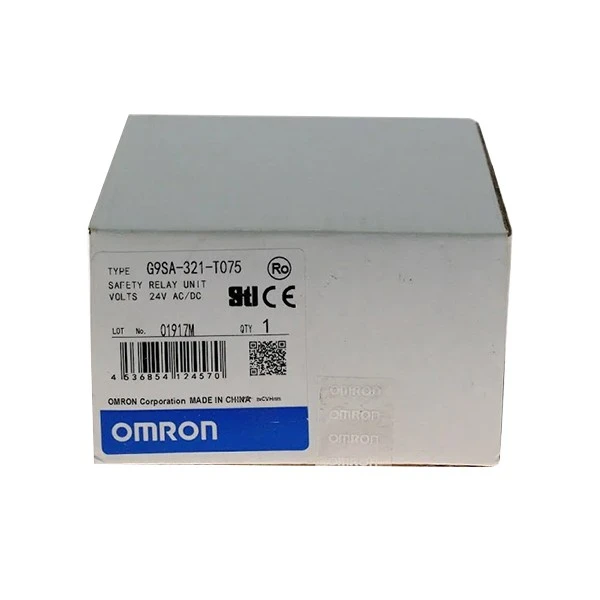
Another great module is the G9SA-321-T075 AC/DC24 Omron. This one has its own set of features that impact its data transfer rate. It's often used in applications where there's a need for precise control and monitoring. The data transfer rate of this module is optimized to ensure that it can handle the specific tasks it's designed for. For instance, in a control system where it needs to quickly adjust settings based on sensor readings, a decent data transfer rate is crucial.
The Omron CQM1-OC222 Module 16 Relay is also a well - known module in the Omron lineup. This module uses relays to control electrical circuits, and its data transfer rate plays a role in how quickly it can switch these relays on and off. A faster data transfer rate means that the module can respond more rapidly to control signals, which is important in applications where timing is critical.
So, how do you figure out the exact data transfer rate of an Omron PLC module? Well, the first step is to check the module's datasheet. Omron provides detailed information about each module, including its data transfer capabilities. The datasheet will tell you things like the maximum data transfer speed, the type of communication interface it uses (e.g., Ethernet, serial), and any limitations or requirements for achieving the stated transfer rate.
It's also important to consider the overall system setup. If you're using multiple PLC modules in a network, the data transfer rate can be affected by factors such as network congestion, the quality of the communication cables, and the processing power of the connected devices. For example, if you have a large number of modules trying to transfer data over a single Ethernet network, there might be some bottlenecks that slow down the overall transfer rate.

When it comes to communication protocols, Omron PLC modules support several different ones. Some of the common protocols include Ethernet/IP, Modbus, and Profibus. Each protocol has its own characteristics and data transfer speeds. Ethernet/IP, for instance, is known for its high - speed data transfer capabilities and is often used in modern industrial automation systems. Modbus is a widely used protocol that offers a good balance between simplicity and performance. Profibus is another option that's popular in European industrial applications.
The choice of communication protocol can have a significant impact on the data transfer rate of your Omron PLC module. For example, if you need a very high - speed connection for real - time control, Ethernet/IP might be the best choice. On the other hand, if you're working with legacy systems or need a more cost - effective solution, Modbus could be a better fit.
In addition to the module type and communication protocol, the firmware of the PLC module also plays a role in data transfer. Omron regularly releases firmware updates for its modules to improve performance, security, and data transfer capabilities. By keeping your modules up - to - date with the latest firmware, you can ensure that they are operating at their optimal data transfer rates.
Now, you might be wondering how all of this affects your specific application. Well, if you're in the manufacturing industry, a high data transfer rate can mean faster production cycles and better quality control. For example, in a robotic assembly line, the PLC modules need to quickly transfer data about the position and movement of the robots to ensure accurate and efficient operation.
In the energy sector, a reliable data transfer rate is crucial for monitoring and controlling power generation and distribution systems. PLC modules need to be able to quickly transfer data about voltage, current, and other parameters to ensure the stability and safety of the power grid.
If you're thinking about using Omron PLC modules in your project, it's important to carefully evaluate your data transfer requirements. Consider factors such as the size of the data you need to transfer, the frequency of data updates, and the response time required for your application. Based on these factors, you can choose the right Omron PLC modules and configure them to achieve the best data transfer performance.
As a supplier of Omron PLC modules, I'm here to help you with all your needs. Whether you're looking for information about data transfer rates, need help choosing the right module for your application, or want to discuss the best communication protocol to use, I'm just a message away. If you're interested in purchasing Omron PLC modules, I can offer you competitive prices and excellent customer service. Don't hesitate to reach out and start a conversation about how we can work together to meet your automation needs.
References
- Omron official product documentation
- Industrial automation textbooks on PLC systems and communication protocols


