


As a Siemens HMI supplier, I've had the privilege of working closely with a wide range of Siemens HMI models. Through hands - on experience and in - depth research, I've come to understand the nuances that set each model apart. In this blog, I'll delve into the differences between various Siemens HMI models to help you make an informed decision when it comes to your industrial automation needs.

Screen Size and Resolution
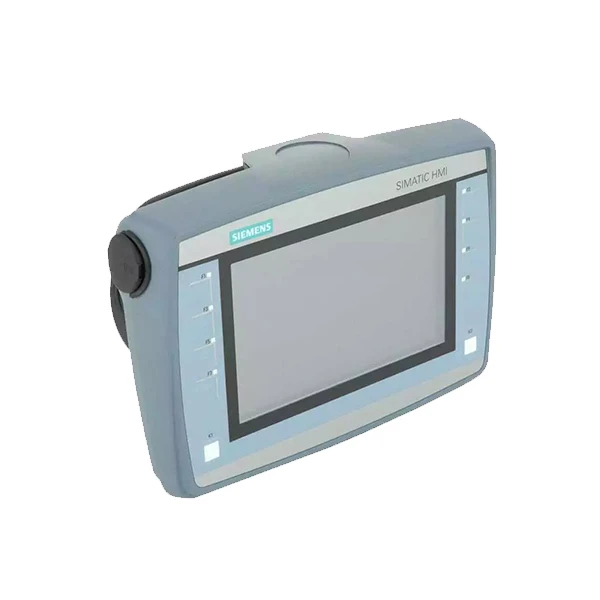
One of the most obvious differences between Siemens HMI models is the screen size and resolution. For instance, the SIMATIC HMI KTP700 Mobile /hmi/siemens-hmi/simatic-hmi-ktp700-mobile.html features a 7 - inch screen. This size is ideal for applications where space is limited, such as small control cabinets or mobile units. The resolution of this model provides a clear and sharp display of information, ensuring that operators can easily read and interact with the interface.
On the other hand, there are larger models like the Siemens 6AV6643 - 0CD01 - 1AX1 /hmi/siemens-hmi/siemens-6av6643-0cd01-1ax1.html which may come with a 12 - inch or even larger screen. These larger screens are beneficial for applications that require more detailed information to be displayed simultaneously. For example, in a complex manufacturing process, a larger screen can show multiple process variables, graphs, and control panels all at once, enhancing the operator's ability to monitor and control the system effectively.
Higher - resolution screens are also available in some models. A high - resolution display can make a significant difference, especially when dealing with detailed graphics, complex schematics, or high - precision data. It allows for a more immersive and accurate user experience, reducing the chance of misinterpretation of information.
Processing Power
The processing power of Siemens HMI models varies widely. Some of the entry - level models are designed for relatively simple applications and have less powerful processors. These models are suitable for basic control tasks, such as monitoring a few sensors and controlling a small number of actuators.
In contrast, more advanced models like the Siemens 6AV2124 - 2DC01 - 0AX0 /hmi/siemens-hmi/siemens-6av2124-2dc01-0ax0.html are equipped with high - performance processors. These processors can handle complex calculations, real - time data processing, and multitasking. For example, in a large - scale industrial plant with hundreds of sensors and actuators, a high - powered HMI is necessary to ensure smooth and efficient operation. It can quickly analyze data, update the display in real - time, and execute control commands without any significant lag.
Connectivity Options
Connectivity is another crucial aspect that differentiates Siemens HMI models. Most models come with standard Ethernet ports, which allow for easy integration with other devices on the network, such as programmable logic controllers (PLCs), servers, and other HMIs. This enables seamless communication and data exchange between different components of the automation system.
Some models also offer additional connectivity options, such as USB ports. USB ports can be used for various purposes, including data transfer, firmware updates, and connecting external devices like keyboards or barcode scanners. This flexibility can be very useful in different industrial scenarios, allowing for easy expansion and customization of the HMI system.
Wireless connectivity is also available in some Siemens HMI models. Wireless connections can provide greater mobility and flexibility, especially in applications where the HMI needs to be used in different locations within the plant. For example, a mobile HMI with wireless connectivity can be carried around by operators to monitor and control different parts of the production line without the need for a physical connection.
Memory Capacity
Memory capacity is an important factor to consider when choosing a Siemens HMI model. The memory is used to store the operating system, application software, and data. Models with larger memory capacities can store more complex applications and a greater amount of historical data.
For applications that require long - term data logging, such as quality control in a manufacturing process, a HMI with a large memory capacity is essential. It can store data over an extended period, allowing for in - depth analysis and reporting. In addition, more memory can also improve the performance of the HMI, especially when running complex applications or handling a large number of concurrent tasks.
User Interface and Functionality
The user interface and functionality of Siemens HMI models can vary significantly. Some models have a simple and intuitive interface, which is easy to learn and use, making them suitable for operators with limited technical skills. These models typically offer basic functions such as simple control buttons, status indicators, and basic data display.
Other models, especially the more advanced ones, come with a rich and feature - packed user interface. They may include advanced graphics, touch - screen capabilities, and customizable dashboards. These features allow operators to interact with the HMI in a more intuitive and efficient way. For example, touch - screen functionality enables operators to directly interact with the display, making it easier to control the system and access information.
Environmental Resistance
Different Siemens HMI models are designed to withstand different environmental conditions. Some models are suitable for use in clean and controlled environments, such as office settings or indoor industrial areas with low levels of dust and moisture.
However, there are also models that are specifically designed for harsh industrial environments. These models are built to be rugged and resistant to factors such as dust, water, vibration, and extreme temperatures. For example, in a mining or chemical processing plant, where the environment is extremely harsh, a HMI with high environmental resistance is necessary to ensure reliable operation.
Cost
Cost is always a consideration when choosing a Siemens HMI model. Entry - level models are generally more affordable and are suitable for small - scale applications or budget - constrained projects. These models offer basic functionality and features, but they can still meet the requirements of many simple control tasks.
On the other hand, high - end models with advanced features, large screen sizes, high - performance processors, and enhanced environmental resistance come at a higher cost. However, for large - scale industrial projects or applications that require high - precision control and monitoring, the investment in a more expensive HMI may be justified by the improved performance and reliability.
Conclusion
In conclusion, there are many differences between different models of Siemens HMI, including screen size and resolution, processing power, connectivity options, memory capacity, user interface and functionality, environmental resistance, and cost. As a Siemens HMI supplier, I can help you evaluate your specific needs and choose the most suitable model for your application.
If you're interested in purchasing a Siemens HMI or have any questions about the different models, I encourage you to contact me for a detailed discussion. I'll be happy to provide you with more information and assist you in making the right decision for your industrial automation project.
References
- Siemens official product documentation
- Industry reports on industrial automation and HMI technology


