


As a supplier of Schneider Variable Frequency Drives (VFDs), I often encounter inquiries about the input voltage range of these high - performance devices. Understanding the input voltage range is crucial for ensuring the proper operation, safety, and efficiency of the VFDs in various industrial and commercial applications. In this blog post, I'll delve into the details of the input voltage ranges of Schneider VFDs, providing you with the necessary information to make informed decisions.
General Considerations for Input Voltage Range in VFDs
Before we discuss the specific input voltage ranges of Schneider VFDs, it's important to understand why the input voltage range matters. VFDs are used to control the speed of electric motors by varying the frequency and voltage supplied to the motor. The input voltage to the VFD must be within a certain range to ensure that the VFD can convert it into the appropriate output voltage and frequency for the motor.
If the input voltage is too low, the VFD may not be able to provide enough power to the motor, leading to reduced performance, overheating, or even motor failure. On the other hand, if the input voltage is too high, it can cause damage to the internal components of the VFD, such as the rectifier, inverter, and control circuits. Additionally, the input voltage range can affect the compatibility of the VFD with different power sources, such as single - phase or three - phase power supplies.

Input Voltage Ranges of Different Schneider VFD Series
Schneider ATV610 Series
The Schneider ATV610 series is designed for general - purpose applications, offering high performance and reliability. The input voltage range of the ATV610 series varies depending on the model and power rating.
For single - phase input models, the typical input voltage range is around 200 - 240V AC, which is suitable for applications where only single - phase power is available. These models are often used in smaller industrial equipment, such as pumps, fans, and conveyors.
For three - phase input models, the input voltage range is typically 380 - 480V AC. This range is commonly found in industrial settings where three - phase power is the standard. The ATV610 series can handle a wide range of motor power ratings, from a few kilowatts to several hundred kilowatts, making it a versatile choice for various applications. For example, the Schneider ATV610D22N4 is a popular model in this series, which is designed to work within the specified three - phase input voltage range and can provide reliable motor control for medium - sized industrial motors.
Schneider ATV320 Series
The Schneider ATV320 series is known for its compact size and energy - efficient operation. It is suitable for applications where space is limited, such as in small machinery and equipment.
The input voltage range for the ATV320 series also has different options for single - phase and three - phase inputs. The single - phase input models usually have an input voltage range of 200 - 240V AC. These models are ideal for small - scale applications, such as home appliances, small pumps, and fans.
The three - phase input models of the ATV320 series typically operate within a voltage range of 380 - 480V AC. This allows them to be used in industrial environments where three - phase power is readily available. The Schneider ATV320U40N4B Variable Speed Drive is a representative model in this series, which offers precise motor control and energy savings within the specified input voltage range.
Schneider ATV71 Series
The Schneider ATV71 series is a high - performance VFD series designed for demanding industrial applications. It offers advanced features such as high - torque control, energy optimization, and communication capabilities.
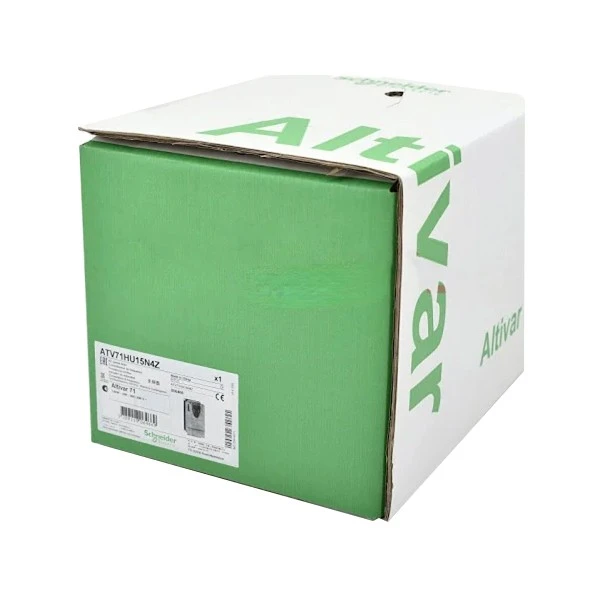
The input voltage range for the ATV71 series is mainly focused on three - phase power supplies. The typical input voltage range is 380 - 480V AC, which is standard for most industrial power systems. This series can handle high - power motors, making it suitable for heavy - duty applications such as large pumps, compressors, and crushers. The Schneider ATV71HU15N4Z VFD is an example of a powerful model in the ATV71 series, which can operate reliably within the specified input voltage range and provide excellent performance in industrial settings.
Factors Affecting the Input Voltage Range
In addition to the series and model of the Schneider VFD, several other factors can affect the input voltage range.
Power Source Quality: The quality of the power source, including voltage fluctuations, harmonics, and power factor, can impact the performance of the VFD. If the power source has significant voltage fluctuations, it may be necessary to use a voltage stabilizer or other power conditioning equipment to ensure that the input voltage to the VFD remains within the acceptable range.
Environmental Conditions: The operating environment of the VFD can also affect its input voltage range. High temperatures, humidity, and dust can reduce the efficiency and reliability of the VFD, and may also affect its ability to handle certain input voltages. In harsh environments, it may be necessary to use additional protection measures, such as enclosures and cooling systems, to ensure the proper operation of the VFD.
Motor Requirements: The power rating and characteristics of the motor connected to the VFD can also influence the input voltage range. Different motors have different voltage and power requirements, and the VFD must be able to provide the appropriate output voltage and frequency to meet these requirements. Therefore, when selecting a VFD, it is important to consider the motor's specifications and ensure that the VFD's input voltage range is compatible with the power source and the motor.
Importance of Selecting the Right Input Voltage Range
Selecting the right input voltage range for your Schneider VFD is crucial for several reasons.
Reliability: A VFD operating within its specified input voltage range is more likely to operate reliably and have a longer lifespan. By avoiding over - voltage or under - voltage conditions, you can reduce the risk of component failure and downtime, which can save you time and money in the long run.
Performance: The input voltage range directly affects the performance of the VFD and the motor it controls. A proper input voltage ensures that the VFD can provide the correct output voltage and frequency to the motor, resulting in smooth operation, accurate speed control, and optimal energy efficiency.
Safety: Operating a VFD outside its recommended input voltage range can pose a safety hazard. Over - voltage can cause electrical arcing, short circuits, and even fires, while under - voltage can lead to motor stalling and overheating. By selecting the right input voltage range, you can ensure the safety of your equipment and personnel.
Conclusion
In conclusion, the input voltage range of Schneider VFDs varies depending on the series, model, and application requirements. Understanding the input voltage range is essential for ensuring the proper operation, reliability, and safety of the VFDs. Whether you are using a single - phase or three - phase power supply, and whether your application is a small - scale home appliance or a large - scale industrial machine, there is a Schneider VFD that can meet your needs.
As a Schneider VFD supplier, I am committed to providing you with the best products and technical support. If you have any questions about the input voltage range of Schneider VFDs or need help selecting the right VFD for your application, please feel free to contact me. We can discuss your specific requirements and find the most suitable solution for your project.
References
- Schneider Electric official product documentation
- Industrial motor control handbooks
- Technical papers on variable frequency drive technology


