


Hey there! I'm a supplier of Allen - Bradley PLCs, and today I wanna talk about the programming performance of Allen - Bradley PLC in real - time applications.
Let's start with what real - time applications are. In simple terms, real - time applications are those where the system has to respond to events within a specific time frame. Think of industrial automation processes like assembly lines, where any delay in the control system can lead to production issues, or in a power grid, where timely control is crucial for stable power supply.

Allen - Bradley PLCs have been around for a long time, and they've built a solid reputation in the industry. One of the key aspects of their programming performance in real - time applications is their ability to handle high - speed processing. These PLCs are equipped with powerful processors that can execute complex control algorithms in a very short time. For example, in a high - speed bottling line, the PLC needs to precisely control the filling, capping, and labeling processes. With Allen - Bradley PLCs, the programming can be set up to react instantaneously to sensor inputs, ensuring that each bottle is filled to the right level and capped properly.
When it comes to programming languages, Allen - Bradley PLCs support a variety of them. Ladder Logic is one of the most commonly used languages. It's very intuitive, kind of like an electrical circuit diagram. For someone who has a basic understanding of electrical circuits, it's easy to pick up. You can use Ladder Logic to program simple on - off control functions, like turning a motor on and off based on a sensor signal. It's great for real - time applications because it allows for quick and straightforward programming.
Another programming language supported is Structured Text. This is more like a traditional programming language, similar to Pascal. It's useful for more complex calculations and control strategies. For instance, in a chemical process where you need to calculate the exact amount of reactants based on multiple variables like temperature, pressure, and flow rate, Structured Text can handle these calculations with ease. The ability to switch between different programming languages depending on the application requirements gives Allen - Bradley PLCs an edge in real - time programming.
Now, let's talk about some specific models. The Allen - Bradley 1794 - TB32 is a great example. It's an input/output module that can be easily integrated into an Allen - Bradley PLC system. In a real - time application, it can quickly transfer data between the sensors in the field and the PLC controller. This module is known for its reliability and fast data transfer rates, which are essential for real - time control.
The Allen Bradley 1769 - L24ER - QBFC1B Controller is another powerful option. It has a high - performance processor and a large memory capacity. This means it can handle complex programming tasks and store a significant amount of data. In a real - time application, it can run multiple control loops simultaneously, ensuring smooth and efficient operation. For example, in a multi - axis robotic system, this controller can manage the movement of each axis in real - time, coordinating their actions precisely.
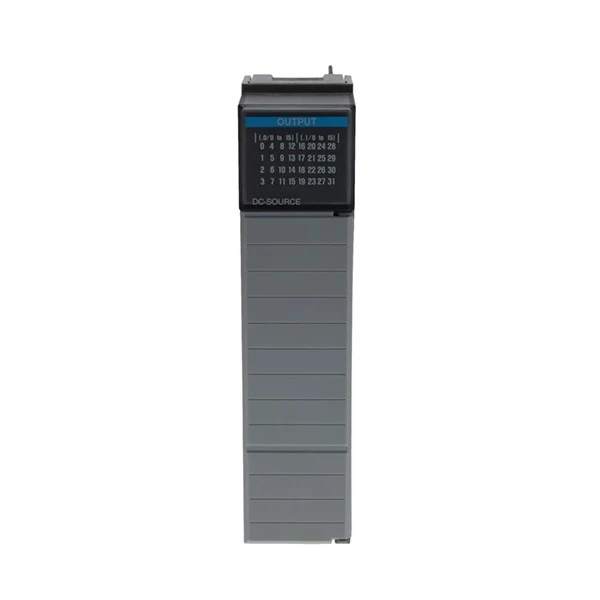
The 1746 - OB32 Allen Bradley is an output module. It can be used to control external devices such as motors, solenoids, and valves. In a real - time application, it can send out control signals based on the programming logic in the PLC. For example, in a water treatment plant, it can control the opening and closing of valves to regulate the flow of water.
One of the challenges in real - time programming is dealing with interrupts. Interrupts are events that can occur at any time and require immediate attention from the PLC. Allen - Bradley PLCs are designed to handle interrupts efficiently. They have a built - in interrupt handling mechanism that can pause the normal execution of the program, handle the interrupt event, and then resume the program exactly where it left off. This ensures that the real - time application can respond to unexpected events without any significant disruption.
In addition to high - speed processing and interrupt handling, Allen - Bradley PLCs also offer excellent communication capabilities. They can communicate with other devices in the system, such as sensors, actuators, and other PLCs, using various communication protocols. For example, Ethernet/IP is a commonly used protocol that allows for high - speed data transfer between devices. In a large industrial network, multiple Allen - Bradley PLCs can communicate with each other in real - time, sharing data and coordinating their actions. This is crucial for applications where different parts of the system need to work together in harmony, like in a large - scale manufacturing plant.
Another important aspect is the ability to monitor and diagnose the PLC's performance in real - time. Allen - Bradley PLCs come with built - in diagnostic tools that allow you to check the status of the inputs, outputs, and the overall system. You can view error messages and performance statistics, which helps in quickly identifying and resolving any issues. This is very useful in real - time applications, as it minimizes downtime and ensures continuous operation.
If you're in the market for Allen - Bradley PLCs for your real - time applications, don't hesitate to reach out. Whether you're looking for a specific model like the ones I mentioned above or need help with programming and system integration, I'm here to assist. We can have a detailed discussion about your requirements and find the best solution for your project.
References
- Allen - Bradley PLC User Manuals
- Industrial Automation Industry Reports
- Technical Papers on Real - Time Control Systems


