


Yo, what's up everyone! I'm a supplier of Schneider VFDs, and today I wanna talk about the starting current of Schneider VFDs. It's a topic that's super important for anyone who's into industrial applications and looking to make the most out of these variable frequency drives.
First off, let's get into what starting current actually is. When a motor starts up, it usually draws a much higher current than it does when it's running at a steady state. This high current is called the starting current, and it can be a real pain in the neck if not managed properly. It can cause all sorts of problems, like voltage drops in the power supply system, overheating of the motor windings, and even damage to the electrical components.
Now, Schneider VFDs are pretty awesome when it comes to dealing with starting current. They use advanced technology to control the voltage and frequency supplied to the motor during startup, which helps to limit the starting current. This is a huge advantage because it not only protects the motor and the electrical system but also improves the overall efficiency of the operation.
One of the key features of Schneider VFDs is their ability to provide a soft start. A soft start means that the motor gradually ramps up to its full speed instead of starting suddenly. This reduces the stress on the motor and the mechanical components connected to it. For example, in a conveyor belt system, a soft start can prevent the belt from jerking and reduce the wear and tear on the bearings and other parts.
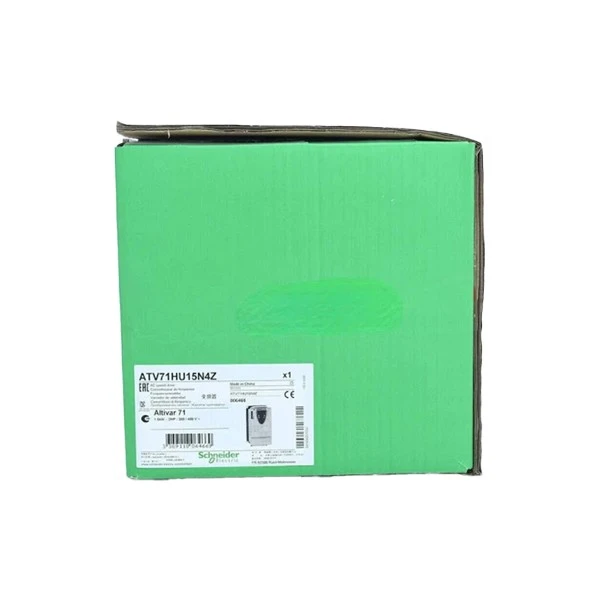

Let's take a look at some specific Schneider VFD models. The Schneider ATV71HU15N4Z VFD is a great choice for many industrial applications. It has a built - in function to control the starting current effectively. It can adjust the voltage and frequency according to the load requirements, ensuring a smooth and efficient start. This model is known for its reliability and performance, and it's widely used in pumps, fans, and other motor - driven equipment.
Another popular model is the Schneider Sw 2524 VFD. This VFD offers a high level of flexibility in terms of starting current control. It allows users to set different starting parameters based on their specific needs. Whether you're dealing with a light - load or a heavy - load application, the Schneider Sw 2524 VFD can be customized to provide the optimal starting current.
The Schneider Electric Altivar 312 ATV312HU40N4 is also worth mentioning. It's designed to be energy - efficient and has excellent starting current control capabilities. It uses advanced algorithms to analyze the motor's characteristics and adjust the starting process accordingly. This results in a significant reduction in energy consumption during startup and also extends the lifespan of the motor.
So, how does a Schneider VFD actually control the starting current? Well, it all comes down to the way it manages the voltage and frequency. When the VFD starts, it begins by supplying a low voltage and frequency to the motor. As the motor gradually picks up speed, the VFD increases the voltage and frequency in a controlled manner. This slow and steady increase in power helps to keep the starting current within acceptable limits.
In addition to the soft start feature, Schneider VFDs also offer other methods to control the starting current. For example, some models have a current limit function. This function allows you to set a maximum current value, and the VFD will ensure that the starting current never exceeds this limit. This is especially useful in applications where the power supply has limited capacity or where the motor needs to be protected from excessive current.
Now, you might be wondering about the benefits of using a Schneider VFD for starting current control. First of all, it saves energy. By reducing the starting current, the VFD reduces the power consumption during startup, which can lead to significant cost savings in the long run. Secondly, it improves the reliability of the motor and the entire system. By preventing overheating and mechanical stress, the VFD helps to extend the lifespan of the equipment and reduces the need for maintenance.
If you're in the market for a high - quality VFD that can effectively control the starting current, Schneider VFDs are definitely worth considering. As a supplier, I can attest to the quality and performance of these products. Whether you're a small - scale business or a large industrial operation, there's a Schneider VFD that's right for you.
If you're interested in learning more about Schneider VFDs or if you want to discuss your specific requirements, don't hesitate to get in touch. We can have a chat about which model would be the best fit for your application and work out a great deal for you.
In conclusion, the starting current of a motor is a crucial factor in industrial applications, and Schneider VFDs offer a reliable and efficient solution to manage it. With their advanced technology, flexibility, and energy - saving features, they are a top choice for many industries. So, if you're looking for a way to improve the performance and efficiency of your motor - driven equipment, give Schneider VFDs a try.
References
- Schneider Electric official product manuals
- Industrial application case studies on motor control and VFD usage


