

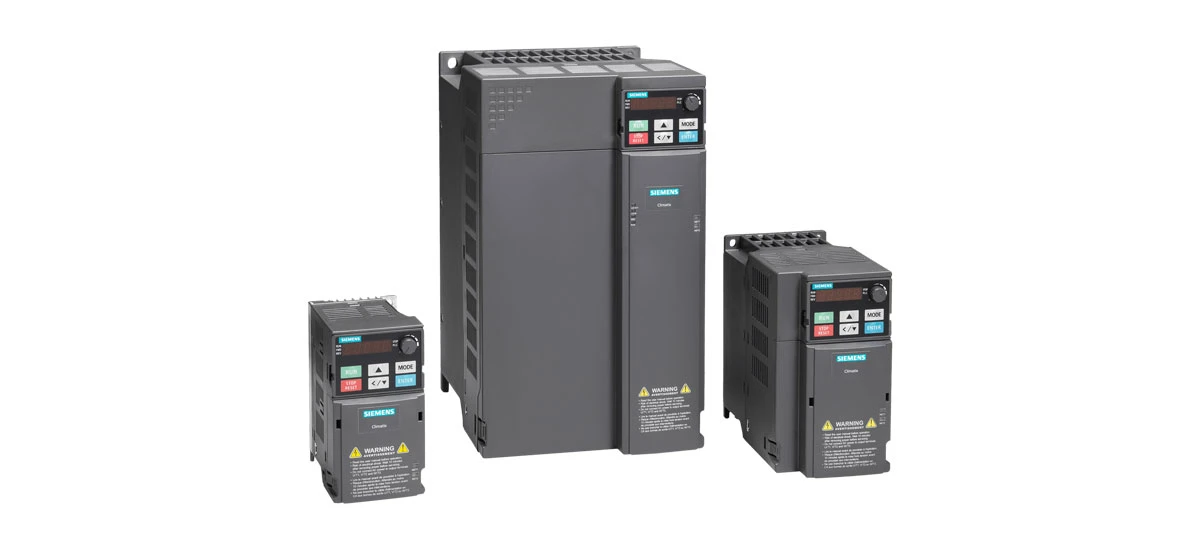
If you work with industrial equipment, you've probably heard of Siemens VFDs. A Siemens VFD (Variable Frequency Drive) is a device that controls the speed and torque of electric motors by changing the frequency and voltage of the power supplied to them. To get the best performance from your Siemens VFD, auto-tuning is a critical step. Auto-tuning helps the Siemens VFD learn important details about the motor it's connected to, so it can adjust its settings for smooth, efficient operation. There are two main types of auto-tuning for Siemens VFDs: stationary tuning and rotating tuning. In this blog, we'll explain what each method is, how they work, their differences, and how to choose the right one for your Siemens VFD setup. We'll also share practical tips to make sure your Siemens VFD auto-tuning goes smoothly, so you can get the most out of your equipment.
What Is Siemens VFD Auto-Tuning?
Before we dive into the two tuning methods, let's make sure we understand what auto-tuning is and why it matters for your Siemens VFD. Auto-tuning is a built-in feature of Siemens VFDs that lets the drive measure the motor's electrical characteristics and adjust its internal settings to match. This process ensures that the Siemens VFD and motor work together seamlessly, reducing energy waste, preventing unnecessary wear and tear, and improving overall performance. Without proper auto-tuning, a Siemens VFD might not run efficiently, could cause the motor to overheat, or even trip (shut down unexpectedly). Siemens VFD auto-tuning is especially important for applications that require precise speed or torque control, like conveyor belts, pumps, or fans. One of the key goals of Siemens VFD auto-tuning for optimal performance is to create an accurate motor model, which helps the drive deliver the right amount of power at the right time.
What Is a Siemens VFD?
A Siemens VFD is a versatile device used in factories, warehouses, and other industrial settings to control motor speed. Unlike traditional motor starters that run motors at a fixed speed, a Siemens VFD lets you adjust the speed to match the needs of your application. This flexibility not only saves energy but also extends the life of both the Siemens VFD and the motor. Siemens VFDs are known for their reliability and ease of use, and their auto-tuning feature is a big part of that. Whether you're using a Siemens VFD for a small pump or a large industrial machine, auto-tuning is essential to unlock its full potential. Common Siemens VFD models, like the MM440 and G120 series, come with both stationary and rotating tuning options to fit different application needs.
Why Auto-Tuning Matters for Siemens VFD Performance
Auto-tuning is not just a "nice-to-have" feature for your Siemens VFD-it's a necessity. Here's why: First, every motor is slightly different, even if they have the same specifications. A Siemens VFD can't know these small differences unless it's tuned. Auto-tuning measures parameters like the motor's resistance and inductance, which are critical for accurate control. Second, auto-tuning helps the Siemens VFD avoid common problems like overcurrent (too much current) or overload (too much load), which can damage the drive or motor. Third, a well-tuned Siemens VFD runs more efficiently, which lowers energy costs. Finally, auto-tuning ensures smooth operation, reducing vibration and noise from the motor. If you want your Siemens VFD to perform at its best, taking the time to do proper auto-tuning is key. This is where understanding the difference between stationary and rotating tuning for Siemens VFDs becomes important.
Stationary Tuning for Siemens VFDs
Stationary tuning is one of the two main auto-tuning methods for Siemens VFDs. As the name suggests, stationary tuning is done while the motor is stationary (not moving). During this process, the Siemens VFD sends small test currents to the motor's windings to measure its electrical properties. The motor doesn't spin, but you might hear a quiet humming sound as the Siemens VFD performs its measurements. Stationary tuning is a simple and safe method, making it a popular choice for many Siemens VFD applications. It's also faster than rotating tuning, which is helpful when you need to set up your Siemens VFD quickly.
How Does Stationary Tuning Work on a Siemens VFD?
The steps for stationary tuning on a Siemens VFD are straightforward, even for beginners. Here's a basic overview (note: always follow the instructions for your specific Siemens VFD model): First, make sure the motor is disconnected from any load (like a pump or conveyor) so it can't move. Then, access the auto-tuning settings on your Siemens VFD's control panel or through software like Siemens TIA Portal. Select "stationary tuning" (on many Siemens VFDs, this is set using parameter P1910, which you set to 1). Next, enter the motor's nameplate information (like voltage, current, and frequency) into the Siemens VFD-this is crucial for accurate tuning. Once you start the tuning process, the Siemens VFD will inject low-voltage, low-frequency signals into the motor windings to measure its electrical characteristics. The process usually takes 10 to 60 seconds, depending on the motor size. When it's done, the Siemens VFD will save the measured parameters and use them to optimize its control. This is the core of Siemens VFD stationary tuning steps.
Pros and Cons of Stationary Tuning for Siemens VFDs
Like any method, stationary tuning has its advantages and disadvantages for Siemens VFDs. Let's start with the pros: It's safe because the motor doesn't move, so there's no risk of injury or damage to equipment during tuning. It's fast, taking only a few minutes at most. It's easy to perform-you don't need advanced technical skills, just basic knowledge of your Siemens VFD. It works well for most basic applications, like small pumps or fans, where precise torque control at low speeds isn't critical. Now, the cons: Stationary tuning only measures the motor's electrical properties, not its mechanical properties (like inertia). This means it might not be as accurate as rotating tuning for applications that require precise speed or torque control, like heavy machinery or robots. It also can't detect issues with the motor's mechanical parts, like a loose bearing. Despite these cons, stationary tuning is a great choice for many Siemens VFD setups, especially when safety and speed are priorities.
Rotating Tuning for Siemens VFDs
Rotating tuning is the second main auto-tuning method for Siemens VFDs. Unlike stationary tuning, rotating tuning is done while the motor is spinning (rotating). During this process, the Siemens VFD runs the motor at a low speed (without a load) and measures both its electrical and mechanical properties. This gives the Siemens VFD a more complete picture of the motor, leading to more accurate control. Rotating tuning is ideal for applications that require high precision, like CNC machines, robotic arms, or high-load pumps. If you need your Siemens VFD to deliver consistent torque at low speeds, rotating tuning is the better option.
How to Do Rotating Tuning on a Siemens VFD
Rotating tuning is a bit more involved than stationary tuning, but it's still manageable with basic knowledge of your Siemens VFD. Here's how to do rotating tuning on a Siemens VFD (again, follow your specific model's instructions): First, ensure the motor is connected to the Siemens VFD but not to any load (so it can spin freely). Make sure the area around the motor is clear-no tools, people, or objects should be near it while it's spinning. Next, access the auto-tuning settings on your Siemens VFD and select "rotating tuning" (on Siemens MM440 VFDs, this is often set using parameter P1960, which you set to 1). Enter the motor's nameplate information, just like with stationary tuning. Start the tuning process: the Siemens VFD will start the motor and run it at a low, steady speed (usually around 20% to 50% of the motor's rated speed). As the motor spins, the Siemens VFD measures its electrical properties (like resistance and inductance) and mechanical properties (like inertia). This process takes a bit longer than stationary tuning-usually 1 to 5 minutes. When it's done, the Siemens VFD saves the parameters and optimizes its control. This step-by-step process is what makes up how to do rotating tuning on a Siemens VFD.
Pros and Cons of Rotating Tuning for Siemens VFDs
Rotating tuning offers several benefits for Siemens VFDs, but it also has some drawbacks. Let's start with the pros: It's more accurate than stationary tuning because it measures both electrical and mechanical properties. This makes it perfect for applications that require precise speed or torque control. It can detect mechanical issues with the motor, like unbalanced rotors or loose parts, which stationary tuning can't. It helps the Siemens VFD deliver better performance at low speeds, which is critical for many industrial applications. Now, the cons: It's less safe than stationary tuning because the motor is spinning-you need to take extra precautions to avoid injury. It's slower than stationary tuning, which can be a problem if you need to set up your Siemens VFD quickly. It requires more space because the motor needs to spin freely without any load. Despite these cons, rotating tuning is the best choice for Siemens VFDs used in high-precision or high-load applications.
Stationary vs. Rotating Tuning: Key Differences for Siemens VFDs
Now that we've explained both methods, let's compare stationary and rotating tuning for Siemens VFDs. Understanding these differences will help you choose the right method for your application. The biggest difference is whether the motor is moving: stationary tuning is done with the motor off, while rotating tuning is done with the motor spinning. This leads to other key differences, like the types of parameters measured, accuracy, safety, and speed. Let's break down the difference between stationary and rotating tuning Siemens VFD in more detail.
Parameter Measurement
Stationary tuning for Siemens VFDs only measures electrical parameters, like the motor's resistance (how much it resists electric current) and inductance (how it stores electrical energy). These parameters are important, but they don't tell the whole story. Rotating tuning, on the other hand, measures both electrical parameters and mechanical parameters, like the motor's inertia (how hard it is to start or stop the motor) and friction (how much resistance the motor has when spinning). This more complete measurement makes rotating tuning more accurate for precise applications.
Accuracy and Performance
When it comes to performance, rotating tuning is more accurate than stationary tuning for Siemens VFDs. Because it measures mechanical parameters, the Siemens VFD can adjust its settings to match the motor's actual behavior, leading to smoother operation, better torque control, and more efficient energy use. Stationary tuning is accurate enough for basic applications, but it might not be sufficient for high-precision tasks. For example, if you're using a Siemens VFD to control a robotic arm that needs to move with exact precision, rotating tuning is the way to go. For a simple fan or pump, stationary tuning will work just fine.
Safety and Convenience
Stationary tuning is safer and more convenient for Siemens VFDs. Since the motor doesn't move, there's no risk of injury or damage during the tuning process. It's also faster, so you can set up your Siemens VFD quickly. Rotating tuning is less safe because the motor is spinning-you need to make sure the area is clear and that no one touches the motor while it's running. It's also slower, which can be a hassle if you're in a hurry. However, the extra time and caution are worth it for applications that require high performance.
How to Choose the Right Tuning Method for Your Siemens VFD
Choosing between stationary and rotating tuning for your Siemens VFD depends on your application. Here are some guidelines to help you decide: If your application is basic (like a fan, small pump, or conveyor) and doesn't require precise torque or speed control, stationary tuning is the best choice. It's safe, fast, and easy to perform. If your application requires high precision (like a CNC machine, robotic arm, or high-load pump) or needs consistent torque at low speeds, rotating tuning is better. It's more accurate and will help your Siemens VFD perform at its best. You should also consider safety: if you're working in a tight space or have limited access to the motor, stationary tuning is safer. If you have plenty of space and can ensure the area is clear, rotating tuning is a good option. Remember, the goal is to get the best performance from your Siemens VFD, so choose the method that fits your specific needs.
Questions to Ask Yourself
To make the decision easier, ask yourself these questions about your Siemens VFD application: 1. Does my application require precise speed or torque control? 2. Will the motor be running at low speeds frequently? 3. Is there enough space for the motor to spin freely during tuning? 4. Am I prioritizing speed and safety, or accuracy and performance? 5. What type of load is the motor driving (light, heavy, or precise)? Answering these questions will help you choose the right tuning method for your Siemens VFD. For example, if you're driving a heavy pump that needs consistent torque, rotating tuning is better. If you're driving a small fan, stationary tuning is sufficient.
Top Tips for Successful Siemens VFD Auto-Tuning
No matter which tuning method you choose, these tips will help ensure your Siemens VFD auto-tuning is successful. Following these tips will help you avoid common mistakes and get the best performance from your Siemens VFD. They'll also help with Siemens VFD auto-tuning troubleshooting if you run into issues.
1. Always Enter Correct Motor Nameplate Information
The Siemens VFD needs accurate information about the motor to tune properly. Before starting auto-tuning, find the motor's nameplate and enter the correct voltage, current, frequency, and power into the Siemens VFD. If you enter the wrong information, the tuning process will be inaccurate, and your Siemens VFD won't perform well. This is one of the most common mistakes people make with Siemens VFD auto-tuning, so double-check the nameplate before you start.
2. Disconnect the Motor from the Load
Whether you're doing stationary or rotating tuning, always disconnect the motor from any load (like a pump, conveyor, or machine) before tuning. If the motor is connected to a load, it won't spin freely (for rotating tuning) or the load will interfere with the electrical measurements (for stationary tuning). This can lead to inaccurate tuning and poor Siemens VFD performance. Make sure the motor is completely disconnected before starting the tuning process.
3. Follow Safety Precautions
Safety is key when working with Siemens VFDs and motors. For stationary tuning, make sure the Siemens VFD is turned off before connecting or disconnecting the motor. For rotating tuning, clear the area around the motor, wear safety glasses and gloves, and never touch the motor while it's spinning. Also, make sure the Siemens VFD is properly grounded to avoid electrical shock. Following these precautions will keep you safe and prevent damage to your Siemens VFD and motor.
4. Test the Siemens VFD After Tuning
After auto-tuning is complete, test your Siemens VFD to make sure it's working properly. Run the motor at different speeds and check for any unusual noise, vibration, or overheating. If you notice any issues, recheck the tuning settings or repeat the auto-tuning process. Testing will help you catch any problems early and ensure your Siemens VFD is performing at its best. This step is especially important for rotating tuning, as it helps verify that the mechanical parameters were measured correctly.
5. Document Your Tuning Settings
Once you've successfully tuned your Siemens VFD, write down the tuning settings and parameters. This will be helpful if you need to re-tune the Siemens VFD later (for example, if you replace the motor or change the application). It will also make Siemens VFD auto-tuning troubleshooting easier if you run into issues down the line. You can document the settings in a notebook or save them in the Siemens VFD's software.
Conclusion: Get the Best Performance from Your Siemens VFD with Auto-Tuning
Auto-tuning is a critical step for getting the best performance from your Siemens VFD. Whether you choose stationary tuning or rotating tuning, the goal is to help your Siemens VFD and motor work together seamlessly. Stationary tuning is safe, fast, and ideal for basic applications, while rotating tuning is more accurate and perfect for high-precision or high-load tasks. By understanding the differences between the two methods and following the tips we shared, you can ensure your Siemens VFD auto-tuning is successful. Remember, the key to optimal Siemens VFD performance is proper tuning-take the time to do it right, and you'll save energy, reduce wear and tear, and get the most out of your equipment. Whether you're a beginner or an experienced user, following these guidelines will help you master Siemens VFD auto-tuning for optimal performance.
If you have questions about Siemens VFD auto-tuning, or if you need help choosing the right tuning method for your application, feel free to leave a comment below. We're here to help you get the best performance from your Siemens VFD!


