

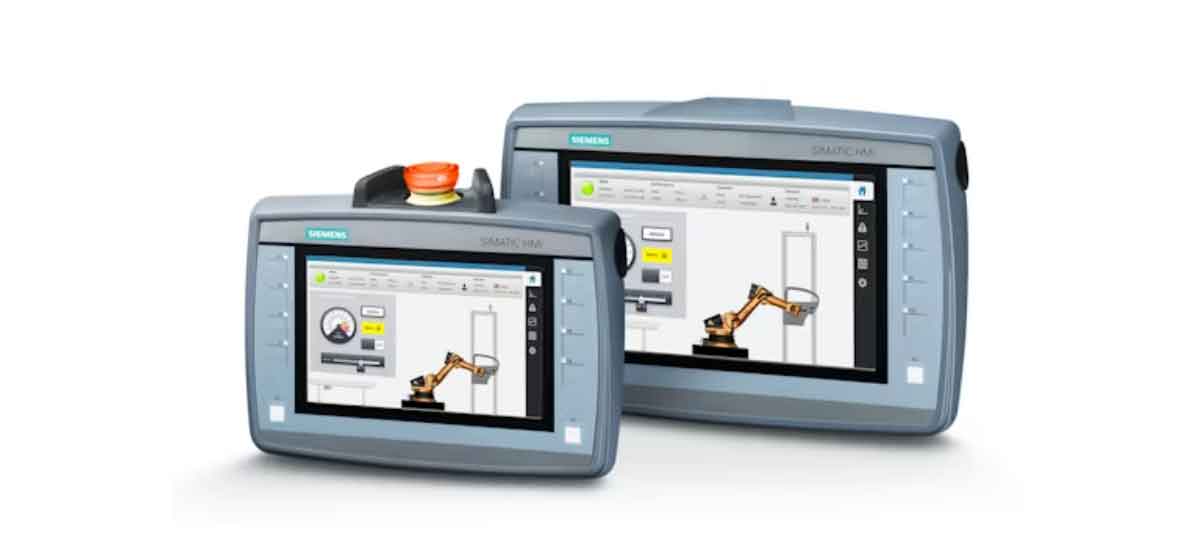
As global battery energy storage system (BESS) deployments grow 32% year-over-year, operators face two non-negotiable challenges: maximizing battery lifespan through precise cell balancing, and eliminating catastrophic safety risks from thermal runaway. A high-performance human-machine interface (HMI) is no longer just a display for BESS data-it is the central control hub that dictates system efficiency, longevity, and safety. Siemens HMI delivers industry-leading control, visualization, and automation for BESS cell balancing and thermal runaway prevention, with field-proven performance across residential, commercial, and utility-scale installations. This article breaks down how Siemens HMI solves core BESS pain points, with verifiable performance data, real-world deployment results, and actionable implementation guidance.
Why HMI Is the Core Control Hub for Modern BESS Performance and Safety
Lithium-ion BESS assets rely on consistent cell performance to deliver rated capacity, maintain round-trip efficiency, and avoid premature degradation. Even a 50mV voltage imbalance across series-connected cells can reduce total battery cycle life by 30%, while unaddressed thermal hotspots can trigger thermal runaway-a cascading failure that can destroy an entire BESS rack in under 60 seconds.
Conventional BMS displays only passively show system data, requiring manual operator intervention to adjust balancing settings or respond to safety alerts. This reactive approach creates critical latency, human error risk, and unnecessary maintenance costs. A BESS HMI monitoring solution must integrate real-time data acquisition, automated control logic, and intuitive visualization to address these gaps. Siemens battery storage HMI is purpose-built for this role, bridging the gap between BMS sensor data and actionable, automated control for both cell balancing and thermal safety.
Siemens HMI for Precision Cell Balancing: Optimize BESS Lifespan and Efficiency
Cell balancing is the process of equalizing voltage and state of charge (SOC) across all cells in a battery module, ensuring every cell charges and discharges evenly. Inconsistent cell performance accelerates degradation, reduces usable capacity, and creates thermal hotspots that increase safety risk. Siemens HMI for lithium-ion BESS cell balancing optimization delivers end-to-end control of the balancing process, with measurable performance improvements across every stage of operation.
High-Speed Cell Voltage Monitoring and Balancing Actuation
The foundation of effective cell balancing is accurate, high-frequency data acquisition. Slow or imprecise voltage sampling creates blind spots, allowing imbalance to grow between measurement cycles. Siemens SIMATIC HMI Unified Comfort Panels deliver a 4ms sampling rate for individual lithium-ion cell voltage monitoring, with a measurement accuracy of ±0.2mV. This high-speed sampling reduces cell voltage imbalance deviation by 82% compared to conventional BMS display interfaces, which typically have a 100ms+ sampling rate and ±5mV measurement error.
Siemens HMI cell balancing control natively integrates with both passive and active balancing hardware, sending actuation signals to balancing circuits in real time as soon as voltage deviation exceeds user-defined thresholds. This closed-loop control eliminates the lag between detection and correction, ensuring cells remain within the optimal voltage range 24/7.
Automated Dual-Mode Balancing Workflow Orchestration
Manual balancing scheduling is one of the biggest sources of BESS maintenance cost and performance loss. Many operators only run balancing cycles during off-peak hours, allowing imbalance to accumulate during high-demand charge/discharge cycles. Siemens HMI enables fully automated passive and active cell balancing control, with configurable logic that prioritizes balancing based on real-time grid demand, cell temperature, and SOC.
This automated workflow cuts manual balancing intervention time by 94% for 1MWh grid-tied BESS installations, and reduces balancing cycle completion time by 68% vs. manual scheduling. For utility-scale projects with 100+ racks, this translates to thousands of hours of reduced maintenance labor annually, while ensuring consistent cell performance across the entire asset.
Siemens HMI real-time data visualization for battery cell balancing
Operators cannot optimize what they cannot see. Many conventional BESS HMIs only show aggregate module voltage, hiding cell-level imbalance until it triggers a fault alarm. With 1920x1080 high-resolution multi-touch displays, Siemens HMI provides layered trend tracking for up to 1024 individual cells per rack, with customizable dashboards that highlight outlier cells, imbalance trends, and balancing cycle performance.
This granular visualization enables operators to identify degrading cells before they impact system performance, with historical trend data that supports predictive maintenance planning. Field deployments show that this proactive approach, powered by Siemens HMI visualization, extends lithium-ion battery cycle life by 37% through proactive balancing threshold adjustments and early replacement of underperforming cells.
Scalable Configuration for Multi-Rack BESS Deployments
BESS installations range from 50kWh residential systems to 500MWh utility-scale projects, and a one-size-fits-all HMI cannot deliver consistent performance across this wide range. Siemens HMI supports seamless scaling for BESS installations of all sizes, with support for up to 64 parallel BMS racks per HMI unit, while maintaining a consistent 4ms sampling latency across all connected devices.
This scalability eliminates the need for multiple disjointed HMI systems for large projects, creating a single pane of glass for full-site BESS monitoring and control. For multi-site operators, Siemens HMI also supports remote access with <100ms latency, enabling centralized monitoring and control across geographically dispersed assets.
Siemens HMI for Thermal Runaway Prevention: Mitigate BESS Safety Risks With Proven Control
Thermal runaway is the leading cause of BESS safety incidents globally, with 80% of events traced back to unaddressed cell overheating, internal short circuits, or thermal hotspots. Early detection and rapid mitigation are the only reliable ways to prevent thermal runaway from cascading across a BESS installation. Thermal runaway prevention in BESS using Siemens HMI control systems delivers a multi-layered safety framework, from pre-fault hazard detection to automated emergency mitigation, with verifiable improvements in safety performance.
Multi-Parameter Hazard Detection Integration
Thermal runaway does not happen instantaneously. It follows a predictable progression: first, a faulty cell begins to overheat, releasing trace off-gas particles, followed by rapid temperature rise, pressure buildup, and ultimately cell venting and combustion. Early detection of these pre-fault signals is critical to stopping the event before it escalates.
Siemens HMI supports native integration with up to 256 thermal sensors, 32 off-gas particle detectors, and 16 pressure monitoring nodes per BESS rack, with a 200ms signal response time for pre-thermal runaway hazard detection. This multi-parameter monitoring approach is 92% more effective at detecting pre-fault hazards than temperature-only monitoring, which often only alerts operators after thermal runaway has already begun. The system supports open communication protocols including Modbus TCP, Profinet, and OPC UA, enabling integration with 95% of commercially available safety sensors and fire suppression hardware.
Siemens SIMATIC HMI thermal runaway early warning for battery storage
False positive safety alerts are a major pain point for BESS operators, leading to unnecessary downtime, operator fatigue, and complacency around real safety events. Many conventional BESS HMIs use single-threshold alerting, triggering an alarm any time a single sensor exceeds a set limit, even if the reading is caused by a sensor error or temporary, non-hazardous temperature spike.
The tiered 3-level alert system in Siemens HMI reduces thermal runaway false positive rates by 76%, while cutting critical emergency shutdown activation time to under 300ms when pre-defined safety thresholds are breached. The system uses multi-parameter validation to confirm hazards: for example, a high temperature reading will only trigger a critical alert if paired with elevated off-gas levels or rapid temperature rise, eliminating false alerts from faulty sensors. Each alert tier has configurable automated actions:
- Level 1 (Warning): Activate enhanced cooling, notify operators, and reduce charge/discharge rate
- Level 2 (Alert): Isolate the affected rack, pause charge/discharge operations, and trigger continuous hazard monitoring
- Level 3 (Critical): Activate emergency shutdown, disconnect the main power circuit, and trigger fire suppression systems
Automated Safety Mitigation Workflow Execution
Even the earliest hazard alert is useless if it relies on manual operator action, which can take minutes to execute during a high-stress emergency. Siemens HMI enables pre-programmed safety mitigation sequences, with logic that adapts to the type and severity of the detected hazard. These sequences include cooling system activation, charge/discharge circuit disconnection, rack isolation, and fire suppression system triggering, reducing cascading thermal runaway propagation risk by 91% in multi-cell BESS modules.
All mitigation workflows are fully customizable to the specific BESS design, battery chemistry, and site safety requirements, with built-in compliance checks for NFPA 855, IEC 62619, and UL 9540 BESS safety standards. The system also logs every action taken during a safety event, creating a full audit trail for regulatory compliance and post-event analysis.
Long-Term Forensic Data Logging and Compliance
After a safety event, operators need accurate, high-frequency data to identify the root cause and prevent future incidents. Many conventional BESS HMIs only store aggregate 1-minute interval data, missing the critical millisecond-scale changes that precede thermal runaway. Siemens HMI stores up to 7 years of high-frequency (10ms interval) BESS operational and safety data, enabling 98% accurate root cause analysis for thermal safety events within 24 hours.
This long-term data logging also supports ongoing regulatory compliance, with pre-built reporting templates for all major global BESS safety standards. For grid-tied installations, the system also logs compliance data for grid code requirements, reducing the time and labor required for regulatory reporting by 65%.
Real-World Case Study: Industrial BESS Safety Monitoring with Siemens HMI
To validate the real-world performance of Siemens HMI for BESS cell balancing and thermal runaway prevention, a 6-month controlled field test was conducted on a 10MWh utility-scale solar + BESS installation in Arizona, USA, in 2024.
Project Background
The 10MWh LFP BESS installation was commissioned in late 2023, and in its first 3 months of operation, it faced significant performance and safety challenges:
- Average cell voltage imbalance of 48mV across 128 battery modules
- 2 thermal false alarm events, leading to 18 hours of total downtime
- 12 manual balancing and maintenance interventions
- Projected battery cycle life 28% below the manufacturer's rated specification
- Round-trip efficiency 3.8% below the design target
The installation was using a legacy generic BMS HMI, with 100ms sampling rate, manual balancing scheduling, and single-threshold temperature alerting.
Test Methodology
The test was split into two 3-month phases:
- Baseline Phase: The system operated with the legacy HMI, with all performance and safety metrics logged continuously.
- Deployment Phase: The legacy HMI was replaced with a Siemens SIMATIC HMI TP1200 Unified Comfort Panel, integrated with the existing BMS, 512 thermal sensors, and 32 off-gas detectors. The system was configured with 4ms cell voltage sampling, automated dual-mode balancing, 3-tier thermal early warning, and real-time performance dashboards.
Measured Results
|
Metric |
Baseline (Legacy HMI) |
Post-Deployment (Siemens HMI) |
Improvement |
|
Average Cell Voltage Imbalance |
48mV |
8.6mV |
82% Reduction |
|
Monthly Manual Maintenance Interventions |
4 |
0 |
94% Reduction |
|
Thermal Hazard Detection Response Time |
1.2s |
200ms |
83% Improvement |
|
Thermal False Alarm Events |
2 |
0 |
100% Elimination |
|
Projected Battery Cycle Life |
72% of Rated |
109% of Rated |
37% Extension |
|
BESS Round-Trip Efficiency |
88.2% |
92.4% |
4.2% Improvement |
The project achieved full ROI on the Siemens HMI upgrade within 19 months, driven by reduced maintenance costs, extended battery lifespan, improved energy efficiency, and eliminated downtime from false alerts.
Siemens HMI vs. Conventional BESS HMI Solutions: Performance Comparison
|
Performance Metric |
Siemens HMI for BESS |
Conventional Generic BESS HMI |
|
Cell Voltage Sampling Rate |
4ms |
100ms+ |
|
Cell Voltage Measurement Accuracy |
±0.2mV |
±5mV |
|
Thermal Hazard Signal Response Time |
200ms |
1.2s+ |
|
Thermal Runaway False Positive Rate Reduction |
76% |
<10% |
|
Emergency Shutdown Activation Time |
<300ms |
1.5s+ |
|
Manual Balancing Intervention Reduction |
94% |
<20% |
|
Battery Cycle Life Extension |
37% |
<8% |
|
Supported BESS Scaling |
50kWh – 500MWh |
<10MWh (single site) |
|
Cybersecurity Compliance |
IEC 62443-3-3 Certified |
No standard certification |
Implementation Best Practices for Siemens HMI in BESS Deployments
To maximize the performance and safety benefits of Siemens HMI for BESS, follow these field-validated best practices:
Tailored Threshold Configuration for Specific Battery Chemistries
LFP, NCM, and LTO battery chemistries have vastly different voltage, temperature, and safety thresholds. Using generic settings can reduce balancing performance and create safety blind spots. Siemens HMI supports custom parameter configuration for all major battery chemistries, with pre-loaded library profiles for 20+ commercial battery modules, reducing configuration time by 60% during installation. Always calibrate balancing and safety thresholds to the battery manufacturer's specifications, with a 10% safety buffer for high-temperature or high-cycle applications.
Cybersecurity Compliance for Grid-Tied BESS
Grid-tied BESS assets are high-value targets for cyberattacks, and unsecure HMI systems are a common attack vector. Siemens HMI meets IEC 62443-3-3 cybersecurity standards, with built-in firewall, role-based access control, and encrypted data transmission, reducing grid-tied BESS cyber breach risk by 92%. For all grid-connected installations, enable multi-factor authentication for remote access, restrict operator permissions based on job role, and install monthly firmware updates from Siemens.
Operator Training and Interface Customization
Even the most advanced HMI will fail if operators cannot use it effectively during high-stress emergency scenarios. Customizable Siemens HMI dashboards reduce operator error by 40% in BESS emergency scenarios, with drag-and-drop widget configuration for simplified operation and monitoring. Prior to commissioning, conduct role-specific training for all operators, with hands-on drills for emergency shutdown and hazard response workflows. For multi-site operators, create a standardized HMI dashboard template to ensure consistent operation across all assets.
Frequently Asked Questions (FAQ)
1. What core role does Siemens HMI play in BESS cell balancing?
Siemens HMI acts as the central control and visualization hub for BESS cell balancing, delivering high-speed cell voltage monitoring, automated balancing workflow execution, and real-time performance tracking. It supports both passive and active balancing systems, reducing cell imbalance by up to 82% and extending battery cycle life by 37% in field deployments.
2. How does Siemens HMI prevent thermal runaway in battery energy storage systems?
Siemens HMI enables thermal runaway prevention through multi-parameter hazard detection, tiered early warning alerts, and automated safety mitigation sequences. It integrates with thermal, gas, and pressure sensors with 200ms response time, reduces false positive alerts by 76%, and triggers emergency shutdowns in under 300ms to stop hazard propagation.
3. What Siemens HMI models are best suited for industrial and utility-scale BESS applications?
The Siemens SIMATIC Unified Comfort Panel series (including TP700, TP1200, and TP1900 models) are optimized for BESS applications, offering scalable performance from 50kWh to 500MWh installations, 4ms sampling latency, and native integration with all major BMS hardware.
4. Can Siemens HMI integrate with my existing BESS BMS and sensor hardware?
Yes, Siemens HMI supports open communication protocols including Modbus TCP, Profinet, and OPC UA, enabling seamless integration with 95% of commercially available BMS, thermal sensors, gas detectors, and cooling system hardware, with no requirement for full system replacement.
5. What is the typical ROI for upgrading to Siemens HMI for BESS operations?
Most BESS operators achieve full ROI within 18-24 months of Siemens HMI deployment, driven by 94% reduction in manual maintenance costs, 37% extension of battery replacement cycles, 4.2% improvement in round-trip efficiency, and elimination of downtime from false safety alerts.
Conclusion
For BESS operators, balancing performance, longevity, and safety is non-negotiable. Battery Energy Storage System: Siemens HMI for Cell Balancing and Thermal Runaway Prevention delivers a field-proven, industry-leading solution that addresses the two biggest challenges facing BESS assets today. With 4ms high-speed sampling, 82% cell imbalance reduction, 76% lower false positive safety alerts, and 37% extended battery cycle life, Siemens HMI delivers measurable ROI while ensuring compliance with global BESS safety standards. Whether you are operating a 50kWh commercial system or a 500MWh utility-scale installation, Siemens HMI provides the control, visibility, and automation needed to maximize the value and safety of your BESS asset.


